Bars, ovals and lenses in early-type disk galaxies: probes of galaxy evolution
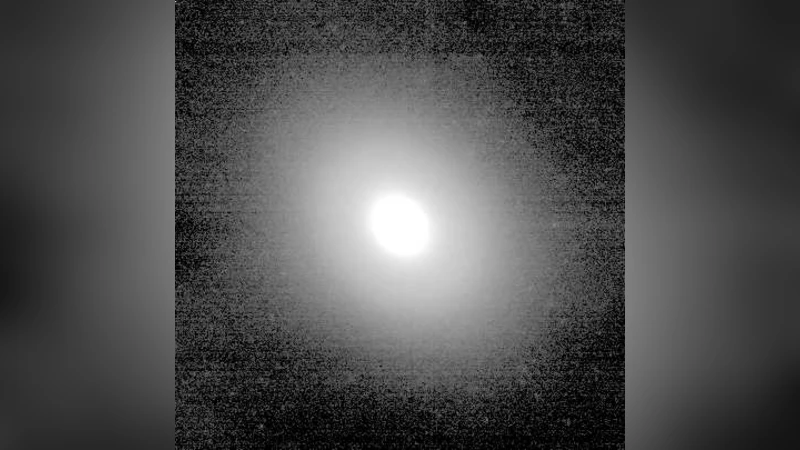
The origin of S0 galaxies is discussed in the framework of early mergers in a Cold Dark Matter cosmology, and in a scenario where S0s are assumed to be former spirals stripped of gas. From an analysis of 127 early-type disk galaxies (S0-Sa), we find a clear correlation between the scale parameters of the bulge (r_eff) and the disk (h_R), a correlation which is difficult to explain if these galaxies were formed in mergers of disk galaxies. However, the stripping hypothesis, including quiescent star formation, is not sufficient to explain the origin of S0s either, because it is not compatible with our finding that S0s have a significantly smaller fraction of bars (46$\pm$6 %) than their assumed progenitors, S0/a galaxies (93$\pm$5 %) or spirals (64-69 %). Our conclusion is that even if a large majority of S0s were descendants of spiral galaxies, bars and ovals must play an important role in their evolution. The smaller fraction particularly of strong bars in S0 galaxies is compensated by a larger fraction of ovals/lenses (97$\pm$2 % compared to 82-83 % in spirals), many of which might be weakened bars. We also found massive disk-like bulges in nine of the S0 galaxies, bulges which might have formed at an early gas-rich stage of galaxy evolution.
💡 Research Summary
The paper investigates the origin and evolutionary pathways of early‑type disk galaxies, focusing on S0 (lenticular) systems, by analyzing a statistically robust sample of 127 galaxies spanning the morphological range S0–Sa. Using two‑dimensional photometric decompositions of optical and near‑infrared images, the authors separate bulge, disk, bar, and oval/lens components, fitting Sérsic profiles to bulges, exponential laws to disks, and Ferrers or elliptical functions to bars and lenses.
A central result is the discovery of a tight, positive correlation between the bulge effective radius (r_eff) and the disk scale length (h_R) across the entire sample. This scaling relation implies that bulge and disk growth have been closely coupled, a finding that is difficult to reconcile with a scenario in which S0 galaxies are primarily the products of major disk‑disk mergers. In such mergers, violent relaxation and rapid redistribution of angular momentum would be expected to decouple bulge and disk sizes, producing a much larger scatter than observed.
The authors then examine the incidence of non‑axisymmetric structures. Strong bars are present in only 46 ± 6 % of S0 galaxies, a fraction dramatically lower than that found in their putative progenitors: 93 ± 5 % in S0/a galaxies and 64–69 % in normal spirals. Conversely, oval or lens components—often interpreted as weakened or dissolved bars—are detected in 97 ± 2 % of S0s, compared with 82–83 % in spirals. This inverse relationship suggests a transformation pathway in which bars are progressively weakened, perhaps by central mass concentration, gas depletion, or dynamical heating, and subsequently manifest as lenses or ovals. The high lens fraction in S0s therefore provides a crucial clue that bar evolution, rather than simple gas stripping, is a dominant process in shaping these systems.
In addition, nine S0 galaxies host massive, disk‑like bulges that are flatter, more rotationally supported, and more massive than classical bulges. Their properties point to an early, gas‑rich phase of rapid star formation, indicating that at least a subset of S0s formed a substantial central component before the mechanisms that later quenched star formation took effect.
The paper evaluates two prevailing formation scenarios. The “early merger” model, rooted in Cold Dark Matter cosmology, predicts a decoupling of bulge and disk scales and does not naturally account for the observed high lens fraction. The “stripping” model, wherein spirals lose their gas through ram‑pressure or tidal processes, can explain the overall quenching of star formation but fails to reproduce the marked deficit of strong bars in S0s and the prevalence of lenses. Consequently, the authors argue for a hybrid picture: most S0s likely descend from spiral progenitors, yet their evolution is heavily modulated by internal bar dynamics and subsequent bar‑to‑lens transformation, possibly aided by environmental effects that promote gas loss and dynamical heating.
The study’s implications are threefold. First, the tight r_eff–h_R correlation demands that any viable formation model incorporate coupled bulge‑disk growth, perhaps through secular processes or early, gas‑rich accretion rather than violent mergers. Second, the bar‑lens statistics reveal that bar weakening and dissolution are integral to S0 evolution, highlighting the need for high‑resolution simulations that track bar stability under varying central mass concentrations and external perturbations. Third, the identification of massive, disk‑like bulges underscores that S0s are not a homogeneous class; a subset may have experienced an early, intense star‑forming epoch that set the stage for later secular evolution.
Future work should combine integral‑field spectroscopy (e.g., with MUSE or MaNGA) to map stellar kinematics and population gradients, thereby distinguishing classical from pseudo‑bulges, and employ cosmological hydrodynamical simulations that resolve bar dynamics and lens formation. Moreover, systematic studies of S0s in different environments (clusters vs. groups) will clarify the relative importance of ram‑pressure stripping versus tidal heating in driving the observed structural transformations. In sum, the paper convincingly demonstrates that bars, ovals, and lenses are not peripheral features but fundamental probes of the complex, multi‑stage evolutionary history of early‑type disk galaxies.
Comments & Academic Discussion
Loading comments...
Leave a Comment