Six more quasars at redshift 6 discovered by the Canada-France High-z Quasar Survey
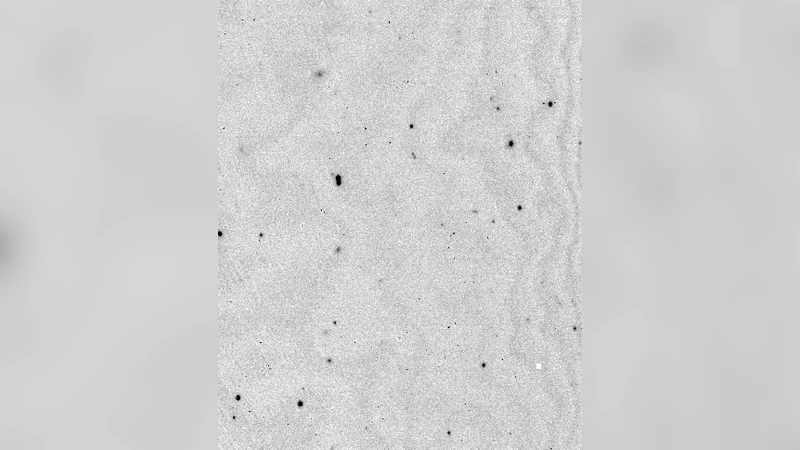
We present imaging and spectroscopic observations for six quasars at z>5.9 discovered by the Canada-France High-z Quasar Survey (CFHQS). The CFHQS contains sub-surveys with a range of flux and area combinations to sample a wide range of quasar luminosities at z~6. The new quasars have luminosities 10 to 75 times lower than the most luminous SDSS quasars at this redshift. The least luminous quasar, CFHQS J0216-0455 at z=6.01, has absolute magnitude M_1450=-22.21, well below the likely break in the luminosity function. This quasar is not detected in a deep XMM-Newton survey showing that optical selection is still a very efficient tool for finding high redshift quasars.
💡 Research Summary
The Canada‑France High‑z Quasar Survey (CFHQS) was designed to probe the quasar luminosity function (QLF) at redshift ≈ 6 over a wide range of luminosities by combining several sub‑surveys with different depth‑area trade‑offs. While the Sloan Digital Sky Survey (SDSS) had previously identified only the most luminous quasars at this epoch (absolute UV magnitude M₁₄₅₀ ≈ ‑27 to ‑26), the CFHQS aimed to reach fainter objects that lie below the expected break (M* ≈ ‑24) of the QLF.
In this paper the authors present imaging and spectroscopic follow‑up of six new quasars with redshifts z > 5.9 discovered through the CFHQS. Candidate selection used an i‑dropout colour cut (i − z > 2.0) together with additional near‑infrared colour criteria (z − J, J − K) to minimise contamination from cool dwarfs. The candidates were identified in deep CFHT/MegaCam and Subaru/HSC imaging, and then confirmed with low‑resolution spectroscopy obtained on Keck/ESI and Gemini/GMOS. All six objects display the classic Type 1 quasar spectrum: strong Ly α and N V emission, with C IV and Si IV present in most cases.
The new quasars have absolute magnitudes M₁₄₅₀ ranging from ‑22.21 to ‑24.55, i.e., 10–75 times fainter than the brightest SDSS quasars at the same redshift. The faintest source, CFHQS J0216‑0455 at z = 6.01, is the least luminous quasar known at z ≈ 6 and lies well below the putative break in the QLF. Its line widths (≈ 2000 km s⁻¹) are narrower and its Ly α and C IV lines are weaker than in the brighter objects, suggesting a lower black‑hole mass (∼10⁸ M⊙) and possibly an earlier growth stage.
X‑ray observations with XMM‑Newton covering the field of J0216‑0455 (∼ 100 ks exposure) yielded no detection, indicating that the X‑ray luminosity of these faint quasars is either intrinsically low or heavily absorbed. This non‑detection reinforces the conclusion that optical colour selection remains the most efficient method for finding high‑z quasars, even at very low luminosities.
From a cosmological perspective the discovery of quasars well below the QLF break has two major implications. First, the space density of low‑luminosity quasars at z ≈ 6 appears higher than some theoretical models predict, challenging scenarios in which super‑massive black holes (SMBHs) grow solely via near‑Eddington accretion from small seeds. The data favour either prolonged periods of sub‑Eddington accretion, or the existence of relatively massive seed black holes (10⁴–10⁵ M⊙) formed by direct collapse or dense stellar clusters. Second, faint quasars could contribute non‑negligibly to the ionising photon budget during the epoch of re‑ionisation. If the faint‑end slope of the QLF is steep, the integrated UV output from these objects may rival that of star‑forming galaxies, thereby affecting models of the timing and topology of re‑ionisation.
In summary, the CFHQS has successfully extended quasar searches to luminosities an order of magnitude fainter than previously possible at z ≈ 6, providing crucial empirical constraints on the early growth of SMBHs and on the role of quasars in cosmic re‑ionisation. Future wide‑area, deep surveys with facilities such as the Vera C. Rubin Observatory, Euclid, and the James Webb Space Telescope will be able to map the faint end of the QLF with much higher precision, ultimately clarifying the physical mechanisms that allowed massive black holes to appear less than a billion years after the Big Bang.
Comments & Academic Discussion
Loading comments...
Leave a Comment