Interference of guiding polariton mode in "traffic" circle waveguides composed of dielectric spherical particles
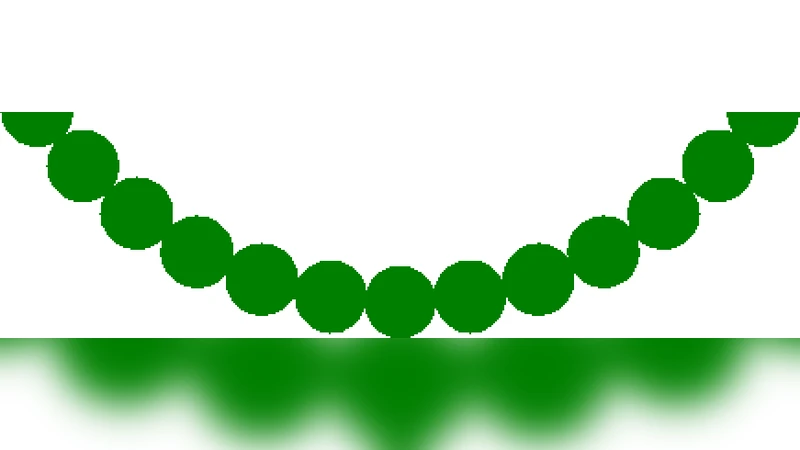
The interference of polariton guiding modes propagating through “traffic circle” waveguides composed of dielectric spherical particles is investigated. The dependence of intensity of the wave on the position of the particle was studied using the multisphere the Mie scattering formalism. We show that if the frequency of light belongs to the passband of the waveguide, electromagnetic waves may be considered as two optical beams running along a circle in opposite directions and interfering with each other. Indeed, the obtained intensity behavior can be represented as a simple superposition of two waves propagating around a circle in opposite directions. The applications of this interference are discussed.
💡 Research Summary
The paper investigates how polariton guiding modes propagate and interfere within a circular “traffic‑circle” waveguide formed by a closed chain of dielectric spherical particles. Using the multisphere Mie scattering formalism, the authors compute the full electromagnetic response of the structure for a range of frequencies and identify a pass‑band where the guided mode experiences minimal attenuation. Within this pass‑band the field can be described as the superposition of two counter‑propagating optical beams that travel around the circle in opposite directions.
The theoretical analysis begins with a geometric model: identical spheres of radius a and permittivity ε are placed at equal angular intervals along a circle of radius R. The inter‑particle spacing is chosen to be comparable to the particle size, ensuring strong near‑field coupling. By expanding the fields in vector spherical harmonics and solving the coupled Mie‑type scattering equations for all spheres, the authors obtain the complex Bloch wave number kₑff that characterizes the collective mode. The dispersion relation reveals a transmission band (the “pass‑band”) where the real part of kₑff is nearly linear with frequency and the imaginary part (loss) is very small.
Inside this band the authors propose a simple picture: the guided polariton can be decomposed into a clockwise component ψ₊ and a counter‑clockwise component ψ₋, each having the same amplitude A and phase velocity vₚ. At the position of the n‑th particle (angular coordinate φₙ = 2πn/N) the total electric field is
Eₙ = A e^{i kRφₙ} + A e^{-i kRφₙ} = 2A cos(kRφₙ).
Consequently the intensity follows
Iₙ = |Eₙ|² = 4A² cos²(kRφₙ).
The authors verify this expression by direct numerical evaluation of the full multisphere solution. The calculated intensity profile along the ring matches the cosine‑squared pattern with high accuracy, confirming that the complex multiple‑scattering problem reduces to a simple two‑beam interference model.
The paper further explores how the interference pattern depends on structural parameters. Varying the particle spacing, radius, or dielectric constant changes the effective wave number k and therefore the spatial period of the intensity modulation. Introducing a deliberate defect (e.g., removing one sphere) creates a localized mode that perturbs the interference pattern and yields a high‑Q resonance, suggesting a route to compact resonators or filters.
From an application standpoint, the authors discuss three main opportunities. First, the ability to control constructive and destructive interference at specific particle sites enables ultra‑sensitive detection schemes: a target analyte binding to a particle located at an intensity maximum would experience a dramatically enhanced local field, improving sensor response. Second, the round‑trip time T = 2πR/v_g (with group velocity v_g ≈ dω/dk) provides a predictable optical delay line that can be integrated into photonic circuits for phase‑shifting or buffering functions. Third, the defect‑induced high‑Q states can serve as narrow‑band filters or low‑threshold microlasers when gain material is incorporated into selected spheres.
Practical implementation considerations are also addressed. Materials such as silica (ε≈2.1) or TiO₂ (ε≈5) are suitable for the spheres, and fabrication can be achieved by electron‑beam lithography, colloidal self‑assembly, or direct laser writing. Near‑field scanning optical microscopy is recommended for experimental validation of the intensity distribution around the ring.
In summary, the study demonstrates that the seemingly intricate multiple‑scattering dynamics of a circular chain of dielectric spheres can be captured by a remarkably simple interference model of two counter‑propagating polariton beams. This insight not only simplifies the design and analysis of such “traffic‑circle” waveguides but also opens avenues for compact, tunable photonic components that exploit controlled interference, optical delay, and defect‑engineered resonances.