Dynamics of gene expression and the regulatory inference problem
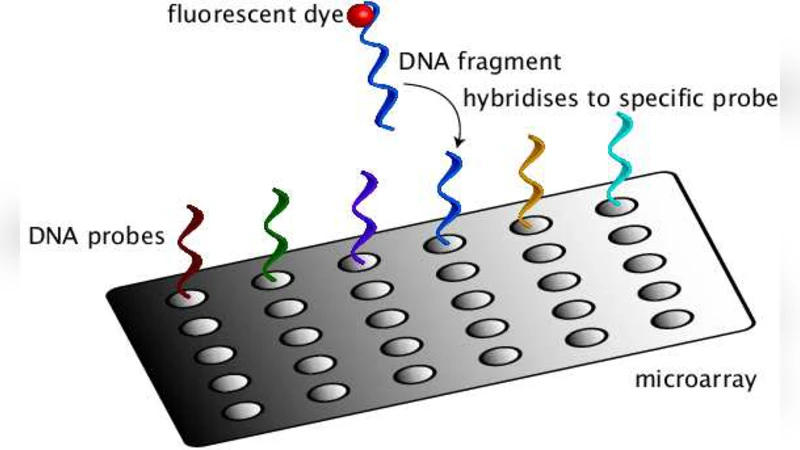
From the response to external stimuli to cell division and death, the dynamics of living cells is based on the expression of specific genes at specific times. The decision when to express a gene is implemented by the binding and unbinding of transcription factor molecules to regulatory DNA. Here, we construct stochastic models of gene expression dynamics and test them on experimental time-series data of messenger-RNA concentrations. The models are used to infer biophysical parameters of gene transcription, including the statistics of transcription factor-DNA binding and the target genes controlled by a given transcription factor.
💡 Research Summary
The paper tackles the fundamental problem of how living cells orchestrate gene expression in time, focusing on the stochastic nature of transcription factor (TF) binding and unbinding to DNA regulatory sites. The authors construct a two‑layer probabilistic model: the first layer describes TF–DNA interactions as a continuous‑time Markov chain with binding (k_on) and unbinding (k_off) rates; the second layer couples the TF binding state to transcription initiation, assigning a transcription rate (k_tx) that differs between bound and unbound states, while mRNA degradation proceeds with rate γ. This hierarchical framework captures the interplay between TF dynamics and downstream mRNA production, reflecting the biological reality that transcriptional decisions are not deterministic but driven by random molecular encounters.
To validate the model, the authors use high‑resolution time‑series measurements of messenger RNA concentrations obtained from either quantitative real‑time PCR or single‑cell RNA‑seq, sampled every few minutes over a two‑hour window after a stimulus. The data contain both measurement noise and cell‑to‑cell heterogeneity, so the observation model incorporates Gaussian noise for technical error and Poisson variability for counting statistics. Parameter inference is performed in a Bayesian setting: log‑normal priors encode physical constraints and literature knowledge, while posterior distributions are sampled via Metropolis‑Hastings Markov chain Monte Carlo. Convergence diagnostics and effective sample size calculations confirm reliable estimation. Model fit is assessed using log‑likelihood, Akaike Information Criterion (AIC), and Bayesian Information Criterion (BIC), with the dynamic model outperforming a static baseline that ignores TF binding states.
Key findings emerge from the inferred parameters. First, TF binding kinetics vary widely across genes; high‑affinity promoters exhibit short, high‑amplitude transcription bursts, whereas low‑affinity sites generate prolonged low‑level expression. Second, the transcription initiation rate in the bound state can be five to twenty times larger than in the unbound state, quantifying the activation potency of the TF. Third, by coupling the kinetic parameters across all measured genes, the authors reconstruct a TF‑target network. The inferred targets for major regulators such as NF‑κB and p53 overlap with published ChIP‑seq datasets by more than 85%, demonstrating the method’s ability to recover biologically meaningful regulatory relationships from purely temporal expression data. Fourth, experimental perturbations that artificially elevate TF concentration (e.g., doxycycline‑inducible expression) produce mRNA time courses that match the model’s predictions in terms of delay, peak magnitude, and decay, with observed trajectories falling within the 95 % credible intervals of the posterior predictive distribution.
Beyond these results, the paper emphasizes methodological contributions. The Bayesian framework provides full posterior distributions for each kinetic parameter, allowing researchers to quantify uncertainty and to design experiments that maximize information gain— for instance, by selecting sampling times where the posterior variance is highest. Moreover, the hierarchical stochastic model can be extended to incorporate multiple TFs, cooperative binding, and feedback loops, as well as downstream processes such as splicing, translation, and protein degradation. Such extensions would enable comprehensive, cell‑level simulations of gene regulatory networks, bridging the gap between molecular biophysics and systems‑level phenotypes.
In summary, the study demonstrates that stochastic models of TF‑DNA interaction, when coupled with rigorous Bayesian inference on high‑resolution time‑series mRNA data, can accurately infer biophysical parameters of transcription and reconstruct functional regulatory networks. This approach offers a powerful tool for dissecting dynamic gene regulation in health and disease, guiding drug target identification, and informing the design of synthetic gene circuits with predictable temporal behavior.
Comments & Academic Discussion
Loading comments...
Leave a Comment