Morphogenesis of growing soft tissues
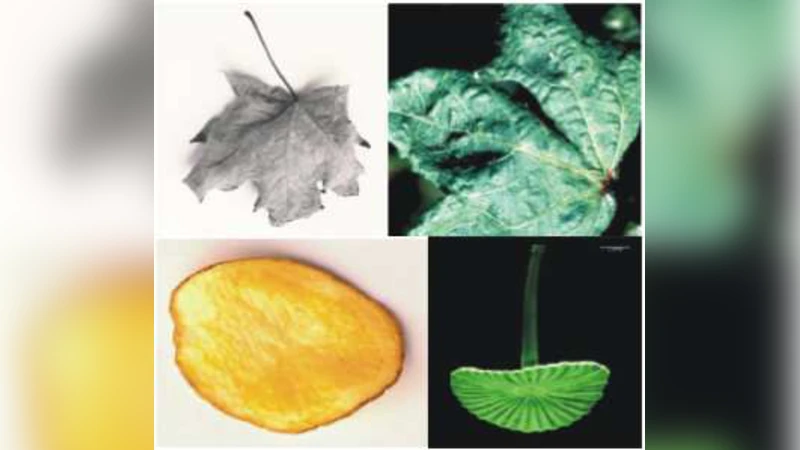
Recently, much attention has been given to a noteworthy property of some soft tissues: their ability to grow. Many attempts have been made to model this behaviour in biology, chemistry and physics. Using the theory of finite elasticity, Rodriguez has postulated a multiplicative decomposition of the geometric deformation gradient into a growth-induced part and an elastic one needed to ensure compatibility of the body. In order to fully explore the consequences of this hypothesis, the equations describing thin elastic objects under finite growth are derived. Under appropriate scaling assumptions for the growth rates, the proposed model is of the Foppl-von Karman type. As an illustration, the circumferential growth of a free hyperelastic disk is studied.
💡 Research Summary
The paper presents a rigorous continuum‑mechanics framework for describing the morphogenesis of soft tissues that undergo growth. Building on Rodriguez’s multiplicative decomposition of the deformation gradient, F = Fᵉ · Fᵍ, where Fᵍ captures the irreversible, growth‑induced change and Fᵉ is the elastic correction required to maintain compatibility, the authors extend this concept from three‑dimensional bulk bodies to thin elastic objects. By assuming that growth is slow compared with elastic relaxation (the “slow‑growth” hypothesis) and that the growth tensor varies primarily in the in‑plane directions, a systematic scaling analysis reduces the full finite‑elasticity equations to a two‑dimensional plate theory.
The reduction proceeds by adopting Kirchhoff‑Love kinematics for a thin sheet of thickness h much smaller than its lateral dimensions L. The mid‑surface displacement field is described by in‑plane components u(x,y), v(x,y) and an out‑of‑plane component w(x,y). The elastic strain energy density depends only on the elastic part of the deformation gradient, Fᵉ, while the growth part, Fᵍ, enters the equilibrium equations as a source of incompatibility. When the growth rate γ scales as O(ε²) with ε = h/L, the leading‑order balance yields a set of nonlinear governing equations that are formally identical to the classical Föppl‑von Kármán (FvK) equations, but with additional terms that contain spatial derivatives of the growth tensor. In compact form the out‑of‑plane equilibrium reads
\
Comments & Academic Discussion
Loading comments...
Leave a Comment