Mechanism of murine epidermal maintenance: Cell division and the Voter Model
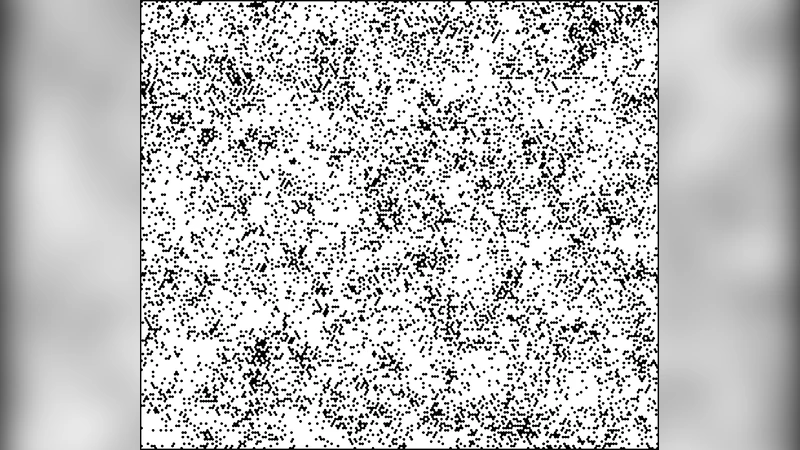
This paper presents an interesting experimental example of voter-model statistics in biology. In recent work on mouse tail-skin, where proliferating cells are confined to a two-dimensional layer, we showed that cells proliferate and differentiate according to a simple stochastic model of cell division involving just one type of proliferating cell that may divide both symmetrically and asymmetrically. Curiously, these simple rules provide excellent predictions of the cell population dynamics without having to address their spatial distribution. Yet, if the spatial behaviour of cells is addressed by allowing cells to diffuse at random, one deduces that density fluctuations destroy tissue confluence, implying some hidden degree of spatial regulation in the physical system. To infer the mechanism of spatial regulation, we consider a two-dimensional model of cell fate that preserves the overall population dynamics. By identifying the resulting behaviour with a three-species variation of the “Voter” model, we predict that proliferating cells in the basal layer should cluster. Analysis of empirical correlations of cells stained for proliferation activity confirms that the expected clustering behaviour is indeed seen in nature.
💡 Research Summary
The authors investigate how the basal layer of mouse tail skin maintains a flat, confluent epithelium while continuously renewing its cell population. Earlier work introduced a “single proliferating cell” model in which a proliferating basal cell can undergo one of four stochastic outcomes during division: symmetric self‑renewal (P → P + P), asymmetric division (P → P + D), or symmetric differentiation (P → D + D). This simple rule set accurately reproduces the observed time‑course of proliferating versus differentiated cell numbers, but it ignores spatial arrangement. When random diffusion of cells is added to the model, the resulting reaction‑diffusion equations predict that density fluctuations will grow unchecked, eventually breaking tissue confluence. Hence, the authors hypothesize that an additional spatial regulation mechanism must be present.
To uncover this mechanism they recast the two‑dimensional fate dynamics as a three‑species variant of the voter model. In the classic voter model, neighboring sites adopt each other’s state, leading to domain coarsening. Here the three states are proliferating cells (P), differentiated precursors (D), and non‑proliferative cells (N). The stochastic division rules from the original model are retained, while spatial dynamics are modeled as random exchanges between neighboring lattice sites. When a P cell interacts with a D or N neighbor, the P state can “copy” onto the neighbor with a probability proportional to the division rules, generating a positive feedback that causes P cells to cluster. Analytical treatment using master equations shows that, despite the added spatial processes, the mean‑field population fractions remain identical to the non‑spatial model. However, in two dimensions the diffusion term exceeds the critical dimension for the voter model, leading to inevitable domain growth (coarsening) and the formation of large P‑cell clusters.
The theoretical prediction of clustering was tested experimentally. Mouse tail skin sections were double‑stained for Ki67 (a proliferation marker) and K10 (a differentiation marker). High‑resolution fluorescence images were processed to locate individual cells and assign them to P, D, or N categories. Spatial correlation functions g(r) = ⟨P(0)P(r)⟩/⟨P⟩² were computed. At short distances (1–3 cell diameters) g(r) significantly exceeds 1, indicating that proliferating cells are not randomly dispersed but form statistically significant clusters. The distribution of cluster sizes follows the scaling expected from the voter‑model coarsening dynamics, and cluster growth is observed over time.
These findings support the view that the basal layer’s homeostasis is governed by a stochastic division rule combined with a spatial regulation that can be captured by a three‑species voter model. The model predicts that proliferating cells will self‑organize into clusters, a phenomenon confirmed by quantitative imaging data. The authors suggest that additional biological processes—such as contact inhibition, mechanical tension, or paracrine signaling—likely fine‑tune the clustering to prevent runaway coarsening and preserve tissue integrity.
In summary, the paper demonstrates (1) the adequacy of a simple stochastic division scheme for population dynamics, (2) the insufficiency of random diffusion alone to maintain tissue confluence, (3) the emergence of proliferative clustering when the system is mapped onto a voter model, and (4) experimental validation of this clustering in mouse epidermis. By bridging statistical physics and stem‑cell biology, the work provides a quantitative framework for understanding how local stochastic rules can give rise to robust, spatially organized tissue maintenance, with implications for regenerative medicine, cancer biology, and the engineering of synthetic epithelia.
Comments & Academic Discussion
Loading comments...
Leave a Comment