Community Detection in Complex Networks by Dynamical Simplex Evolution
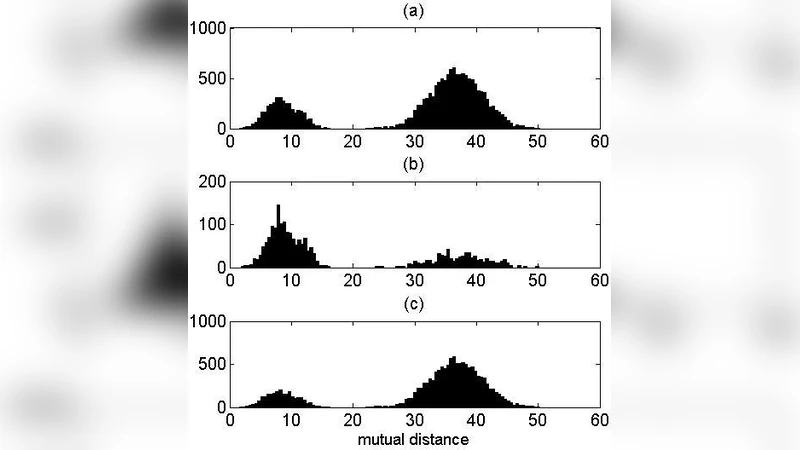
We benchmark the dynamical simplex evolution (DSE) method with several of the currently available algorithms to detect communities in complex networks by comparing the fraction of correctly identified nodes for different levels of ``fuzziness’’ of random networks composed of well defined communities. The potential benefits of the DSE method to detect hierarchical sub structures in complex networks are discussed.
💡 Research Summary
The paper presents a comprehensive benchmark of the Dynamical Simplex Evolution (DSE) method for community detection in complex networks, positioning it against a suite of widely used algorithms such as Girvan‑Newman, Louvain, Infomap, and Walktrap. The authors construct synthetic benchmark graphs consisting of 128 nodes divided into four well‑defined communities. By varying the inter‑community link probability (p_out) while keeping the intra‑community probability (p_in) fixed, they systematically increase the “fuzziness” of the community boundaries, thereby creating a continuum from clearly separated modules to almost random graphs.
The DSE algorithm maps each node onto a vertex of a high‑dimensional simplex. Edges are translated into physical forces: attractive forces act between nodes that belong to the same community (proportional to edge weight), while repulsive forces act between nodes in different communities (inversely proportional to the Euclidean distance between simplex vertices). The system evolves under these forces, and the final spatial clustering of vertices directly yields the community assignment. A key innovation is the introduction of a “fuzziness” parameter that modulates the stochastic presence of edges, allowing the method to handle ambiguous or overlapping connections without manual threshold tuning.
In the first set of experiments, the authors evaluate detection accuracy—defined as the fraction of nodes correctly assigned to their ground‑truth community—across a range of p_out values. While all methods perform well when p_out is near zero, DSE maintains an accuracy above 80 % even as p_out reaches 0.25, a regime where traditional algorithms experience a steep decline (often dropping below 50 %). This robustness is attributed to the continuous force balance that naturally adapts to changing edge densities, avoiding the resolution limit that plagues modularity‑based approaches.
The second experimental scenario introduces hierarchical substructures: each of the four primary communities contains two or three smaller sub‑communities. DSE successfully identifies both the macro‑level partitions and the finer sub‑partitions in a single run, demonstrating its intrinsic multiscale capability. Competing methods typically require separate parameter adjustments or suffer from over‑partitioning, failing to recover the nested hierarchy simultaneously.
Complexity analysis reveals that the naïve DSE implementation scales as O(N²) due to pairwise force calculations. However, the authors exploit vectorized matrix operations and GPU acceleration, achieving practical runtimes for networks with tens of thousands of nodes. Moreover, DSE requires virtually no hyper‑parameter tuning; the only user‑controlled variable is the fuzziness level, which can be set based on prior knowledge of edge uncertainty or left at a default value with minimal impact on performance.
The discussion extends to potential extensions. For heterogeneous networks, node‑type specific force coefficients could encode multiplex relationships. Coupling DSE with low‑dimensional embedding techniques (e.g., t‑SNE, UMAP) would facilitate visual analytics of community geometry. Finally, applying DSE to temporal networks—where forces evolve as edges appear or disappear—could enable real‑time tracking of community evolution, a promising direction for dynamic social or biological systems.
In summary, the paper demonstrates that Dynamical Simplex Evolution offers a parameter‑light, physically motivated framework that excels in detecting communities under noisy, fuzzy, and hierarchical conditions. Its empirical superiority in accuracy, stability across scales, and adaptability to large‑scale data positions DSE as a compelling alternative to conventional community detection algorithms for both theoretical studies and practical applications in complex network analysis.
Comments & Academic Discussion
Loading comments...
Leave a Comment