Spectral Modeling of Turbulent Flows and the Role of Helicity
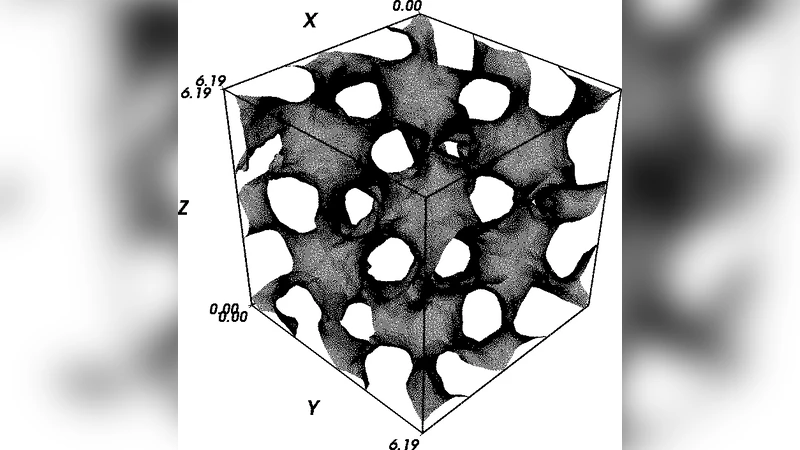
We present a new version of a dynamical spectral model for Large Eddy Simulation based on the Eddy Damped Quasi Normal Markovian approximation \cite{sao,chollet_lesieur}. Three distinct modifications are implemented and tested. On the one hand, whereas in current approaches, a Kolmogorov-like energy spectrum is usually assumed in order to evaluate the nonlocal transfer, in our method the energy spectrum of the subgrid scales adapts itself dynamically to the large-scale resolved spectrum; this first modification allows in particular for a better treatment of transient phases and instabilities, as shown on one specific example. Moreover, the model takes into account the phase relationships of the small-scales, embodied for example in strong localized structures such as vortex filaments. To that effect, phase information is implemented in the treatment of the so-called eddy noise in the closure model. Finally, we also consider the role that helical small scales may play in the evaluation of the transfer of energy and helicity, the two invariants of the primitive equations in the inviscid case; this leads as well to intrinsic variations in the development of helicity spectra. Therefore, our model allows for simulations of flows for a variety of circumstances and a priori at any given Reynolds number. Comparisons with Direct Numerical Simulations of the three-dimensional Navier-Stokes equation are performed on fluids driven by an ABC (Beltrami) flow which is a prototype of fully helical flows. Good agreements are obtained for physical and spectral behavior of the large scales.
💡 Research Summary
The paper introduces a novel Large‑Eddy Simulation (LES) framework built on the Eddy‑Damped Quasi‑Normal Markovian (EDQNM) closure, aiming to improve the representation of sub‑grid‑scale (SGS) dynamics in turbulent flows. Traditional spectral LES models usually assume a fixed Kolmogorov –5/3 energy spectrum for the unresolved scales when evaluating non‑local transfer terms. In contrast, the authors let the SGS energy spectrum evolve dynamically, matching the instantaneous large‑scale resolved spectrum. This adaptive approach enables the model to respond to rapid changes during transient phases, instabilities, or sudden spectral reorganizations, which are poorly captured by static‑spectrum closures.
A second innovation concerns the treatment of “eddy noise.” Conventional closures treat the phase of Fourier modes as random, ignoring coherent structures such as vortex filaments that are characterized by strong phase correlations. The authors embed phase‑information into the eddy‑noise term, thereby preserving the influence of localized, highly organized small‑scale structures on the overall energy transfer. This modification yields a more realistic representation of non‑linear interactions among unresolved modes.
The third and perhaps most original contribution is the explicit inclusion of helicity dynamics. In the inviscid limit, the Navier‑Stokes equations conserve both kinetic energy and kinetic helicity. Existing LES models typically focus on energy alone, relegating helicity to a secondary role or neglecting it entirely. Here, the helicity spectrum is evolved alongside the energy spectrum, and its impact on the transfer of both invariants is incorporated into the EDQNM transfer kernel. This dual‑invariant treatment allows the model to capture helicity‑driven spectral features, such as inverse cascades or helicity‑biased forward transfers, that are especially prominent in fully helical flows.
To validate the methodology, the authors perform direct numerical simulations (DNS) of the three‑dimensional Navier‑Stokes equations forced by an Arnold‑Beltrami‑Childress (ABC) flow, a canonical example of a maximally helical forcing. The DNS data serve as a benchmark for the LES model. Results show that the new LES reproduces the large‑scale kinetic energy spectrum, helicity spectrum, and transfer rates with high fidelity. Notably, during early‑time transients when the flow rapidly reorganizes, the adaptive SGS spectrum captures the steepening and subsequent relaxation of the spectra far better than a fixed‑Kolmogorov model. Moreover, the phase‑aware eddy‑noise term improves the representation of intermittent, filamentary structures, as evidenced by closer agreement in higher‑order statistics and visualizations of vorticity fields.
Overall, the study demonstrates that a dynamically adaptive SGS spectrum, combined with phase‑aware noise modeling and explicit helicity dynamics, can substantially enhance LES accuracy for a broad class of turbulent flows, especially those with strong helicity or rapid spectral evolution. The authors argue that the approach is Reynolds‑number agnostic, offering a pathway to affordable high‑Re simulations without sacrificing essential physics. They also discuss potential extensions, such as incorporating complex boundary conditions, multi‑phase effects, or coupling with wall‑modeling strategies, and suggest that the method could be translated from spectral to physical‑space implementations with appropriate parallelization techniques.
In conclusion, the paper provides a compelling case that moving beyond static spectral assumptions and embracing the full vectorial nature of turbulence—through adaptive spectra, phase coherence, and helicity conservation—yields a more robust and physically faithful LES framework.