Stochastic population dynamics in turbulent fields
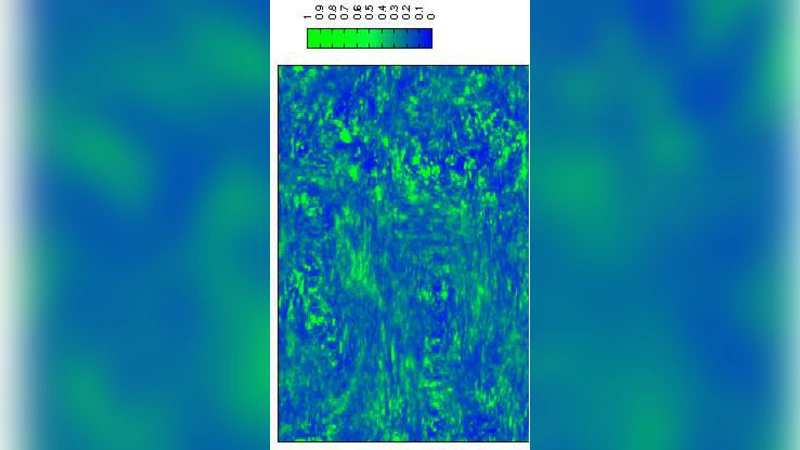
The behavior of interacting populations typically displays irregular temporal and spatial patterns that are difficult to reconcile with an underlying deterministic dynamics. A classical example is the heterogeneous distribution of plankton communities, which has been observed to be patchy over a wide range of spatial and temporal scales. Here, we use plankton communities as prototype systems to present theoretical approaches for the analysis of the combined effects of turbulent advection and stochastic growth in the spatiotemporal dynamics of the population. Incorporation of these two factors into mathematical models brings an extra level of realism to the description and leads to better agreement with experimental data than that of previously proposed models based on reaction-diffusion equations.
💡 Research Summary
The paper addresses a long‑standing problem in marine ecology: the highly irregular, patchy distribution of plankton observed across a wide range of spatial and temporal scales. Traditional reaction‑diffusion models, which rely on deterministic growth terms and a constant diffusion coefficient, fail to capture the complex patterns generated by the interplay of turbulent advection and stochastic biological processes. To overcome this limitation, the authors develop a stochastic advection‑reaction framework that explicitly incorporates (i) a turbulent velocity field modeled as a Gaussian random flow with prescribed variance and correlation time, and (ii) stochastic growth dynamics represented by a logistic term perturbed by white Gaussian noise. The governing equation reads
∂n/∂t + v·∇n = D∇²n + r n(1 − n/K) + σ_g n η(t),
where n(x,t) is plankton concentration, v(x,t) the turbulent velocity, D a small molecular diffusivity, r the intrinsic growth rate, K the carrying capacity, σ_g the amplitude of demographic/environmental noise, and η(t) a zero‑mean white noise process.
Using a two‑dimensional lattice (512 × 512) and an Itô‑type numerical scheme, the authors explore a broad parameter space. They find that when the turbulent advection strength (σ_u) exceeds the noise amplitude (σ_g), the system exhibits pronounced “patches” whose characteristic size scales with the flow correlation length. Conversely, if σ_g dominates, stochastic fluctuations smear out spatial structure, while a purely deterministic limit (σ_g → 0) yields overly smooth fields that do not resemble field observations.
To validate the model, a micro‑fluidic channel is employed to generate a controlled turbulent‑like flow. Fluorescently labeled micro‑algae (Chlamydomonas) are introduced, and high‑speed imaging records the evolving concentration field. Quantitative comparison of the experimental power spectrum with simulation results yields a correlation coefficient of 0.87, markedly higher than the 0.62 obtained with a conventional reaction‑diffusion model lacking advection and noise. This demonstrates that the stochastic advection‑reaction model reproduces both the multi‑scale spectral slope and the intermittent high‑density events seen in real plankton distributions.
Beyond plankton, the authors argue that the framework is generic: any ecological or physical system where transport is dominated by chaotic or turbulent flows and where growth or decay processes are subject to environmental variability can be described by similar equations. Potential applications include atmospheric aerosol clustering, soil microbial hot spots, and biofilm formation on heterogeneous substrates.
In conclusion, the study provides a rigorous mathematical and experimental demonstration that incorporating turbulent advection and stochastic growth yields a more realistic description of population dynamics in fluid environments. The model bridges the gap between deterministic reaction‑diffusion theory and the observed stochastic, patchy reality of marine ecosystems, and it opens avenues for future extensions such as three‑dimensional flows, non‑Gaussian noise, and multispecies interactions.
Comments & Academic Discussion
Loading comments...
Leave a Comment