Textures and non-Abelian vortices in atomic d-wave paired Fermi condensates
We report on fundamental properties of superfluids with d-wave pairing symmetry. We consider neutral atomic Fermi gases in a harmonic trap, the pairing being produced by a Feshbach resonance via a d-wave interaction channel. A Ginzburg-Landau (GL) functional is constructed which is symmetry constrained for five component order parameters (OP). We find OP textures in the cyclic phase and stability conditions for a non-Abelian fractional 1/3-vortex under rotation. It is proposed how to create the intriguing 1/3-vortex experimentally in atomic gases via optical means.
💡 Research Summary
The paper presents a comprehensive theoretical study of superfluidity in neutral atomic Fermi gases when the pairing occurs in the d‑wave channel. Unlike the extensively studied s‑wave and p‑wave superfluids, d‑wave pairing involves a five‑component complex order parameter (OP) corresponding to the ℓ = 2 spherical harmonics (m = −2,…,2). The authors construct a Ginzburg‑Landau (GL) functional that respects the full rotational symmetry SO(3) and the global U(1) gauge symmetry, and they identify the allowed invariant combinations up to fourth order. The quadratic term is not a simple |Δ|² but a tensor that couples the different m‑components, while the quartic term can be expressed in terms of four independent invariants (I₁–I₄). These invariants classify possible symmetry‑broken phases: the cyclic (or “C”) phase, the nematic (or “N”) phase, and analogues of the A‑ and B‑phases known from ^3He.
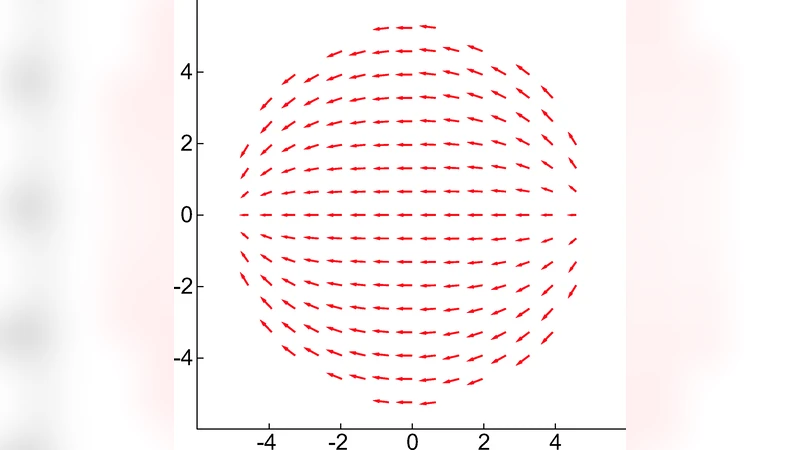
Using numerical minimization of the GL free energy in a three‑dimensional harmonic trap, the authors map out the spatial texture of the cyclic phase. In the trap centre the OP is essentially uniform, whereas near the edges the amplitude decays and the relative phases of the five components develop a non‑trivial winding, forming domain‑like structures dictated by the trap geometry. This baseline texture provides the platform on which rotation can act.
When the trap is set into rotation, a Coriolis term −Ω·L is added to the free energy. The analysis shows that above a critical angular velocity Ω_c a fractional vortex with a winding of 2π/3—i.e., a 1/3‑vortex—becomes energetically favorable. This vortex is non‑Abelian: the core suppresses one of the five components, while the remaining components carry a 2π/3 phase winding. The order‑parameter field around the core undergoes a non‑commuting SU(2) rotation, giving the vortex its non‑Abelian statistics. The stability condition is quantified: the trap radius must exceed the coherence length, and Ω must satisfy Ω ≳ (ħ/2mR²)·(1/3). Under these conditions the 1/3‑vortex remains confined within the cyclic phase and does not decay into conventional integer vortices.
A key contribution of the work is a concrete experimental protocol to create the 1/3‑vortex in ultracold gases. First, a d‑wave Feshbach resonance is accessed by tuning a magnetic field and employing Raman or optical dressing to enhance the d‑wave interaction channel while suppressing s‑ and p‑wave contributions. Second, the atomic cloud is loaded into a rotating optical dipole trap that provides the required angular velocity. Finally, a spatial light modulator or digital micromirror device imprints a 2π/3 phase pattern onto the cloud, effectively seeding the fractional vortex. The authors argue that current technology—high‑resolution optical potentials, precise magnetic‑field control, and fast phase‑mask projection—makes the proposal experimentally realistic.
In summary, the paper establishes a full GL description of d‑wave paired Fermi superfluids, identifies the cyclic phase as the natural ground state in a harmonic trap, and demonstrates that a non‑Abelian 1/3‑vortex can be stabilized under rotation. The proposed optical creation scheme opens a pathway to observe and manipulate non‑Abelian defects in a clean, highly controllable atomic system, with potential implications for topological quantum computation and the study of exotic superfluid phases.
Comments & Academic Discussion
Loading comments...
Leave a Comment