General Polytropic Magnetofluid under Self-Gravity: Voids and Shocks
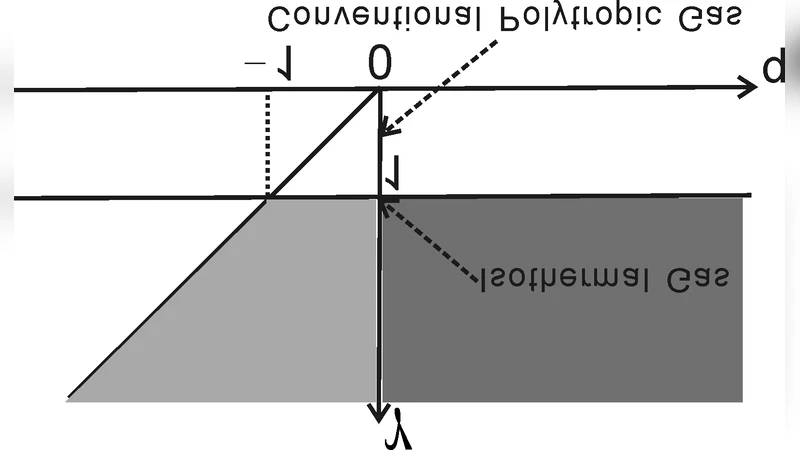
We study the self-similar magnetohydrodynamics (MHD) of a quasi-spherical expanding void (viz. cavity or bubble) in the centre of a self-gravitating gas sphere with a general polytropic equation of state. We show various analytic asymptotic solutions near the void boundary in different parameter regimes and obtain the corresponding void solutions by extensive numerical explorations. We find novel void solutions of zero density on the void boundary. These new void solutions exist only in a general polytropic gas and feature shell-type density profiles. These void solutions, if not encountering the magnetosonic critical curve (MCC), generally approach the asymptotic expansion solution far from the central void with a velocity proportional to radial distance. We identify and examine free-expansion solutions, Einstein-de Sitter expansion solutions, and thermal-expansion solutions in three different parameter regimes. Under certain conditions, void solutions may cross the MCC either smoothly or by MHD shocks, and then merge into asymptotic solutions with finite velocity and density far from the centre. Our general polytropic MHD void solutions provide physical insight for void evolution, and may have astrophysical applications such as massive star collapses and explosions, shell-type supernova remnants and hot bubbles in the interstellar and intergalactic media, and planetary nebulae.
💡 Research Summary
The paper presents a comprehensive study of self‑similar magnetohydrodynamic (MHD) flows in a quasi‑spherical, self‑gravitating gas sphere that contains a central expanding void (or bubble). The authors adopt a general polytropic equation of state, (p=K(t)\rho^{\gamma}), where the polytropic coefficient (K) varies as a power of time, introducing an additional index (q) to describe this temporal scaling. By introducing the similarity variable (\xi = r/t^{n}) (with (n) the similarity exponent) the governing mass, momentum, energy, and magnetic induction equations are reduced to a set of coupled ordinary differential equations (ODEs) in dimensionless form. Three dimensionless parameters – the polytropic index (\gamma), the temporal‑scaling index (q), and the magnetic strength parameter (h) – fully characterize the system.
Two distinct boundary conditions at the void surface are examined. In the “zero‑density” case the density, pressure, and magnetic field all vanish at the void edge, leading to a power‑law behaviour of the form (v\propto \xi) and (\rho\propto \xi^{\beta}) near the boundary. In the “finite‑density” case the density remains non‑zero while pressure and magnetic stresses drop sharply, producing a thin, high‑density shell that surrounds the void. Analytic asymptotic expansions are derived for both cases, and the corresponding eigenvalues (e.g., the proportionality constant (\lambda) in the velocity law) are expressed in terms of (\gamma, q,) and (h).
A central issue is whether a solution can cross the magnetosonic critical curve (MCC), the locus where the flow speed equals the combined sound‑plus‑Alfvén speed. The authors perform a detailed critical‑point analysis, showing that smooth crossing is possible only for a restricted set of parameter combinations that satisfy a regularity condition derived from the ODEs. When this condition is violated, the flow must be connected through an MHD shock. The shock jump conditions are imposed in the self‑similar framework, ensuring conservation of mass, momentum, energy, and magnetic flux across the discontinuity. Numerical integration then yields global solutions that either pass smoothly through the MCC or contain a shock that restores regular behaviour at large radii.
Extensive numerical exploration of the ((\gamma, q, h)) space reveals three families of asymptotic far‑field solutions. (1) Free‑expansion solutions occur when pressure and magnetic forces are negligible; the velocity grows linearly with radius ((v\propto r)) and the density falls as (r^{-2}). (2) Einstein–de Sitter (EDS) expansion solutions correspond to a balance between self‑gravity and pressure, giving a density that decays as (t^{-2}) while the velocity remains proportional to radius. (3) Thermal‑expansion solutions are pressure‑dominated; the flow accelerates with a power‑law time dependence (v\propto t^{\alpha}) (α > 0).
A particularly novel result is the existence of zero‑density void solutions that are unique to the general polytropic case; they do not appear in the classic isothermal ((\gamma=1)) or isobaric limits. These solutions generate a pronounced shell‑type density profile that closely resembles observed structures such as supernova‑remnant shells, planetary‑nebula rims, and hot bubbles in the interstellar or intergalactic medium. The authors discuss how the parameters of their model can be calibrated to match observed expansion speeds (hundreds to thousands of km s⁻¹) and shell thicknesses (a few percent of the bubble radius).
Finally, the paper outlines several astrophysical applications. In massive star core collapse or supernova explosions, a high‑pressure cavity forms at the centre and drives an outward shock that sweeps up surrounding material into a thin shell – precisely the configuration reproduced by the finite‑density void solutions. Similarly, wind‑blown bubbles around OB associations, hot bubbles in galaxy clusters, and the cavities carved by fast winds in planetary nebulae can be interpreted within this framework. By providing a unified, self‑similar description that incorporates gravity, pressure, and magnetic fields, the work extends earlier self‑similar studies and offers a versatile tool for interpreting a wide range of observed void‑like phenomena in astrophysics.
Comments & Academic Discussion
Loading comments...
Leave a Comment