Heuristic and computer calculations for the magnitude of metric spaces
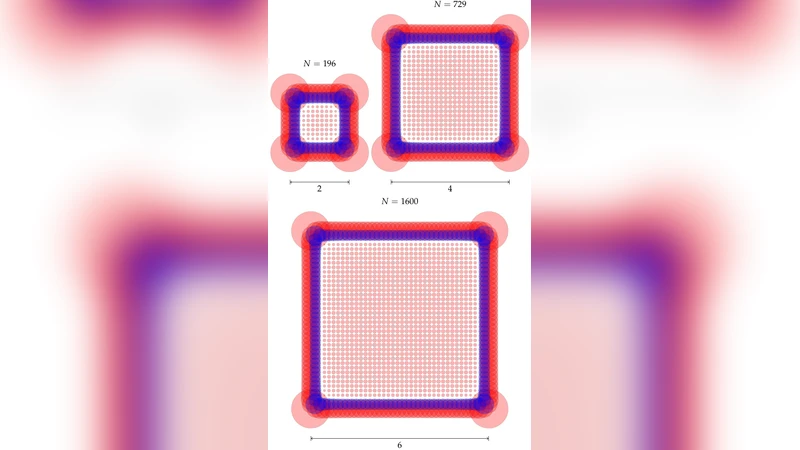
The notion of the magnitude of a compact metric space was considered in arXiv:0908.1582 with Tom Leinster, where the magnitude was calculated for line segments, circles and Cantor sets. In this paper more evidence is presented for a conjectured relationship with a geometric measure theoretic valuation. Firstly, a heuristic is given for deriving this valuation by considering ’large’ subspaces of Euclidean space and, secondly, numerical approximations to the magnitude are calculated for squares, disks, cubes, annuli, tori and Sierpinski gaskets. The valuation is seen to be very close to the magnitude for the convex spaces considered and is seen to be ‘asymptotically’ close for some other spaces.
💡 Research Summary
The paper investigates the magnitude of compact metric spaces, a scalar invariant introduced by Leinster and Willerton that generalizes notions of size beyond classical volume. Building on earlier exact calculations for line segments, circles, and Cantor sets, the authors aim to substantiate a conjectured relationship between magnitude and a geometric‑measure‑theoretic valuation—essentially a linear combination of Minkowski functionals (volume, surface area, curvature terms).
The first contribution is a heuristic derivation. By embedding a compact set (X\subset\mathbb{R}^n) inside a large Euclidean ball (B_R) with radius (R\gg\operatorname{diam}(X)), the distance matrix (A_{ij}=e^{-d(x_i,x_j)}) becomes almost diagonal: off‑diagonal entries decay exponentially with the separation of points. Consequently, the inverse matrix (A^{-1}) is close to the identity, and the sum of all its entries—by definition the magnitude (|X|)—is approximated by a sum of contributions localized near the boundary of (X). Expanding these boundary contributions in powers of the scale parameter yields \
Comments & Academic Discussion
Loading comments...
Leave a Comment