Nonlinear resonances of water waves
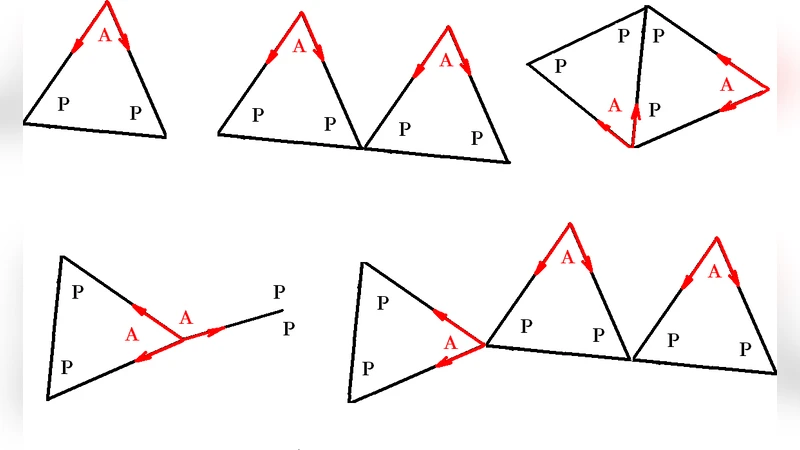
In the last fifteen years, a great progress has been made in the understanding of the nonlinear resonance dynamics of water waves. Notions of scale- and angle-resonances have been introduced, new type of energy cascade due to nonlinear resonances in the gravity water waves have been discovered, conception of a resonance cluster has been much and successful employed, a novel model of laminated wave turbulence has been developed, etc. etc. Two milestones in this area of research have to be mentioned: a) development of the $q$-class method which is effective for computing integer points on the resonance manifolds, and b) construction of the marked planar graphs, instead of classical resonance curves, representing simultaneously all resonance clusters in a finite spectral domain, together with their dynamical systems. Among them, new integrable dynamical systems have been found that can be used for explaining numerical and laboratory results. The aim of this paper is to give a brief overview of our current knowledge about nonlinear resonances among water waves, and formulate three most important open problems at the end.
💡 Research Summary
Over the past fifteen years the field of nonlinear resonant dynamics of water waves has undergone a remarkable transformation. The authors begin by distinguishing two fundamental families of resonances that have become central to modern wave‑turbulence theory: scale resonances, in which the interacting wavevectors differ primarily in magnitude, and angle resonances, in which the magnitudes are comparable but the directions differ. Scale resonances give rise to a previously unrecognized cascade in gravity‑wave regimes, allowing energy to jump across large wavelength gaps and to form a “step‑like” spectrum that deviates from the classic Kolmogorov‑Zakharov power law. Angle resonances, on the other hand, generate dense clusters of modes that share the same wavenumber length but are linked by intricate phase relationships; these clusters are responsible for the formation of long‑lived phase‑locked states observed in laboratory tanks.
A major methodological breakthrough highlighted in the paper is the development of the q‑class method. By partitioning the integer lattice of wavevectors into equivalence classes modulo a prime number q, the authors reduce the search for integer solutions of the resonance conditions
\