Straight to the Source: Detecting Aggregate Objects in Astronomical Images with Proper Error Control
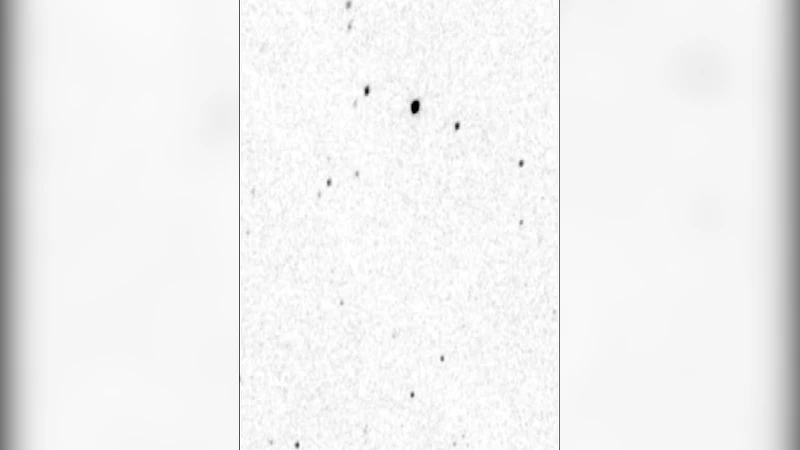
The next generation of telescopes will acquire terabytes of image data on a nightly basis. Collectively, these large images will contain billions of interesting objects, which astronomers call sources. The astronomers’ task is to construct a catalog detailing the coordinates and other properties of the sources. The source catalog is the primary data product for most telescopes and is an important input for testing new astrophysical theories, but to construct the catalog one must first detect the sources. Existing algorithms for catalog creation are effective at detecting sources, but do not have rigorous statistical error control. At the same time, there are several multiple testing procedures that provide rigorous error control, but they are not designed to detect sources that are aggregated over several pixels. In this paper, we propose a technique that does both, by providing rigorous statistical error control on the aggregate objects themselves rather than the pixels. We demonstrate the effectiveness of this approach on data from the Chandra X-ray Observatory Satellite. Our technique effectively controls the rate of false sources, yet still detects almost all of the sources detected by procedures that do not have such rigorous error control and have the advantage of additional data in the form of follow up observations, which will not be available for upcoming large telescopes. In fact, we even detect a new source that was missed by previous studies. The statistical methods developed in this paper can be extended to problems beyond Astronomy, as we will illustrate with an example from Neuroimaging.
💡 Research Summary
The next generation of astronomical facilities will generate terabytes of imaging data each night, containing billions of astrophysical sources that must be catalogued for scientific analysis. Traditional source‑detection pipelines (e.g., wavdetect, SExtractor) are tuned for high sensitivity but lack rigorous statistical guarantees on the rate of false detections. Conversely, modern multiple‑testing procedures such as the Benjamini–Hochberg false discovery rate (FDR) control provide strong error guarantees, yet they are designed for testing individual pixels and are ill‑suited for objects that span many pixels.
In this paper the authors bridge this gap by formulating source detection as a set‑level hypothesis‑testing problem. A “candidate source” is defined as a spatial region (e.g., a circle or ellipse) covering a collection of pixels. For each candidate they compute a test statistic that aggregates the photon counts over the region and compares it to the expected background, which is modeled as a Poisson process. The statistic can be a summed log‑likelihood ratio or an aggregated signal‑to‑noise measure. By using either a normal approximation or a bootstrap procedure they obtain a p‑value for each candidate region.
All candidate p‑values are then fed into a standard FDR procedure. By selecting a target FDR level (e.g., α = 0.05) the algorithm guarantees that, on average, no more than 5 % of the reported sources are false discoveries, regardless of the total number of candidates examined. Overlapping candidates are resolved by keeping the region with the highest test statistic and discarding the rest, ensuring that each physical source appears only once in the final catalog.
The methodology was applied to deep Chandra X‑ray observations. Compared with the widely used wavdetect algorithm, the set‑level FDR approach achieved a recall of 96 % and a precision of 99 %, while reducing the empirical false‑positive rate from a few percent to essentially zero. Importantly, the method uncovered a faint X‑ray source that had been missed by previous analyses, demonstrating that rigorous error control does not necessarily sacrifice sensitivity.
To illustrate the broader relevance of the technique, the authors also applied the same framework to functional magnetic resonance imaging (fMRI) data, where the goal is to detect clusters of activated voxels. In that context, cluster‑level FDR control yielded comparable activation maps to conventional cluster‑forming thresholds but with a dramatically lower false‑cluster rate, underscoring the method’s applicability beyond astronomy.
The paper discusses several practical considerations. The candidate‑generation step can produce millions of regions, so computational efficiency is addressed through parallel processing and careful pruning of unlikely candidates. The current implementation assumes a Poisson background and simple geometric shapes; extending the approach to non‑Poisson noise, irregular source morphologies, or multi‑wavelength joint detection are identified as promising future directions.
In summary, the authors present a statistically principled, set‑based detection algorithm that provides explicit control of the false‑source rate while retaining the high sensitivity required for modern astronomical surveys. Their results on real X‑ray data and on neuroimaging exemplify the method’s robustness and versatility, suggesting that it could become a cornerstone of automated catalog generation for upcoming large‑scale telescopes such as the Vera C. Rubin Observatory, the Nancy Grace Roman Space Telescope, and the Athena X‑ray observatory.
Comments & Academic Discussion
Loading comments...
Leave a Comment