Time-delay and Doppler tests of the Lorentz symmetry of gravity
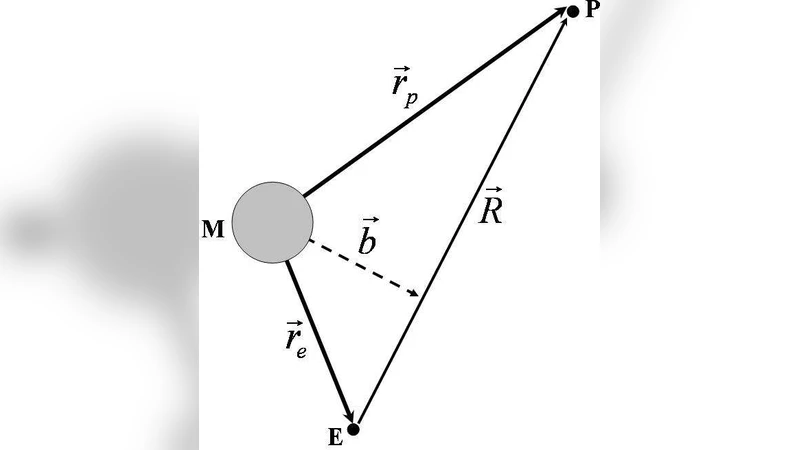
Modifications to the classic time-delay effect and Doppler shift in General Relativity (GR) are studied in the context of the Lorentz-violating Standard-Model Extension (SME). We derive the leading Lorentz-violating corrections to the time-delay and Doppler shift signals, for a light ray passing near a massive body. It is demonstrated that anisotropic coefficients for Lorentz violation control a time-dependent behavior of these signals that is qualitatively different from the conventional case in GR. Estimates of sensitivities to gravity-sector coefficients in the SME are given for current and future experiments, including the recent Cassini solar conjunction experiment.
💡 Research Summary
The paper investigates how the classic Shapiro time‑delay and Doppler shift effects predicted by General Relativity (GR) are altered when the Lorentz‑violating Standard‑Model Extension (SME) is taken into account. Starting from the weak‑field, post‑Newtonian expansion of the metric, the authors introduce the SME gravity‑sector coefficients (\bar s^{\mu\nu}) as small perturbations to the usual GR potentials. They then derive explicit expressions for the light‑travel time and frequency shift of a photon that passes near a massive body, showing that each observable acquires an additional term proportional to (\bar s^{\mu\nu}).
In the time‑delay case the total delay can be written as (\Delta t = \Delta t_{\rm GR} + \Delta t_{\rm LV}). The Lorentz‑violating contribution (\Delta t_{\rm LV}) depends on the orientation of the light path relative to the massive body and contains anisotropic pieces involving (\bar s^{TT}, \bar s^{TJ}) and the purely spatial components (\bar s^{JK}). Consequently the delay is no longer a simple logarithmic function of the impact parameter; it exhibits a characteristic time‑dependent modulation that varies as the Earth–spacecraft geometry changes during a solar conjunction.
For the Doppler shift the frequency variation similarly splits into the standard GR part and a Lorentz‑violating correction (\delta f_{\rm LV}). The latter is proportional to the same set of SME coefficients and introduces a direction‑dependent term that modifies both the gravitational red‑shift and the kinematic Doppler contribution. The authors provide compact formulas that can be directly inserted into data‑analysis pipelines for radio‑tracking experiments.
To assess experimental sensitivity, the authors re‑analyse the Cassini solar conjunction experiment of 2002, which measured the Shapiro delay with an accuracy of a few parts in (10^{5}). By fitting the SME‑modified delay and Doppler models to the Cassini radio‑tracking data they obtain bounds of order (10^{-5}) on (\bar s^{TT}) and (\bar s^{TJ}) and (10^{-4}) on the spatial anisotropies (\bar s^{JK}). These limits are comparable to, but independent from, those derived from lunar‑laser ranging and atom‑interferometer tests.
The paper also projects the reach of upcoming missions. Laser‑ranged interferometers such as LISA, next‑generation gravimetric satellites (e.g., GRACE‑Follow‑On), and dedicated micro‑satellite solar‑conjunction experiments could achieve picosecond‑level timing and sub‑Hz frequency precision. With such performance the SME coefficients could be constrained at the (10^{-7}) level or better. Moreover, combining measurements from multiple conjunctions involving different planets (Mercury, Jupiter) would allow a disentanglement of the various (\bar s^{\mu\nu}) components because each geometry samples a different projection of the anisotropic background.
In summary, the work provides a rigorous theoretical framework for incorporating Lorentz‑violating effects into classic gravitational light‑propagation observables, demonstrates how existing data already place meaningful limits on the SME gravity sector, and outlines realistic pathways for future experiments to improve those limits by several orders of magnitude. This establishes time‑delay and Doppler tracking as powerful, complementary probes of fundamental spacetime symmetries.
Comments & Academic Discussion
Loading comments...
Leave a Comment