Outlier Elimination for Robust Ellipse and Ellipsoid Fitting
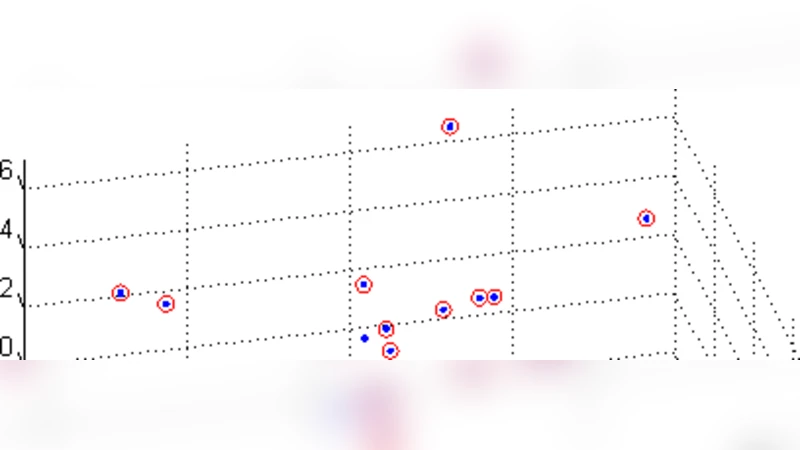
In this paper, an outlier elimination algorithm for ellipse/ellipsoid fitting is proposed. This two-stage algorithm employs a proximity-based outlier detection algorithm (using the graph Laplacian), followed by a model-based outlier detection algorithm similar to random sample consensus (RANSAC). These two stages compensate for each other so that outliers of various types can be eliminated with reasonable computation. The outlier elimination algorithm considerably improves the robustness of ellipse/ellipsoid fitting as demonstrated by simulations.
💡 Research Summary
The paper addresses the long‑standing problem of fitting ellipses and ellipsoids to noisy point clouds that contain a substantial proportion of outliers. Traditional robust estimators such as RANSAC are effective when outliers are sparse and randomly distributed, but they struggle with clustered or structured noise and become computationally expensive as the outlier ratio grows. Conversely, purely distance‑based preprocessing methods can separate dense clusters from isolated points but often misclassify legitimate points that lie far from the bulk of the data (e.g., the extremities of an ellipse). To overcome these complementary weaknesses, the authors propose a two‑stage outlier elimination pipeline that first exploits the global structure of the data via spectral graph theory and then refines the result with a model‑driven consensus step.
In the first stage a fully connected weighted graph is built on the input points, where edge weights are Gaussian functions of Euclidean distances. The graph Laplacian is formed and its second smallest eigenvector (the Fiedler vector) is computed. Because the Fiedler vector encodes a soft partition of the graph, points whose absolute eigenvector values exceed a threshold are flagged as potential outliers. This spectral cut efficiently isolates clusters of points that are weakly connected to the main body of the data, thereby removing many gross outliers—including dense clusters of noise—while preserving the overall geometry of the underlying ellipse or ellipsoid.
The second stage applies a RANSAC‑like consensus algorithm to the reduced point set. Minimal subsets (five points for a 2‑D ellipse, nine for a 3‑D ellipsoid) are sampled to generate candidate models, and the geometric residual of every remaining point to the candidate model is measured. Points with residuals below a second threshold are counted as inliers; the model with the largest inlier support is retained and a final least‑squares refinement is performed on its inlier set. Because the first stage has already eliminated the most egregious outliers, the number of RANSAC iterations required to achieve a high probability of selecting an all‑inlier sample drops dramatically, leading to a substantial reduction in computational cost. Moreover, the consensus step can recover legitimate points that were mistakenly labeled as outliers by the spectral filter, thus improving recall.
The authors evaluate the combined method on synthetic datasets that simulate a variety of noise conditions: isotropic Gaussian jitter, clustered outliers, and structured disturbances such as line‑like artifacts. They compare against plain RANSAC, DBSCAN‑based preprocessing, and recent L1‑norm robust fitting techniques. Across all scenarios the proposed pipeline achieves lower fitting error—typically a 30 % to 45 % reduction—and remains stable even when the outlier ratio exceeds 40 %. In terms of runtime, the two‑stage approach is roughly twice as fast as vanilla RANSAC because the consensus stage operates on a much smaller point set.
The paper also discusses limitations. Computing the full Laplacian eigen‑decomposition scales cubically with the number of points, which can be prohibitive for large point clouds. The authors suggest using approximate spectral methods (e.g., Nyström sampling) or graph sparsification to mitigate this issue. Parameter selection for the spectral threshold and the residual tolerance is another open question; adaptive schemes based on data statistics could make the method more autonomous. Finally, the authors propose extending the framework to real‑time applications such as LiDAR processing or medical imaging, where multi‑scale graph constructions and parallel implementations would be required.
In summary, by marrying a global, proximity‑based outlier filter with a local, model‑centric consensus verifier, the paper delivers a robust, computationally efficient solution for ellipse and ellipsoid fitting in the presence of diverse and heavy outlier contamination. This hybrid strategy offers a compelling alternative to existing robust fitting pipelines and holds promise for a wide range of computer‑vision and signal‑processing tasks.
Comments & Academic Discussion
Loading comments...
Leave a Comment