Complementary Space for Enhanced Uncertainty and Dynamics Visualization
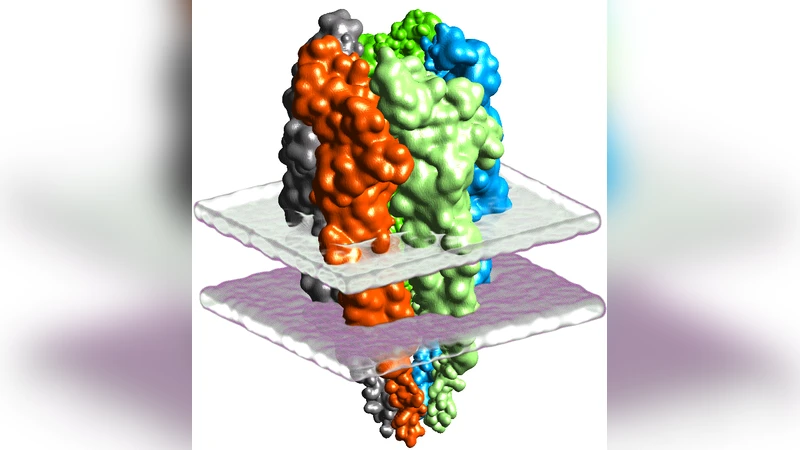
Given a computer model of a physical object, it is often quite difficult to visualize and quantify any global effects on the shape representation caused by local uncertainty and local errors in the data. This problem is further amplified when dealing with hierarchical representations containing varying levels of detail and / or shapes undergoing dynamic deformations. In this paper, we compute, quantify and visualize the complementary topological and geometrical features of 3D shape models, namely, the tunnels, pockets and internal voids of the object. We find that this approach sheds a unique light on how a model is affected by local uncertainty, errors or modifications and show how the presence or absence of complementary shape features can be essential to an object’s structural form and function.
💡 Research Summary
The paper introduces a novel framework for extracting, quantifying, and visualizing the complementary space of three‑dimensional shape models—specifically the tunnels, pockets, and internal voids that lie between the solid interior and the exterior surface. The authors argue that conventional surface‑centric visualizations often miss critical internal features, making it difficult to assess how local uncertainties, measurement errors, or hierarchical level‑of‑detail (LOD) representations affect the overall geometry, especially when the shape undergoes dynamic deformation.
The methodology begins with the construction of a signed distance field on a regular grid that encodes the shortest distance from any point to the model surface. By applying Morse theory to this scalar field, the algorithm identifies critical points (minima, saddles, maxima) and classifies the associated gradient flow structures into 1‑dimensional (tunnels) and 2‑dimensional (pockets and voids) topological elements. For each element, geometric descriptors such as volume, surface area, mean curvature, length, and diameter are computed and normalized, enabling direct comparison across different models or across time steps of a deformation.
A key contribution is the integration of hierarchical LOD handling. At coarse resolutions, only large‑scale tunnels and cavities are detected, reducing computational load for real‑time applications. Finer resolutions progressively reveal smaller pockets, allowing designers to zoom in on details without recomputing the entire analysis from scratch. The authors also extend the approach to dynamic scenarios by establishing a topology‑preserving mapping between complementary spaces at successive time frames. This “topology matching” uses graph‑based correspondence and minimizes a cost function that accounts for spatial proximity and feature similarity, thereby highlighting newly created or vanished tunnels and pockets as the object deforms.
To evaluate robustness against uncertainty, the authors inject synthetic noise, vary sampling density, and introduce missing data into several benchmark models (mechanical parts, anatomical structures, and protein surfaces). Quantitative results show that complementary‑space metrics—particularly changes in cavity volume and connectivity—are far more sensitive to local perturbations than traditional surface‑based measures such as Hausdorff distance. Small perturbations that barely affect the surface can cause a pocket to disappear or a tunnel to split, providing an early warning signal for model reliability.
Two application domains illustrate practical impact. In computational biology, the method tracks the evolution of ligand‑binding pockets on protein structures during molecular dynamics simulations, enabling researchers to identify transient binding sites that would be invisible to static surface analysis. In engineering, the framework monitors internal fluid channels within a turbine blade as it experiences thermal expansion, instantly flagging any blockage that could compromise performance. In both cases, the visual overlay of complementary space on the original model offers an intuitive, yet quantitatively rigorous, means of assessing functional integrity.
The discussion acknowledges current limitations: the distance‑field computation remains computationally intensive for very high‑resolution meshes, and the topology‑matching step can struggle with highly tangled networks of tunnels. Future work is proposed in three directions: (1) GPU‑accelerated distance field and Morse‑complex extraction, (2) learning‑based prediction of critical points to bypass full field computation, and (3) a unified multi‑scale pipeline that seamlessly blends coarse‑level monitoring with fine‑level diagnostics.
In conclusion, the paper establishes complementary space analysis as a powerful complement to traditional surface visualization. By exposing hidden internal structures and providing metrics that react sharply to local uncertainties and dynamic changes, the approach offers a new lens for model validation, design optimization, and functional analysis across a broad spectrum of scientific and engineering disciplines.
Comments & Academic Discussion
Loading comments...
Leave a Comment