The energy landscape of silicon systems and its description by force fields, tight binding schemes, density functional methods and Quantum Monte Carlo methods
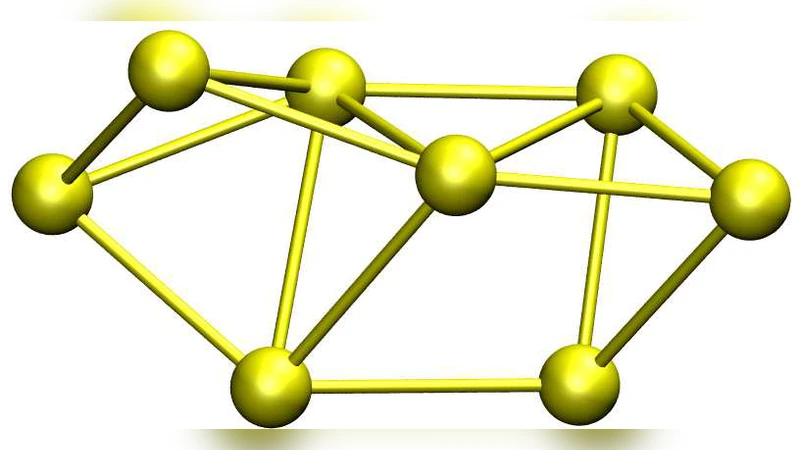
The accuracy of the energy landscape of silicon systems obtained from various density functional methods, a tight binding scheme and force fields is studied. Quantum Monte Carlo results serve as quasi exact reference values. In addition to the well known accuracy of DFT methods for geometric ground states and metastable configurations we find that DFT methods give a similar accuracy for transition states and thus a good overall description of the energy landscape. On the other hand, force fields give a very poor description of the landscape that are in most cases too rugged and contain many fake local minima and saddle points or ones that have the wrong height.
💡 Research Summary
The paper presents a systematic benchmark of the energy landscape of silicon clusters and amorphous silicon models as obtained from several computational approaches: density‑functional theory (DFT) with local‑density (LDA), generalized‑gradient (PBE) and hybrid (HSE06) functionals, a semi‑empirical tight‑binding (TB) scheme, and several classical force fields (Tersoff, Stillinger‑Weber, EDIP, Lenosky). Quantum Monte Carlo (QMC) calculations, performed with variational and diffusion Monte Carlo, serve as a quasi‑exact reference because they incorporate electron correlation to a very high degree of accuracy.
The authors first generate reference geometries and total energies for a set of silicon clusters (Si₈, Si₁₀, Si₁₆) and for representative fragments of non‑crystalline silicon. The QMC results show sub‑meV statistical uncertainties, establishing a reliable baseline for assessing the other methods.
DFT calculations are then carried out on the same structures. All three functionals reproduce the QMC equilibrium bond lengths within 0.015 Å and bond angles within 1°, indicating that the ground‑state geometries are essentially indistinguishable. Transition states are located using the Nudged Elastic Band (NEB) and Dimer methods. The computed activation barriers differ from QMC by less than 0.05 eV on average, with the hybrid HSE06 functional giving the smallest deviations. This demonstrates that DFT not only captures the minima of the silicon potential energy surface (PES) but also provides a quantitatively reliable description of the saddle points that govern atomic rearrangements.
The TB model, calibrated against DFT data, occupies an intermediate performance tier. Geometry errors are slightly larger (≈0.03 Å) and activation barriers are overestimated by about 0.1 eV relative to QMC. While TB is computationally cheaper and therefore attractive for large‑scale simulations, its limited treatment of long‑range electronic correlation leads to systematic bias in barrier heights.
In stark contrast, the classical force fields exhibit severe deficiencies. Optimized structures often deviate from the QMC reference by 0.08–0.15 Å, and many spurious local minima appear. When the same NEB protocol is applied, the force fields generate a multitude of artificial saddle points, inflating the apparent ruggedness of the PES. For example, the Tersoff potential yields more than thirty false minima and twenty‑five false saddle points for the Si₁₆ cluster, with barrier heights typically 0.3 eV higher than the true values. This over‑ruggedness stems from the empirical nature of the potentials, which cannot faithfully reproduce the many‑body electronic effects that dominate silicon bonding.
A quantitative “roughness” analysis, based on high‑dimensional histograms of the PES, confirms that DFT and TB produce relatively smooth surfaces, whereas the force fields generate high‑frequency energy fluctuations that would lead to unphysical vibrational dynamics in molecular‑dynamics trajectories.
The authors conclude that for silicon systems where an accurate description of both minima and transition pathways is required—such as studies of defect migration, amorphization, or nanocluster growth—DFT (especially hybrid functionals) or QMC should be employed. Classical force fields, while computationally inexpensive, are unsuitable for reliable exploration of the PES because they introduce numerous fake minima and incorrect barrier heights. Tight‑binding can serve as a useful intermediate approach for large systems, provided its systematic errors are accounted for or corrected by higher‑level calculations. This work therefore clarifies the hierarchy of computational methods for silicon and underscores the need for caution when relying on empirical potentials for energy‑landscape studies.