Variance Analysis of Randomized Consensus in Switching Directed Networks
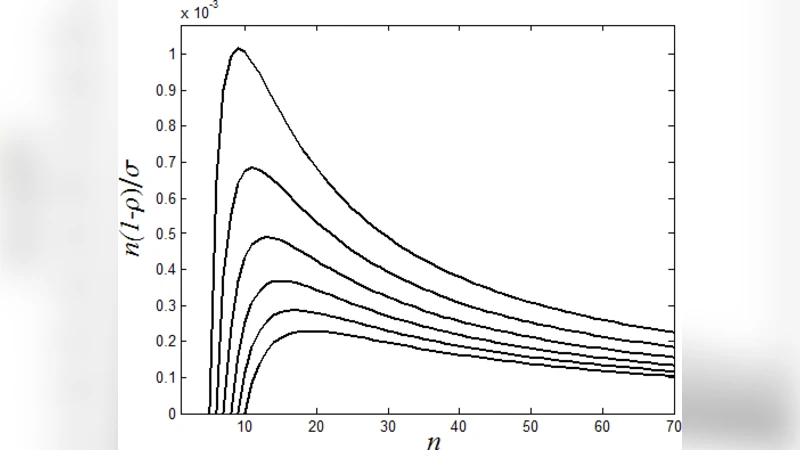
In this paper, we study the asymptotic properties of distributed consensus algorithms over switching directed random networks. More specifically, we focus on consensus algorithms over independent and identically distributed, directed Erdos-Renyi random graphs, where each agent can communicate with any other agent with some exogenously specified probability $p$. While it is well-known that consensus algorithms over Erdos-Renyi random networks result in an asymptotic agreement over the network, an analytical characterization of the distribution of the asymptotic consensus value is still an open question. In this paper, we provide closed-form expressions for the mean and variance of the asymptotic random consensus value, in terms of the size of the network and the probability of communication $p$. We also provide numerical simulations that illustrate our results.
💡 Research Summary
The paper investigates the long‑term statistical behavior of distributed consensus algorithms running on time‑varying directed random networks, specifically on sequences of independent and identically distributed (i.i.d.) directed Erdős‑Rényi (ER) graphs. Each node can communicate with any other node with a fixed exogenous probability p, and at every discrete time step a new directed ER graph is drawn independently. The state update follows the standard linear consensus rule x(t+1)=W(t)x(t), where W(t) is a row‑stochastic matrix derived from the adjacency matrix of the current graph: each node assigns equal weight to its own state and to each out‑neighbor, normalizing by its out‑degree plus one. Because the graphs are directed, W(t) is generally non‑symmetric, yet each W(t) remains a stochastic matrix.
The authors first compute the expectation of the random transition matrix, (\bar{W}=E
Comments & Academic Discussion
Loading comments...
Leave a Comment