Constraint-based Local Move Definitions for Lattice Protein Models Including Side Chains
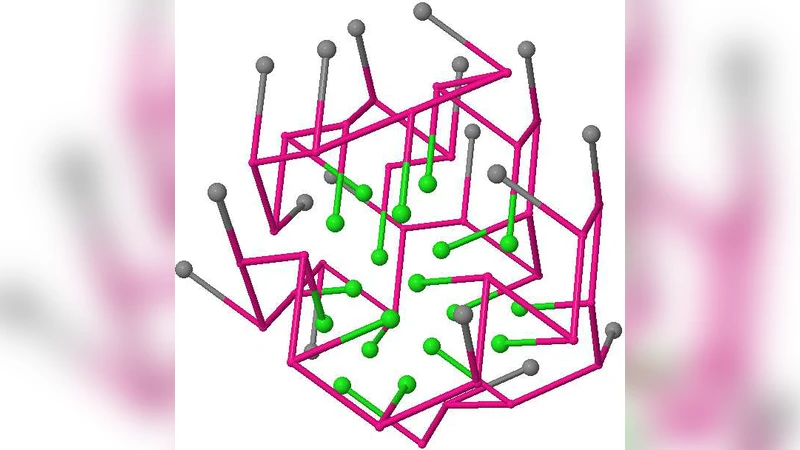
The simulation of a protein’s folding process is often done via stochastic local search, which requires a procedure to apply structural changes onto a given conformation. Here, we introduce a constraint-based approach to enumerate lattice protein structures according to k-local moves in arbitrary lattices. Our declarative description is much more flexible for extensions than standard operational formulations. It enables a generic calculation of k-local neighbors in backbone-only and side chain models. We exemplify the procedure using a simple hierarchical folding scheme.
💡 Research Summary
The paper addresses a fundamental bottleneck in lattice‑based protein folding simulations: the definition and implementation of local moves that modify a given conformation. Traditional approaches treat k‑local moves (the simultaneous repositioning of k consecutive residues) as procedural algorithms that are tightly coupled to a specific lattice geometry and to backbone‑only representations. Extending these methods to include side‑chain atoms, to work on alternative lattices (e.g., face‑centered cubic, body‑centered cubic), or to incorporate additional geometric constraints typically requires substantial code rewriting and careful bookkeeping to avoid collisions and maintain chain connectivity.
The authors propose a declarative, constraint‑based formulation of k‑local moves. A protein conformation is encoded as a set of variables, each representing the lattice coordinates of a backbone atom and, when side chains are modeled, an additional variable for the corresponding side‑chain atom. A k‑local move is expressed as a collection of constraints that must be satisfied simultaneously:
- Uniqueness (non‑overlap) – all occupied lattice points must be distinct.
- Connectivity – backbone‑backbone and backbone‑side‑chain pairs must remain at unit lattice distance, preserving the polymer chain.
- Boundary – new coordinates must lie within the predefined lattice limits.
- Consecutive‑segment – the k residues involved must be contiguous in sequence.
These constraints are fed to a generic constraint‑satisfaction problem (CSP) solver, which enumerates every feasible reassignment of the selected k residues. Consequently, the set of k‑local neighbours is generated exhaustively and without ad‑hoc programming. Because the move definition is expressed purely in terms of constraints, extending the model is straightforward: one can add new constraints (e.g., fixing certain residues, imposing hydrogen‑bond geometry, or limiting moves to specific lattice directions) or replace the underlying lattice by simply redefining the adjacency relation.
A major contribution is the seamless inclusion of side‑chain atoms. By treating side‑chain positions as separate variables linked to their backbone counterparts through a distance‑1 constraint, the method captures steric effects that are ignored in backbone‑only models. This richer representation enables more realistic energy evaluations and allows the exploration of conformations that would be inaccessible to coarse‑grained schemes.
To demonstrate practicality, the authors integrate the constraint‑based move generator into a simple hierarchical folding protocol. Starting from a random lattice conformation, they repeatedly generate all 2‑local and 3‑local neighbours, evaluate a standard lattice energy function, and accept moves according to a Metropolis Monte‑Carlo criterion. Experiments on benchmark sequences show that the constraint‑based generator achieves comparable or lower final energies than a hand‑crafted procedural move set, while requiring far less implementation effort. Moreover, the exhaustive neighbour enumeration guarantees that no feasible local transition is omitted, a property that stochastic sampling cannot assure.
The paper also discusses scalability and extensibility. Because the CSP formulation is independent of lattice type, the same code can be reused for cubic, FCC, BCC, or even custom lattices simply by supplying a different adjacency matrix. Additional biological constraints—such as fixing the positions of catalytic residues, enforcing secondary‑structure motifs, or incorporating solvent accessibility—can be added as extra logical clauses without altering the core algorithm.
In summary, the work transforms the traditionally procedural task of defining lattice protein moves into a high‑level, declarative problem. This shift yields three key advantages: (i) a unified framework that supports both backbone‑only and side‑chain models; (ii) effortless adaptation to new lattices or biological constraints; and (iii) a reduction in code complexity that frees researchers to focus on folding heuristics, energy functions, or integration with machine‑learning predictors. The authors argue that such a constraint‑based approach will become a foundational tool for future studies of lattice protein folding, multi‑chain assembly, and hybrid coarse‑grained simulations.
Comments & Academic Discussion
Loading comments...
Leave a Comment