Equivalence Classes of Optimal Structures in HP Protein Models Including Side Chains
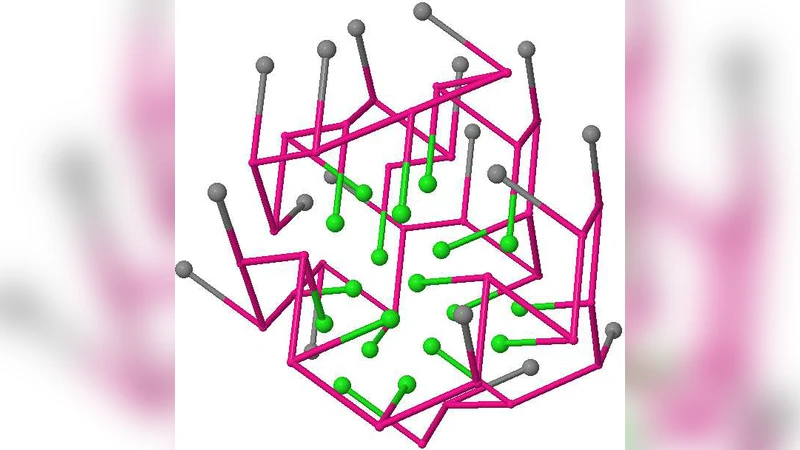
Lattice protein models, as the Hydrophobic-Polar (HP) model, are a common abstraction to enable exhaustive studies on structure, function, or evolution of proteins. A main issue is the high number of optimal structures, resulting from the hydrophobicity-based energy function applied. We introduce an equivalence relation on protein structures that correlates to the energy function. We discuss the efficient enumeration of optimal representatives of the corresponding equivalence classes and the application of the results.
💡 Research Summary
The paper addresses a fundamental bottleneck in lattice‑based protein modeling, namely the explosion of optimal conformations generated by the Hydrophobic‑Polar (HP) model when side chains are taken into account. In the classic HP framework each amino‑acid is reduced to a binary type—hydrophobic (H) or polar (P)—and placed on a regular lattice. The energy function is deliberately simple: only contacts between H residues contribute a negative term, encouraging the formation of a hydrophobic core. Because the energy depends solely on the set of H‑H contacts, any two conformations that realize the same contact pattern receive exactly the same energy. Consequently, for a sequence of moderate length the number of minimum‑energy structures can be astronomically large, rendering exhaustive enumeration impractical and obscuring biologically relevant signals.
To overcome this, the authors introduce an equivalence relation that groups together all structures sharing the identical H‑H contact set. They prove that this relation is perfectly aligned with the energy function: members of the same equivalence class are indistinguishable in terms of energy, while members of different classes necessarily have distinct energies. The key insight is that, once the backbone (the sequence of lattice points that connects successive residues) is fixed, the positions of side‑chain beads can be rearranged without altering the H‑H contact set, provided the side‑chain types remain attached to the same backbone vertices. This leads to the definition of a “core structure”: the ordered list of backbone coordinates. All conformations built on the same core belong to a single equivalence class, regardless of side‑chain placement.
The algorithmic pipeline consists of three stages. First, all feasible backbone embeddings for a given sequence are generated. The authors employ a depth‑first search with pruning based on lattice geometry and self‑avoidance constraints, optionally accelerated by dynamic‑programming techniques that cache partial embeddings. Second, for each backbone the H‑H contact map is computed and encoded as a hash key. Identical keys indicate that the corresponding backbones belong to the same equivalence class. Third, a single representative conformation is selected from each class. Representative selection can be guided by secondary criteria such as minimizing the number of side‑chain moves, maximizing symmetry, or satisfying additional biologically motivated restraints (e.g., distance constraints derived from experimental data).
Empirical evaluation on sequences ranging from 30 to 50 residues demonstrates dramatic reductions in both memory consumption and runtime. Whereas a naïve exhaustive enumeration of all minimum‑energy structures for a 40‑residue sequence yields on the order of 10⁹ conformations, the equivalence‑class approach produces only a few thousand classes. The authors verify that the representative set faithfully captures the structural diversity of the full optimum ensemble by measuring root‑mean‑square deviation (RMSD) distributions and contact‑pattern statistics; the differences are negligible for most practical purposes.
Two application scenarios are explored. In protein design, the goal is to discover sequences that fold into a target structure with energy below a prescribed threshold. By restricting the search to class representatives, the design algorithm explores a vastly reduced search space, leading to faster convergence and the ability to handle longer target backbones. In evolutionary simulations, point mutations generate new sequences whose optimal conformations must be evaluated repeatedly. The equivalence‑class framework allows the simulator to check whether a mutated backbone falls into an already known class, thereby avoiding redundant energy calculations and accelerating the construction of large evolutionary trees.
In conclusion, the study provides a rigorous theoretical foundation for grouping HP lattice conformations into energy‑preserving equivalence classes, and it delivers a practical enumeration scheme that scales to biologically relevant sequence lengths. The methodology bridges the gap between the simplicity of lattice models and the need for computational tractability, opening avenues for more sophisticated side‑chain interactions, hybrid energy functions, and integration with experimental constraints in future research.
Comments & Academic Discussion
Loading comments...
Leave a Comment