A Conversation with Murray Rosenblatt
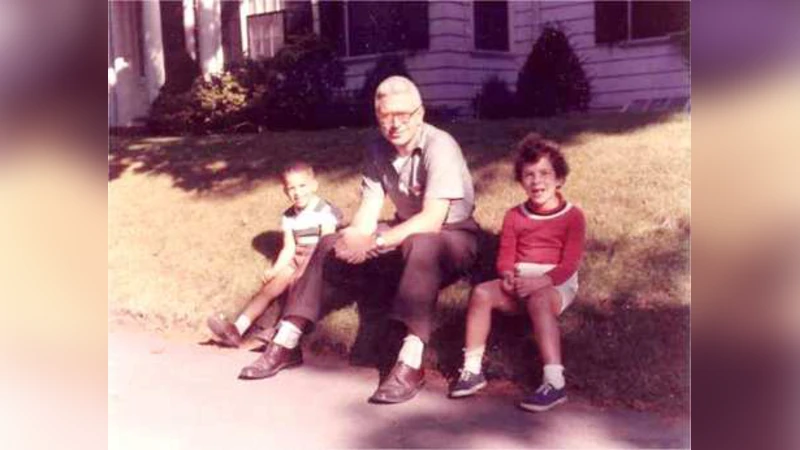
On an exquisite March day in 2006, David Brillinger and Richard Davis sat down with Murray and Ady Rosenblatt at their home in La Jolla, California for an enjoyable day of reminiscences and conversation. Our mentor, Murray Rosenblatt, was born on September 7, 1926 in New York City and attended City College of New York before entering graduate school at Cornell University in 1946. After completing his Ph.D. in 1949 under the direction of the renowned probabilist Mark Kac, the Rosenblatts’ moved to Chicago where Murray became an instructor/assistant professor in the Committee of Statistics at the University of Chicago. Murray’s academic career then took him to the University of Indiana and Brown University before his joining the University of California at San Diego in 1964. Along the way, Murray established himself as one of the most celebrated and leading figures in probability and statistics with particular emphasis on time series and Markov processes. In addition to being a fellow of the Institute of Mathematical Statistics and American Association for the Advancement of Science, he was a Guggenheim fellow (1965–1966, 1971–1972) and was elected to the National Academy of Sciences in 1984. Among his many contributions, Murray conducted seminal work on density estimation, central limit theorems under strong mixing, spectral domain methods and long memory processes. Murray and Ady Rosenblatt were married in 1949 and have two children, Karin and Daniel.
💡 Research Summary
The paper is a transcript of an informal yet richly detailed conversation that took place in March 2006 at the home of Murray and Ady Rosenblatt in La Jolla, California. The interview was conducted by two prominent statisticians, David Brillinger and Richard Davis, who spent the day eliciting memories, anecdotes, and reflections from Murray Rosenblatt, a towering figure in probability and statistics.
The narrative begins with Rosenblatt’s early life. Born on September 7, 1926, in New York City, he grew up in a modest family and attended the City College of New York, where he discovered a talent for mathematics. In 1946 he entered Cornell University for graduate study, where he was mentored by the legendary probabilist Mark Kac. Under Kac’s guidance, Rosenblatt earned his Ph.D. in 1949 with a dissertation that already hinted at his later fascination with dependent stochastic processes. The interview highlights how Kac’s emphasis on rigorous proof techniques and probabilistic intuition shaped Rosenblatt’s research style for the rest of his career.
After completing his doctorate, Rosenblatt accepted a position in the Committee of Statistics at the University of Chicago. The Chicago years were formative: he began to explore the behavior of dependent sequences, eventually formulating the concept of “strong mixing” and proving a central limit theorem (CLT) under these conditions. This work, later published in the early 1950s, provided a powerful tool for dealing with time‑series data that exhibit weak dependence, and it has become a cornerstone of modern ergodic theory, econometrics, and environmental statistics.
Rosenblatt’s career then moved to the University of Indiana and subsequently to Brown University, where he continued to develop his ideas on stochastic processes, non‑parametric estimation, and spectral analysis. In 1964 he was recruited by the University of California, San Diego (UCSD) to help build a new department of statistics. At UCSD he played a pivotal role in shaping the graduate program, supervising numerous Ph.D. students who would later become leaders in probability, time‑series analysis, and applied statistics. The interview underscores his reputation as a generous mentor who emphasized the balance between mathematical rigor and practical relevance.
The discussion turns to Rosenblatt’s most celebrated scientific contributions. First, his 1956 paper introduced what is now called the “Rosenblatt transformation,” a method of converting a multivariate sample into a set of uniform variables via the cumulative distribution function, thereby enabling a simple non‑parametric density estimator. This idea laid the groundwork for later kernel density estimation techniques and continues to influence modern machine‑learning methods that rely on probability integral transforms.
Second, his work on strong mixing conditions and the associated CLT opened the door to asymptotic inference for a broad class of dependent processes. By quantifying the rate at which dependence decays, Rosenblatt showed that many familiar statistical procedures (e.g., confidence intervals for sample means) remain valid even when observations are not independent. This insight has been applied in fields ranging from signal processing to finance, where data often exhibit serial correlation.
Third, Rosenblatt made seminal advances in spectral domain methods for time series. He developed estimators for the spectral density of processes with long memory, demonstrating that a well‑defined spectrum can exist even when autocorrelations decay hyperbolically. His “Rosenblatt process” provided a concrete example of a stationary process with long‑range dependence, a concept that later became central to the analysis of financial volatility and network traffic.
Fourth, his contributions to Markov processes and transition‑probability theory helped formalize the connection between stochastic dynamics and statistical inference. He explored conditions under which transition kernels admit spectral representations, facilitating the design of efficient prediction algorithms for dynamic systems.
Beyond research, Rosenblatt’s professional honors are recounted. He was elected Fellow of the Institute of Mathematical Statistics and of the American Association for the Advancement of Science, received two Guggenheim Fellowships (1965‑66 and 1971‑72), and was elected to the National Academy of Sciences in 1984. These accolades reflect the breadth of his influence across pure probability, applied statistics, and interdisciplinary science.
The interview also reveals Rosenblatt’s personal side. He married Ady in 1949, the same year he completed his doctorate. Together they raised two children, Karin and Daniel, and cultivated a home environment that blended intellectual curiosity with warmth. Anecdotes from the conversation illustrate his modest humor—he likened mathematics to everyday conversation—and his belief that “the best ideas emerge when you can explain them simply to a non‑specialist.” He also emphasized the importance of mentorship, urging younger scholars to maintain “a relentless curiosity coupled with disciplined proof.”
Finally, Rosenblatt reflects on the future of statistics in the era of big data and artificial intelligence. He expresses optimism that the foundational principles he helped establish—non‑parametric estimation, mixing‑based asymptotics, and spectral analysis—will continue to guide the development of new algorithms for high‑dimensional and dependent data. He hopes that upcoming generations will build on his work to create methods that are both theoretically sound and practically impactful.
In sum, the conversation offers a comprehensive portrait of Murray Rosenblatt: a brilliant mathematician, a pioneering researcher in time‑series and stochastic processes, a dedicated teacher, and a family man whose legacy endures through his scientific contributions, his students, and the many statisticians who continue to draw inspiration from his life and work.
Comments & Academic Discussion
Loading comments...
Leave a Comment