Search for Dark Matter with CRESST
The search for direct interactions of dark matter particles remains one of the most pressing challenges of contemporary experimental physics. A variety of different approaches is required to probe the available parameter space and to meet the technological challenges. Here, we review the experimental efforts towards the detection of direct dark matter interactions using scintillating crystals at cryogenic temperatures. We outline the ideas behind these detectors and describe the principles of their operation. Recent developments are summarized and various results from the search for rare processes are presented. In the search for direct dark matter interactions, the CRESST-II experiment delivers competitive limits, with a sensitivity below 5x10^(-7) pb on the coherent WIMP-nucleon cross section.
💡 Research Summary
**
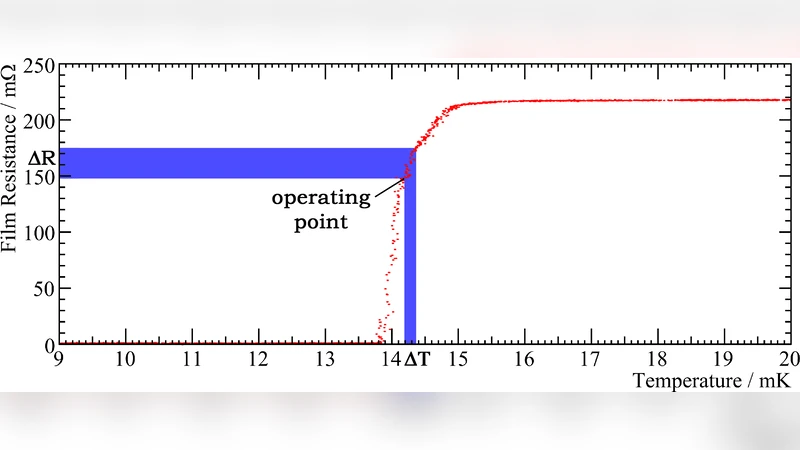
The paper provides a comprehensive review of the CRESST‑II experiment, which searches for direct interactions of dark‑matter particles using scintillating crystals operated at cryogenic temperatures. The detector core is a CaWO₄ crystal that simultaneously emits phonons (lattice vibrations) and scintillation light when a particle deposits energy. Two independent Transition‑Edge Sensors (TES) are bonded to each crystal: one measures the tiny temperature rise caused by the phonon signal, while the other records the amount of scintillation light. Because nuclear recoils (the expected signature of a WIMP) produce far less light than electron recoils (β/γ background), the ratio of light to phonon signal—called the light yield—provides powerful event‑by‑event discrimination.
CRESST‑II employs an array of modules, each containing a ~300 g crystal, achieving a total target mass of several kilograms. The multi‑element composition of CaWO₄ (Ca, O, and heavy W) gives sensitivity to a broad WIMP mass range, from sub‑GeV up to ~10 GeV, while the modular design allows independent read‑out and cross‑checks between detectors. To suppress radioactive backgrounds, the crystals are grown from ultra‑pure material, their surfaces are carefully polished, and the entire experiment is housed in a low‑radioactivity, heavily shielded cryostat. Recent upgrades include the addition of thin optical “iSticks” that absorb surface‑origin light, and a redesign of the TES to reduce heat capacity, lowering the energy threshold to below 30 eV. This ultra‑low threshold is crucial for probing low‑mass WIMPs that deposit only a few tens of electron‑volts.
Data analysis is performed with a Bayesian multi‑parameter fit that simultaneously models signal and background distributions in a high‑dimensional space (time, position, phonon energy, light yield). The posterior probability is used to set 90 % confidence limits on the WIMP‑nucleon cross section. The latest results place limits below 5 × 10⁻⁷ pb for spin‑independent coherent scattering, improving upon previous experiments by one to two orders of magnitude in the 1–10 GeV mass window.
The authors also outline future directions. Scaling up to tens of kilograms of target material, further improving TES energy resolution, and exploring alternative scintillating crystals such as Li₂MoO₄ or NaI are planned. These steps aim to extend sensitivity to even lower cross sections and to test a wider variety of interaction models, including spin‑dependent and electron‑coupled scenarios. In summary, CRESST‑II demonstrates that cryogenic scintillating‑crystal detectors can achieve competitive, and in some regimes superior, limits on dark‑matter interactions, establishing a solid foundation for the next generation of direct‑detection experiments.
Comments & Academic Discussion
Loading comments...
Leave a Comment