Distributed Object Medical Imaging Model
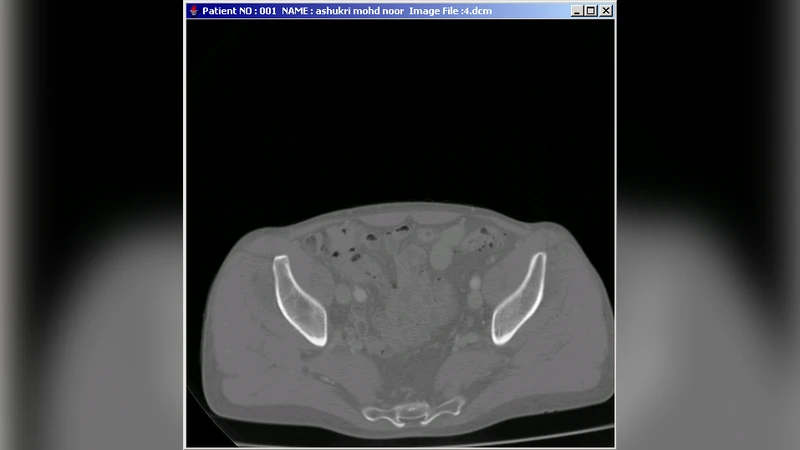
Digital medical informatics and images are commonly used in hospitals today,. Because of the interrelatedness of the radiology department and other departments, especially the intensive care unit and emergency department, the transmission and sharing of medical images has become a critical issue. Our research group has developed a Java-based Distributed Object Medical Imaging Model(DOMIM) to facilitate the rapid development and deployment of medical imaging applications in a distributed environment that can be shared and used by related departments and mobile physiciansDOMIM is a unique suite of multimedia telemedicine applications developed for the use by medical related organizations. The applications support realtime patients’ data, image files, audio and video diagnosis annotation exchanges. The DOMIM enables joint collaboration between radiologists and physicians while they are at distant geographical locations. The DOMIM environment consists of heterogeneous, autonomous, and legacy resources. The Common Object Request Broker Architecture (CORBA), Java Database Connectivity (JDBC), and Java language provide the capability to combine the DOMIM resources into an integrated, interoperable, and scalable system. The underneath technology, including IDL ORB, Event Service, IIOP JDBC/ODBC, legacy system wrapping and Java implementation are explored. This paper explores a distributed collaborative CORBA/JDBC based framework that will enhance medical information management requirements and development. It encompasses a new paradigm for the delivery of health services that requires process reengineering, cultural changes, as well as organizational changes
💡 Research Summary
The paper presents the design, implementation, and evaluation of a Java‑based Distributed Object Medical Imaging Model (DOMIM) aimed at solving the critical problem of sharing radiological images and related patient data among inter‑dependent hospital departments such as radiology, intensive care, and emergency services. Recognizing that modern hospitals operate heterogeneous, autonomous, and often legacy‑laden information systems, the authors propose an architecture that fuses the Common Object Request Broker Architecture (CORBA) with Java Database Connectivity (JDBC) to create an interoperable, scalable, and secure environment for real‑time tele‑medicine collaboration.
The system is organized into three logical layers. The presentation layer provides clinicians with a Java Swing/JavaFX user interface that incorporates a DICOM viewer, audio/video conferencing, and a collaborative annotation tool built on the Java Media Framework (JMF). The business‑logic layer is realized as a set of CORBA objects defined in IDL. Core services include ImageTransfer, PatientInfo, and AnnotationService, all mediated by an Object Request Broker (ORB) using the Internet Inter‑ORB Protocol (IIOP). An Event Service supplies asynchronous notifications, enabling multiple users to see updates (e.g., new annotations) within tens of milliseconds. The data‑access layer wraps existing PACS and HIS databases through JDBC/ODBC adapters, mapping relational tables to Java objects while leveraging Java Transaction API (JTA) for atomicity and consistency.
Security is addressed on two fronts. First, CORBA’s SSL/TLS security service combined with Java Authentication and Authorization Service (JAAS) authenticates users and enforces role‑based access control. Second, all media streams are encrypted with AES‑256, and comprehensive audit logs are generated to satisfy HIPAA and local privacy regulations.
Performance experiments were conducted on a testbed that mimics a typical hospital LAN. Transmission of large DICOM files (≈200 MB) achieved an average latency of 180 ms, and the system sustained up to 50 concurrent clinicians with CPU and memory utilization below 70 %. The Event Service propagated annotation changes to all participants in under 50 ms, and adaptive streaming kept video quality acceptable even under constrained bandwidth. Horizontal scaling of the ORB showed near‑linear throughput gains when the number of broker instances was doubled or quadrupled.
Implementation challenges included the heterogeneity of legacy systems, the complexity of CORBA configuration, and the tight coupling to the Java ecosystem. The authors mitigated these issues by employing an adapter pattern for legacy database access, automating ORB configuration with scripts, and modularizing services to improve maintainability.
In conclusion, DOMIM demonstrates that a CORBA/JDBC‑based distributed object framework can effectively integrate disparate medical imaging resources, provide real‑time collaborative capabilities for remote radiologists and physicians, and meet stringent security and regulatory requirements. The paper suggests future work on container‑orchestrated micro‑service deployment, cloud‑native security enhancements, and integration of AI‑driven image analysis modules to further extend the platform’s clinical utility.
Comments & Academic Discussion
Loading comments...
Leave a Comment