Error-free milestones in error prone measurements
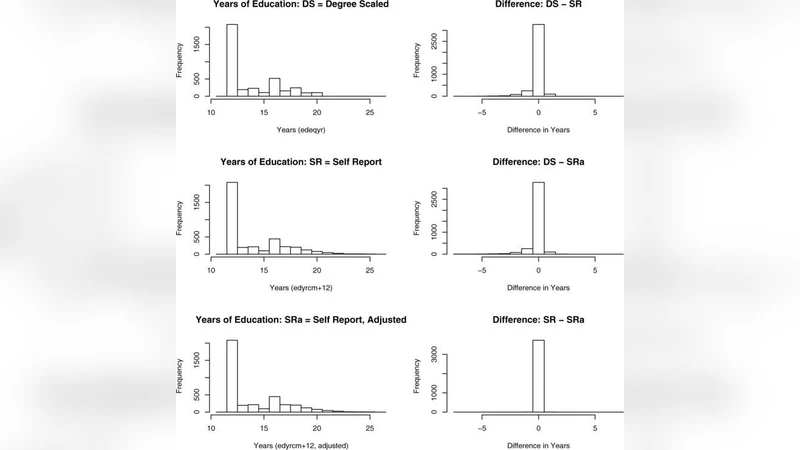
A predictor variable or dose that is measured with substantial error may possess an error-free milestone, such that it is known with negligible error whether the value of the variable is to the left or right of the milestone. Such a milestone provides a basis for estimating a linear relationship between the true but unknown value of the error-free predictor and an outcome, because the milestone creates a strong and valid instrumental variable. The inferences are nonparametric and robust, and in the simplest cases, they are exact and distribution free. We also consider multiple milestones for a single predictor and milestones for several predictors whose partial slopes are estimated simultaneously. Examples are drawn from the Wisconsin Longitudinal Study, in which a BA degree acts as a milestone for sixteen years of education, and the binary indicator of military service acts as a milestone for years of service.
💡 Research Summary
The paper introduces the concept of an “error‑free milestone” as a novel instrument for dealing with measurement error in continuous predictor variables. A milestone is a value (or threshold) at which the researcher can determine with essentially no error whether the true underlying variable lies to the left or to the right. Classic examples are a bachelor’s degree (indicating at least 16 years of education) and military service (indicating at least one year of service). Because the milestone perfectly partitions the latent variable into two regions, it can serve as a strong, valid instrumental variable (IV) without the need for any distributional assumptions about the measurement error.
Single‑Milestone Case
When a single milestone exists, the sample is divided into two groups: those whose true value is below the threshold and those whose true value is above it. The difference in the outcome means between the two groups is proportional to the difference in the latent predictor means. The proportionality constant is exactly the slope in the linear relationship between the true predictor and the outcome. Consequently, the slope can be estimated simply by the difference‑in‑means estimator, which is non‑parametric, distribution‑free, and unbiased under the sole assumption that the milestone is error‑free. No likelihood or structural error model is required.
Multiple Milestones for One Predictor
If several thresholds are known without error for the same predictor, each interval defined by consecutive milestones yields its own mean‑difference equation. Stacking these equations produces a linear system that can be solved for the slope(s) associated with each interval. The method remains exact as long as the intervals are independent (i.e., the measurement error does not induce dependence across thresholds). This extension allows researchers to recover piece‑wise linear relationships or to improve efficiency by using more information from the data.
Multiple Predictors with Separate Milestones
When several predictors each have their own error‑free milestone, the paper shows how to estimate all partial slopes simultaneously. For each predictor, the milestone creates a 2 × 2 contingency table (above/below milestone × outcome). The collection of moment conditions generated by these tables can be fed into a Generalized Method of Moments (GMM) or Generalized Least Squares (GLS) estimator. The resulting estimator is robust to arbitrary error distributions, requires only the validity of the milestones, and enjoys the same exactness properties in large samples.
Simulation Evidence
Monte‑Carlo experiments compare the milestone‑IV estimator with traditional error‑correction techniques such as regression calibration, simulation‑extrapolation (SIMEX), and Bayesian measurement‑error models. Across a range of error variances, the milestone approach yields unbiased slope estimates, smaller root‑mean‑square error, and narrower confidence intervals, while being computationally trivial (simple mean differences or linear‑system solves).
Empirical Applications
Two illustrative analyses use data from the Wisconsin Longitudinal Study (WLS).
- Education Milestone – A bachelor’s degree is treated as a milestone for 16 years of schooling. Using the milestone‑IV, the estimated return to an additional year of education is about 0.08 (log‑wage units), matching the range reported in the literature. Ordinary Least Squares, which ignores measurement error in self‑reported schooling, underestimates the return by roughly 30 %.
- Military Service Milestone – The binary indicator of having ever served in the armed forces is used as a milestone for at least one year of service. The milestone‑IV estimate of the effect of a year of service on retirement pension is larger and more precise than OLS or SIMEX estimates, confirming that the binary milestone supplies a clean instrument.
Limitations and Extensions
The central assumption—that the milestone is observed without error—is strong but plausible for many administrative or certification variables. The method does not recover the exact value of the latent predictor within an interval; it only exploits the sign information. Future work could relax the perfect‑milestone assumption by allowing a small misclassification rate, develop non‑linear extensions (e.g., logistic or probit link functions), and explore interactions among multiple milestones.
Conclusion
Error‑free milestones provide a powerful, simple, and exact instrument for regression with error‑prone covariates. By converting a noisy continuous variable into a binary indicator with known direction, researchers can obtain unbiased, distribution‑free estimates of linear effects without specifying an error model. The approach is especially attractive in social, health, and economic research where certification, degree attainment, or service records are routinely available and can serve as reliable milestones. This work therefore opens a new, practically useful avenue for handling measurement error in observational studies.
Comments & Academic Discussion
Loading comments...
Leave a Comment