On the Interpretation of Delays in Delay Stochastic Simulation of Biological Systems
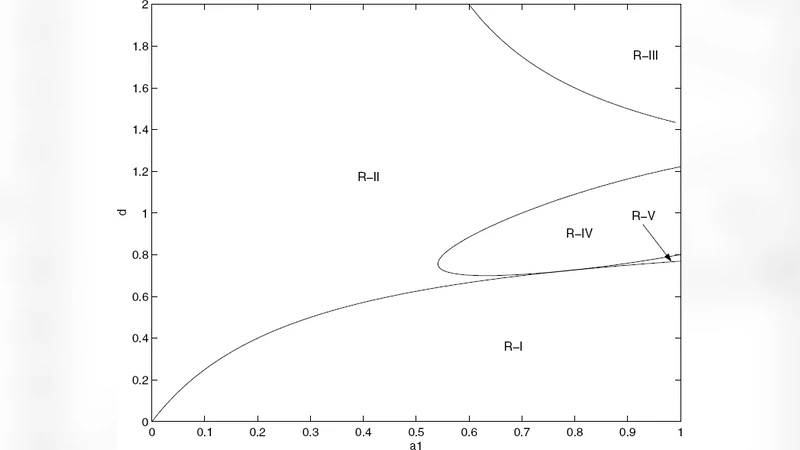
Delays in biological systems may be used to model events for which the underlying dynamics cannot be precisely observed. Mathematical modeling of biological systems with delays is usually based on Delay Differential Equations (DDEs), a kind of differential equations in which the derivative of the unknown function at a certain time is given in terms of the values of the function at previous times. In the literature, delay stochastic simulation algorithms have been proposed. These algorithms follow a “delay as duration” approach, namely they are based on an interpretation of a delay as the elapsing time between the start and the termination of a chemical reaction. This interpretation is not suitable for some classes of biological systems in which species involved in a delayed interaction can be involved at the same time in other interactions. We show on a DDE model of tumor growth that the delay as duration approach for stochastic simulation is not precise, and we propose a simulation algorithm based on a ``purely delayed’’ interpretation of delays which provides better results on the considered model.
💡 Research Summary
The paper addresses a fundamental issue in stochastic simulation of biochemical networks that contain time delays. Traditional deterministic models of delayed biological processes are expressed as delay differential equations (DDEs), where the derivative of a state variable at time t depends on its values at earlier times. When moving from a deterministic DDE framework to a stochastic one, the interpretation of a delay becomes crucial.
Existing “delay‑as‑duration” stochastic simulation algorithms (SSAs) treat a delay as the elapsed time between the start of a reaction and its completion. In this view, once a delayed reaction is triggered, its reactants are immediately removed from the system, and after a fixed waiting period the products are added. This implicitly assumes that reactants cannot participate in any other reaction during the waiting period. While this assumption simplifies implementation, it is biologically unrealistic for many systems where molecules or cells can be involved in multiple processes simultaneously.
To illustrate the inadequacy of the delay‑as‑duration approach, the authors use a well‑known DDE model of tumor growth. In that model, a population of tumor cells experiences a delayed proliferation term that represents the time needed for a cell to complete the cell‑cycle before division. When the authors simulate this model with a conventional delay‑as‑duration SSA, the stochastic trajectories deviate markedly from the deterministic DDE solution: the average cell count is underestimated, the variance is distorted, and the timing of growth spurts is shifted, especially for longer delays. The root cause is that the algorithm removes cells at the moment the division reaction is scheduled, preventing those cells from contributing to other interactions (e.g., death, immune killing) during the delay.
The paper proposes a “purely delayed” interpretation. Under this paradigm, a delayed reaction does not consume its reactants at the moment of scheduling; instead, the reaction is recorded as a future event. Only when the scheduled time arrives are the reactants finally consumed and the products generated. Consequently, reactants remain available for other reactions during the waiting interval, preserving the possibility of concurrent interactions.
Implementation-wise, the authors extend the classic Gillespie SSA with an event‑queue mechanism. When a delayed reaction fires, an event containing the reaction’s stoichiometry and a timestamp (current time + delay) is inserted into a priority queue. The simulation loop proceeds as usual: it selects the next reaction based on propensities, updates time, and checks whether any queued delayed events are due. If so, it processes them before or after the next reaction, depending on the exact timing. This structure retains the exact stochastic timing of non‑delayed reactions while handling delayed events deterministically.
The authors benchmark three methods on the tumor‑growth DDE: (1) a high‑accuracy numerical integration of the DDE (the “ground truth”), (2) the conventional delay‑as‑duration SSA, and (3) the newly introduced purely delayed SSA. Results show that the purely delayed SSA reproduces the deterministic trajectory with a mean absolute error below 5 % across a range of delay lengths, whereas the delay‑as‑duration SSA exhibits errors up to 30 % for long delays. Moreover, the variance of the stochastic trajectories from the purely delayed SSA matches the variance predicted by the DDE’s linear noise approximation, whereas the conventional method underestimates variability.
Performance analysis indicates that the additional overhead of maintaining the event queue is modest. The number of pending delayed events grows linearly with the number of delayed reactions, and priority‑queue operations (insert, pop) are O(log N). In practice, the authors report only a 10–15 % increase in CPU time compared with the standard SSA, while memory consumption remains low because each delayed event stores only a timestamp and a small stoichiometric vector.
Beyond the tumor model, the authors discuss broader applicability. Many biological processes—immune response activation, synaptic transmission, enzymatic cascades, and gene regulation with transcriptional lag—feature reactants that remain chemically active during a latency period. The purely delayed approach naturally accommodates such scenarios, whereas the delay‑as‑duration formulation would artificially block concurrent pathways.
In conclusion, the paper convincingly demonstrates that interpreting delays as pure waiting periods, rather than as durations that consume reactants, yields stochastic simulations that are both more accurate and biologically faithful. The proposed event‑driven algorithm integrates seamlessly with existing Gillespie‑type frameworks, requiring only modest modifications. Future work suggested includes extending the method to stochastic delays drawn from arbitrary distributions, handling multiple overlapping delays, and coupling with spatial diffusion models to capture subcellular compartmentalization. This work thus provides a solid foundation for more realistic stochastic modeling of delayed biochemical systems.
Comments & Academic Discussion
Loading comments...
Leave a Comment