Cosmic Rays from the Knee to the Highest Energies
This review summarizes recent developments in the understanding of high-energy cosmic rays. It focuses on galactic and presumably extragalactic particles in the energy range from the knee (10^15 eV) up to the highest energies observed (>10^20 eV). Emphasis is put on observational results, their interpretation, and the global picture of cosmic rays that has emerged during the last decade.
💡 Research Summary
The review “Cosmic Rays from the Knee to the Highest Energies” provides a comprehensive synthesis of the last decade’s progress in understanding the cosmic‑ray spectrum from the knee (∼10^15 eV) up to the ultra‑high‑energy (UHE) regime (>10^20 eV). It begins with a concise historical overview, emphasizing the four major spectral features: the knee, the second knee, the ankle, and the Greisen‑Zatsepin‑Kuzmin (GZK) cutoff. The authors then detail the experimental techniques that have shaped the field, ranging from ground‑based air‑shower arrays such as KASCADE‑Grande, IceTop, and HAWC, to hybrid fluorescence‑Cherenkov observatories like the Pierre Auger Observatory and the Telescope Array. They discuss how modern reconstruction algorithms, cross‑calibrations, and the recent AugerPrime upgrade have reduced systematic uncertainties in energy scale and mass composition to below 10 %.
In the knee region, the data indicate a rigidity‑dependent steepening: light nuclei (protons and helium) dominate below 10^15 eV, while heavier elements become increasingly important as the knee is crossed. This behavior aligns with supernova‑remnant (SNR) shock acceleration models that predict a maximum energy proportional to charge (E_max≈Z·10^14 eV). However, the spectrum above the knee cannot be explained by SNRs alone, prompting the discussion of additional galactic accelerators (e.g., young massive star clusters, magnetars) and the onset of extragalactic contributions.
The second knee (∼4×10^17 eV) marks a further steepening, interpreted as the termination of the heavy‑nuclei component from the Galaxy. The ankle (∼3×10^18 eV) then appears as a flattening, often viewed as the transition between galactic and extragalactic cosmic rays. Composition measurements from Auger and Telescope Array suggest a gradual lightening of the mass spectrum in this region, supporting models where distant active galactic nuclei (AGN) or radio galaxies inject predominantly protons and light nuclei.
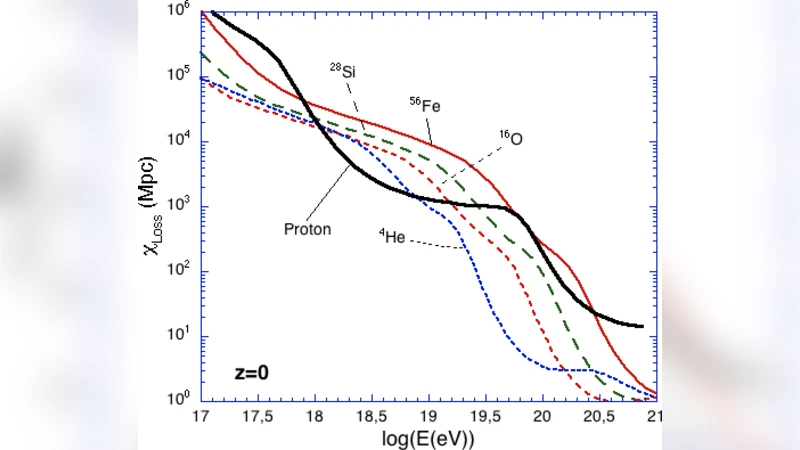
The GZK cutoff, observed clearly above ∼5×10^19 eV, confirms the expected energy loss of ultra‑high‑energy protons and nuclei through photopion production and photodisintegration on the cosmic microwave background. This effect limits the observable horizon to ≲100 Mpc, focusing source searches on nearby extragalactic objects. Anisotropy studies reveal a modest excess of events near the supergalactic plane in the southern sky (Auger) and a distinct “hot spot” in the northern sky (Telescope Array), suggesting that the UHE sky is not isotropic and that multiple nearby sources may contribute.
The review also highlights the emerging multimessenger context: high‑energy neutrinos detected by IceCube, TeV–PeV γ‑rays observed by HAWC and CTA, and future gravitational‑wave observations are increasingly being correlated with cosmic‑ray data to pinpoint acceleration sites. Finally, the authors outline forthcoming facilities—GRAND, POEMMA, and expanded TA×4—that aim to improve composition discrimination, extend exposure, and achieve full‑sky coverage. These next‑generation experiments are expected to resolve the remaining puzzles concerning the exact acceleration mechanisms, the precise energy of the galactic‑extragalactic transition, and the identity of the most energetic cosmic‑ray sources.