Discerning the physical origins of cosmological Gamma-ray bursts based on multiple observational criteria: the cases of z=6.7 GRB 080913, z=8.3 GRB 090423, and some short/hard GRBs
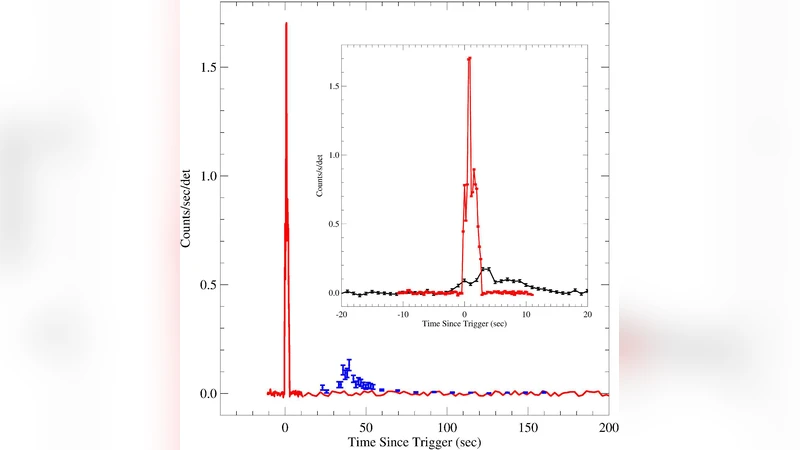
(Abridged) The two high-redshift gamma-ray bursts, GRB 080913 at z=6.7 and GRB 090423 at z=8.3, recently detected by Swift appear as intrinsically short, hard GRBs. They could have been recognized by BATSE as short/hard GRBs should they have occurred at z <= 1. We perform a more thorough investigation on two physically distinct types (Type I/II) of cosmological GRBs and their observational characteristics. We reiterate the definitions of Type I/II GRBs and review the observational criteria and their physical motivations. Contrary to the traditional approach of assigning the physical category based on the gamma-ray properties (duration, hardness, and spectral lag), we take an alternative approach to define the Type I and Type II Gold Samples using several criteria that are more directly related to the GRB progenitors, and study the properties of the two Gold Samples and compare them with the traditional long/soft and short/hard samples. We find that the Type II Gold Sample reasonably tracks the long/soft population, although it includes several intrinsically short (shorter than 1s in the rest frame) GRBs. The Type I Gold Sample only has 5 GRBs, 4 of which are not strictly short but have extended emission. Other short/hard GRBs detected in the Swift era represent the BATSE short/hard sample well, but it is unclear whether all of them belong to Type I. We suggest that some (probably even most) high-luminosity short/hard GRBs instead belong to Type II. We suggest that GRB 080913 and GRB 090423 are more likely Type II events. We re-emphasize the importance of invoking multiple observational criteria, and cautiously propose an operational procedure to infer the physical origin of a given GRB with available multiple observational criteria, with various caveats laid out.
💡 Research Summary
The paper revisits the physical classification of two very high‑redshift gamma‑ray bursts (GRBs) detected by Swift—GRB 080913 at z = 6.7 and GRB 090423 at z = 8.3. In the observer frame these events appear as short (≈8–10 s) and spectrally hard, so that, if they had occurred at low redshift, they would have been identified as classic short/hard BATSE bursts. The authors argue that relying solely on gamma‑ray duration, hardness, and spectral lag is insufficient for assigning a physical origin because these properties are strongly affected by redshift and instrumental selection effects.
They therefore adopt a physically motivated dichotomy: Type I bursts (compact‑object mergers, e.g., neutron‑star–neutron‑star or neutron‑star–black‑hole) and Type II bursts (core‑collapse of massive stars, often associated with broad‑lined Type Ic supernovae). To operationalize this distinction they construct two “Gold Samples” that satisfy a set of criteria directly linked to the progenitor. The Type II Gold Sample requires (1) long intrinsic duration (>2 s), (2) high isotropic‑equivalent energy (E_iso ≈ 10^52–10^54 erg), (3) location within a star‑forming (typically low‑metallicity) host galaxy, (4) evidence for an associated supernova, and (5) relatively high host metallicity. The Type I Gold Sample demands (1) a short initial spike (≤2 s) possibly followed by extended emission, (2) low E_iso (≈10^49–10^51 erg), (3) occurrence in an early‑type or host‑less environment, (4) low metallicity, and (5) lack of a supernova signature.
Applying these criteria to the Swift GRB catalog, the authors find that the Type II Gold Sample tracks the traditional long/soft population very well, although it also contains several intrinsically short bursts (rest‑frame < 1 s). In contrast, the Type I Gold Sample is extremely sparse—only five bursts meet all five conditions, four of which show extended emission and are not strictly short. Most Swift short/hard bursts populate the BATSE short/hard sample, but many of them fail one or more Type I criteria, suggesting that a substantial fraction of high‑luminosity short/hard events may actually be Type II.
For GRB 080913 and GRB 090423 the authors compute rest‑frame durations of ≈0.9 s and ≈0.8 s, respectively, and spectral indices indicative of hard spectra. After correcting for redshift, however, their isotropic‑equivalent energies are ∼10^53 erg, far exceeding typical merger energies and falling squarely within the range expected for collapsar‑type explosions. The X‑ray afterglows are long‑lasting, and while no supernova bump has been detected (owing to the extreme redshift and observational limits), the lack of a host galaxy detection does not preclude a star‑forming, low‑metallicity host. Consequently, the authors place both bursts in the Type II Gold Sample, arguing that they are more plausibly massive‑star collapses observed at early cosmic times.
The paper culminates in a practical, step‑by‑step decision tree for assigning a physical class to any GRB with available data: (1) measure γ‑ray duration and hardness; (2) correct for redshift and compute E_iso; (3) identify the host galaxy type and location of the burst within it; (4) search for supernova signatures in optical/IR follow‑up; (5) assess metallicity and afterglow properties. The authors stress that each step carries uncertainties, and that the Gold Sample criteria should be used as a guide rather than a strict rule.
In summary, the study demonstrates that the traditional duration‑hardness classification does not map cleanly onto the underlying progenitor physics. By integrating multiple observational diagnostics—prompt emission, energetics, host environment, and supernova association—the authors provide a more robust framework for distinguishing Type I (merger) from Type II (collapsar) GRBs. Their analysis suggests that many high‑luminosity short/hard bursts, including the two record‑breaking high‑z events, are likely Type II explosions, with important implications for the use of GRBs as probes of star formation and metal enrichment in the early Universe.