Towards the Intensity Interferometry Stellar Imaging System
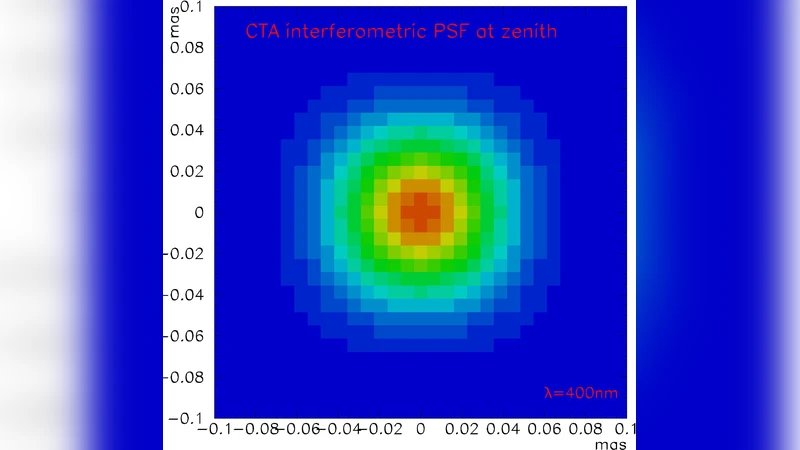
The imminent availability of large arrays of large light collectors deployed to exploit atmospheric Cherenkov radiation for gamma-ray astronomy at more than 100GeV, motivates the growing interest in application of intensity interferometry in astronomy. Indeed, planned arrays numbering up to one hundred telescopes will offer close to 5,000 baselines, ranging from less than 50m to more than 1000m. Recent and continuing signal processing technology developments reinforce this interest. Revisiting Stellar Intensity Interferometry for imaging is well motivated scientifically. It will fill the short wavelength (B/V bands) and high angular resolution (< 0.1mas) gap left open by amplitude interferometers. It would also constitute a first and important step toward exploiting quantum optics for astronomical observations, thus leading the way for future observatories. In this paper we outline science cases, technical approaches and schedule for an intensity interferometer to be constructed and operated in the visible using gamma-ray astronomy Air Cherenkov Telescopes as receivers.
💡 Research Summary
The paper presents a comprehensive roadmap for building a stellar intensity interferometry (II) system that leverages the forthcoming generation of large atmospheric Cherenkov telescope (ACT) arrays, originally designed for very‑high‑energy gamma‑ray astronomy. The authors argue that the sheer number of telescopes (up to one hundred) and the resulting dense network of baselines—approximately 5 000 spanning from less than 50 m to over 1 km—provide an unprecedented uv‑coverage in the visible B/V bands (400–550 nm). This coverage enables sub‑0.1 mas angular resolution, a regime that current amplitude interferometers cannot reach at short wavelengths.
The scientific motivation is threefold. First, the system would directly measure stellar diameters of rapidly rotating stars, luminous blue variables, and supergiants with unprecedented precision, thereby constraining models of stellar structure, rotation, and mass loss. Second, it would deliver high‑precision orbital parameters for binary and multiple systems, improving mass‑radius relationships across the Hertzsprung‑Russell diagram. Third, the technique would allow imaging of surface features such as starspots, convection cells, and circumstellar disks, and even detect minute intensity fluctuations during exoplanet transits, opening a new window on stellar magnetic activity and planetary atmospheres.
From a technical standpoint, the paper details the requirements for photon‑counting detectors, timing electronics, and data processing pipelines. The authors propose using high‑quantum‑efficiency photomultiplier tubes (PMTs) or silicon photomultipliers (SiPMs) with sub‑nanosecond response times, coupled to GHz‑bandwidth digitizers. Correlation of photon streams from any pair of telescopes will be performed in real time using a hybrid architecture: field‑programmable gate arrays (FPGAs) handle the initial cross‑correlation, while graphics processing units (GPUs) execute higher‑level statistical analysis and image reconstruction. To synchronize baselines separated by up to a kilometre, a fiber‑optic distribution network carrying an optical clock reference is envisaged, achieving timing alignment better than 10 ps. The expected raw data rate exceeds several hundred gigabits per second; therefore, lossless compression and a distributed storage cluster are incorporated to enable continuous operation and long‑term archiving.
The implementation plan is staged. In Phase 1, a pilot experiment will be conducted on existing ACT facilities such as VERITAS and H.E.S.S., retrofitting a subset of telescopes with the proposed detectors and correlators. This phase will validate photon‑count rates, timing jitter, and the robustness of the correlation hardware under night‑sky background conditions. Phase 2 will involve the full deployment on the Cherenkov Telescope Array (CTA) core sites, installing dedicated II modules on a substantial fraction of the 100‑telescope array. Over a year‑long campaign, the team will map the uv‑plane, refine baseline weighting strategies, and test image reconstruction algorithms (CLEAN, maximum entropy, and regularized fitting). Phase 3 will transition the system to a science‑operation mode, integrating the II data stream into a public archive, providing calibrated visibility measurements, and supporting community‑driven imaging projects.
The authors also discuss risk mitigation. Detector aging, atmospheric background fluctuations, and radio‑frequency interference are addressed through redundant detector channels, adaptive background subtraction, and shielding of the electronics. They highlight the advantage of intensity interferometry’s insensitivity to atmospheric phase turbulence, which eliminates the need for adaptive optics or delay lines that are mandatory in amplitude interferometers.
In conclusion, the paper argues that repurposing large ACT arrays for intensity interferometry offers a cost‑effective pathway to achieve sub‑milliarcsecond imaging in the visible, filling a critical gap left by existing optical interferometers. By demonstrating the feasibility of high‑speed photon correlation across thousands of baselines, the project would also serve as a testbed for future quantum‑optics‑based astronomical instruments, potentially paving the way for even larger arrays and more sophisticated quantum measurement techniques.
Comments & Academic Discussion
Loading comments...
Leave a Comment