A Conversation with Robert V. Hogg
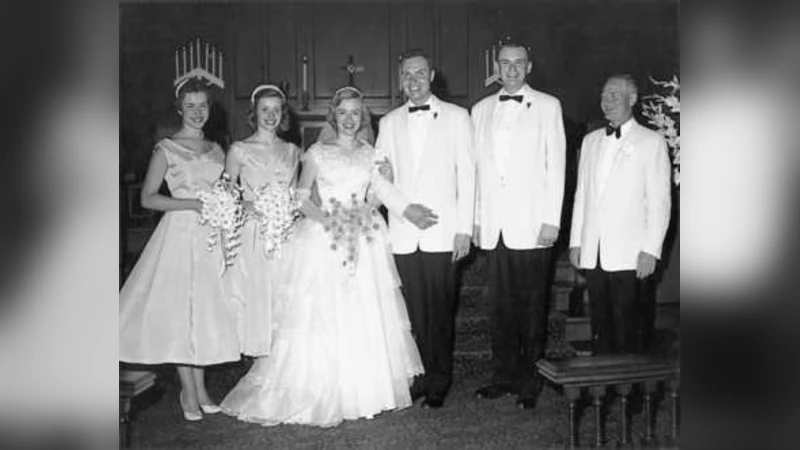
Robert Vincent Hogg was born on November 8, 1924 in Hannibal, Missouri. He earned a Ph.D. in statistics at the University of Iowa in 1950, where his advisor was Allen Craig. Following graduation, he joined the mathematics faculty at the University of Iowa. He was the founding Chair when the Department of Statistics was created at Iowa in 1965 and he served in that capacity for 19 years. At Iowa he also served as Chair of the Quality Management and Productivity Program and the Hanson Chair of Manufacturing Productivity. He became Professor Emeritus in 2001 after 51 years on the Iowa faculty. He is a Fellow of the Institute of Mathematical Statistics and the American Statistical Association plus an Elected Member of the International Statistical Institute. He was President of the American Statistical Association (1988) and chaired two of its winter conferences (1992, 1994). He received the ASA’s Founder’s Award (1991) and the Gottfried Noether Award (2001) for contributions to nonparametric statistics. His publications through 1996 are described in Communications in Statistics–Theory and Methods (1996), 2467–2481. This interview was conducted on April 14, 2004 at the Department of Statistics, University of Florida, Gainesville, Florida, and revised in the summer of 2006.
💡 Research Summary
The interview, conducted on April 14, 2004 at the University of Florida’s Department of Statistics and revised in the summer of 2006, presents a comprehensive portrait of Robert V. Hogg, a towering figure in twentieth‑century statistics. Born on November 8, 1924 in Hannibal, Missouri, Hogg earned his Ph.D. in statistics from the University of Iowa in 1950 under the supervision of Allen Craig. Immediately after graduation he joined the Iowa mathematics faculty, and when the university created a separate Department of Statistics in 1965 he became its founding chair, a position he held for nineteen years.
During his tenure Hogg shaped the department’s curriculum, emphasizing a solid grounding in probability theory, classical inference, and, most importantly, non‑parametric methods. He championed the development of rank‑based tests, generalized Wilcoxon‑type procedures, and multivariate extensions that later became standard tools for robust analysis. His research was summarized in a 1996 article in Communications in Statistics—Theory and Methods (pages 2467‑2481), which systematically presented the theoretical underpinnings, efficiency properties, and practical implementations of non‑parametric techniques.
Beyond pure theory, Hogg served as chair of the Quality Management and Productivity Program and held the Hanson Chair of Manufacturing Productivity, where he applied statistical quality control and experimental design to real‑world manufacturing problems. His work in this arena demonstrated how rigorous statistical methodology could yield measurable improvements in productivity and cost efficiency, bridging the gap between academia and industry.
Hogg’s professional service was equally distinguished. He was elected a Fellow of both the Institute of Mathematical Statistics and the American Statistical Association, and he became an elected member of the International Statistical Institute. In 1988 he served as President of the ASA, during which he promoted statistical education reform, increased support for early‑career researchers, and expanded international collaborations. He also chaired the ASA winter conferences in 1992 and 1994, using those venues to highlight advances in non‑parametric statistics and to foster interdisciplinary dialogue.
His contributions were recognized with the ASA’s Founders Award in 1991 and the Gottfried Noether Award in 2001, the latter specifically honoring his impact on non‑parametric statistics. After a distinguished 51‑year career at Iowa, he retired as Professor Emeritus in 2001 but remained active as a reviewer, speaker, and mentor. Throughout the interview Hogg stresses a guiding philosophy: statistics must remain a tool that connects data to the substantive realities it represents.
In sum, the conversation not only chronicles Hogg’s personal journey—from a small town in Missouri to the helm of a major statistical department—but also illuminates the evolution of non‑parametric statistics as a robust, widely applicable framework. His legacy endures in the curricula he shaped, the methodological innovations he pioneered, and the countless students and practitioners who continue to rely on the rank‑based, distribution‑free techniques he helped to legitimize.