On a constructive characterization of a class of trees related to pairs of disjoint matchings
For a graph consider the pairs of disjoint matchings which union contains as many edges as possible, and define a parameter $\alpha$ which eqauls the cardinality of the largest matching in those pairs. Also, define $\betta$ to be the cardinality of a maximum matching of the graph. We give a constructive characterization of trees which satisfy the $\alpha$=$\betta$ equality. The proof of our main theorem is based on a new decomposition algorithm obtained for trees.
💡 Research Summary
The paper introduces a novel graph‑theoretic parameter α that is defined via pairs of disjoint matchings. For a given graph G, consider all ordered pairs (M₁, M₂) of matchings such that M₁∩M₂ = ∅ and the union M₁∪M₂ contains the maximum possible number of edges among all such pairs. Among these optimal pairs, α(G) is the size of the larger matching (i.e., max{|M₁|,|M₂|}). The classical maximum‑matching size is denoted β(G). By construction α(G) ≤ β(G) for any graph, and equality holds for certain special structures. The authors focus exclusively on trees and give a complete constructive characterization of those trees for which α = β.
The core of the work is a linear‑time decomposition algorithm tailored to trees. The algorithm proceeds by rooting the tree, then processing vertices from the leaves upward. Each vertex receives a label from the set {0,1,2} that encodes the feasibility of embedding two disjoint matchings in the subtree rooted at that vertex: 0 means no matching at all, 1 means exactly one matching can be placed, and 2 means both matchings can coexist without conflict. The label‑propagation rules are derived from the local structure: a parent can be labeled 2 only if all its children are labeled 2 and the incident edge can be assigned to one of the two matchings without creating overlap. The algorithm maintains, for each processed subtree, the exact values of α and β; a key “Preservation Lemma” proves that if α = β holds for a subtree, the property is preserved when the subtree is merged with its parent under the labeling conditions.
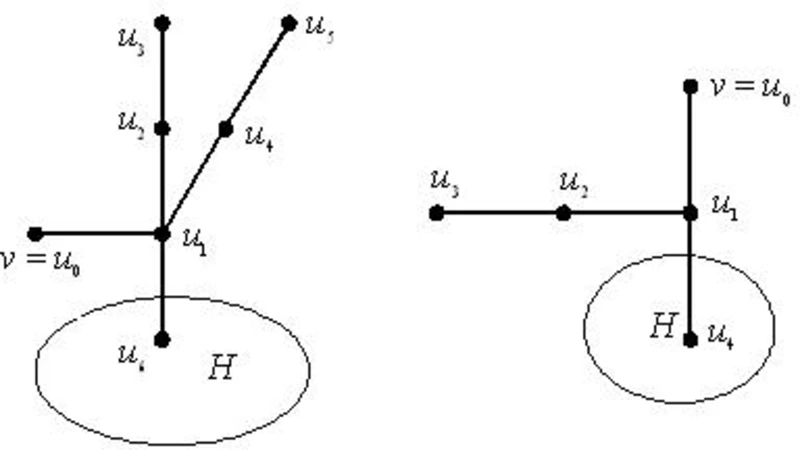
Using this algorithm, the authors prove the main theorem (Theorem 1): a tree T satisfies α(T)=β(T) if and only if T can be generated from the trivial two‑vertex tree by a finite sequence of two elementary extensions:
- Leaf‑attachment – add a new leaf adjacent to any existing vertex.
- Edge‑subdivision – replace an existing edge uv by a path u–w–v, inserting a new vertex w.
The forward direction shows that any tree built by repeatedly applying these operations inevitably yields α = β. The proof proceeds by induction on the number of operations, using the labeling algorithm to verify that each intermediate tree maintains the equality. The reverse direction demonstrates that any tree with α = β can be reduced, via inverse operations (pruning leaves that are not essential and contracting degree‑2 vertices that lie on a unique path), back to the base two‑vertex tree while preserving the equality at each step. This reduction is guided by the labeling information: vertices labeled 2 are “safe” for contraction, while vertices labeled 1 or 0 indicate the presence of a structural obstruction that forces the tree out of the α = β class.
The paper also contains several auxiliary results. A “Conflict‑Avoidance Theorem” guarantees that the two matchings can be arranged so that no edge belongs to both, provided the labeling constraints are satisfied. A “Core‑Vertex Lemma” identifies a unique vertex (if any) that must belong to both matchings in any optimal pair; its existence is equivalent to the tree being a member of the characterized class. The authors give explicit examples illustrating the labeling process on stars, paths, and more complex trees, showing that stars fail the equality (α < β) while paths always satisfy it, consistent with the constructive description.
Beyond the pure combinatorial contribution, the authors discuss potential applications. In network design, guaranteeing two edge‑disjoint spanning structures (e.g., for fault‑tolerant routing) often reduces to finding two disjoint matchings that together cover as many links as possible. Trees that satisfy α = β provide a structural guarantee that such dual coverings can be achieved without sacrificing any edge. Similarly, in parallel processing on tree‑structured data, tasks can be partitioned into two independent sets corresponding to the two matchings; α = β ensures that the workload can be perfectly balanced. The linear‑time algorithm also offers a practical tool for detecting whether a given tree admits this optimal dual‑matching property.
The conclusion acknowledges that the results are limited to acyclic graphs. Extending the constructive characterization to general graphs, especially those containing cycles, remains open. The authors suggest investigating approximation algorithms that minimize the gap β − α, studying the probability that a random tree falls into the α = β class, and exploring connections with other well‑studied graph families such as König‑Egerváry graphs and core graphs.
In summary, the paper delivers a thorough theoretical treatment of a new matching‑based parameter, provides a clean linear‑time decomposition method, and completely characterizes the family of trees where the new parameter coincides with the classical maximum‑matching size. The work bridges a gap between abstract matching theory and concrete algorithmic construction, and it opens several avenues for future research in both combinatorial optimization and applied network design.
Comments & Academic Discussion
Loading comments...
Leave a Comment