Network strategies to understand the aging process and help age-related drug design
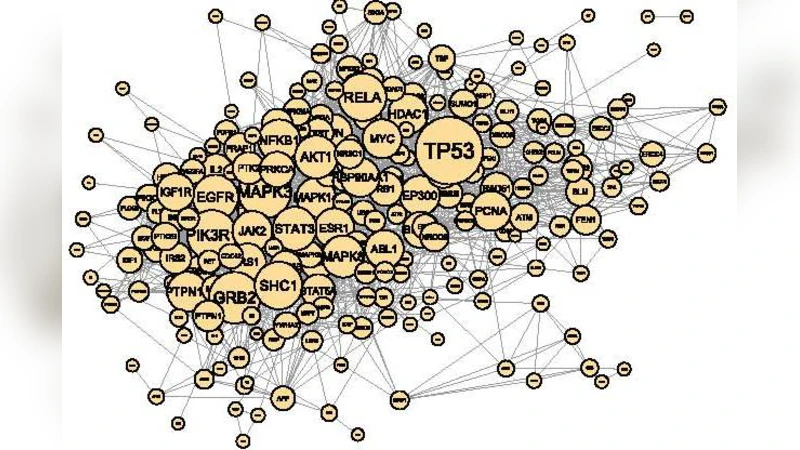
Recent studies have demonstrated that network approaches are highly appropriate tools to understand the extreme complexity of the aging process. The generality of the network concept helps to define and study the aging of technological, social networks and ecosystems, which may give novel concepts to cure age-related diseases. The current review focuses on the role of protein-protein interaction networks (interactomes) in aging. Hubs and inter-modular elements of both interactomes and signaling networks are key regulators of the aging process. Aging induces an increase in the permeability of several cellular compartments, such as the cell nucleus, introducing gross changes in the representation of network structures. The large overlap between aging genes and genes of age-related major diseases makes drugs which aid healthy aging promising candidates for the prevention and treatment of age-related diseases, such as cancer, atherosclerosis, diabetes and neurodegenerative disorders. We also discuss a number of possible research options to further explore the potential of the network concept in this important field, and show that multi-target drugs (representing “magic-buckshots” instead of the traditional “magic bullets”) may become an especially useful class of age-related future drugs.
💡 Research Summary
The review article provides a comprehensive synthesis of how network science can be leveraged to decode the intricate biology of aging and to guide the design of age‑related therapeutics. It begins by highlighting the limitations of reductionist, single‑gene approaches for a phenomenon as multifactorial as aging, and proposes that the universal language of networks—nodes, edges, hubs, and modules—offers a more fitting framework. The authors focus primarily on protein‑protein interaction (PPI) networks, or interactomes, as the structural substrate through which cellular aging manifests.
In the first analytical segment, the paper describes “hubs” as highly connected proteins that are disproportionately involved in essential processes such as DNA repair, proteostasis, and cell‑cycle regulation. Empirical loss‑of‑function studies demonstrate that removal of hub proteins dramatically reduces network robustness and accelerates the appearance of canonical senescence markers (e.g., p16^INK4a, SA‑β‑gal). This underscores hubs as critical control points whose integrity is essential for maintaining youthful cellular function.
The second segment shifts attention to inter‑modular connectors, termed “bridges.” These proteins link otherwise distinct functional modules, thereby conferring flexibility to signal transduction pathways. During aging, bridge proteins exhibit pronounced expression changes; many of them participate in inflammation, mitochondrial metabolism, and autophagy. Perturbation of bridges leads to modular isolation, diminishing the cell’s capacity to coordinate stress responses and further promoting age‑associated dysfunction.
A third major theme is the age‑related alteration of subcellular compartment permeability, especially the nuclear envelope. Increased nuclear leakiness allows cytoplasmic proteins and RNAs to infiltrate the nucleus, reshaping the nuclear interactome. This “network rewiring” reduces modularity while increasing overall connectivity, eroding the system’s resilience and facilitating the widespread transcriptional dysregulation observed in senescent cells.
The authors then present a quantitative comparison between the “aging gene” set (e.g., from the GenAge database) and gene lists associated with major age‑related diseases such as cancer, atherosclerosis, type‑2 diabetes, and neurodegenerative disorders. The overlap reaches 30‑40 %, indicating that many genes implicated in longevity also drive pathological processes. Consequently, interventions that target aging pathways have the potential to act as broad‑spectrum prophylactics against multiple chronic diseases.
From a pharmacological perspective, the review critiques the classic “magic‑bullet” paradigm, which seeks highly selective ligands for single targets. Instead, it advocates for “magic‑buckshot” or multi‑target drugs that simultaneously modulate hubs and bridges, thereby restoring network stability. The authors cite rapamycin, an mTOR inhibitor, as a proof‑of‑concept: it influences several aging‑related pathways and extends lifespan across species. They also discuss natural polyphenols and other pleiotropic compounds, suggesting that computational systems‑biology pipelines can predict optimal combinations of targets and refine multi‑target scaffolds.
Finally, the paper outlines future research avenues. It proposes the use of network entropy and other topological metrics to quantify the “age” of a cellular network, dynamic simulations to test intervention scenarios, and machine‑learning models that integrate genomics, proteomics, and metabolomics for personalized drug design. By marrying high‑throughput omics with rigorous network theory, the authors argue that we can move beyond descriptive aging biology toward actionable, network‑guided therapeutics capable of promoting healthy longevity and mitigating age‑related disease burden.
Comments & Academic Discussion
Loading comments...
Leave a Comment