Eternal Inflation, Bubble Collisions, and the Disintegration of the Persistence of Memory
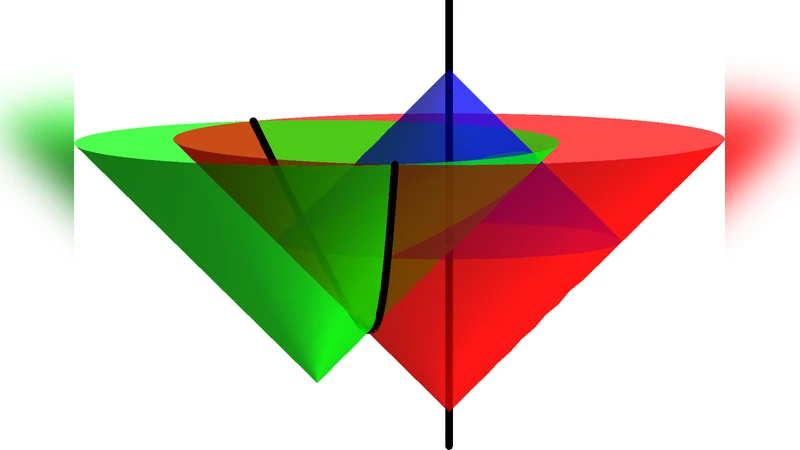
We compute the probability distribution for bubble collisions in an inflating false vacuum which decays by bubble nucleation. Our analysis generalizes previous work of Guth, Garriga, and Vilenkin to the case of general cosmological evolution inside the bubble, and takes into account the dynamics of the domain walls that form between the colliding bubbles. We find that incorporating these effects changes the results dramatically: the total expected number of bubble collisions in the past lightcone of a typical observer is N ~ \gamma V_f / V_i, where \gamma is the fastest decay rate of the false vacuum, V_f is its vacuum energy, and V_i is the vacuum energy during inflation inside the bubble. This number can be large in realistic models without tuning. In addition, we calculate the angular position and size distribution of the collisions on the cosmic microwave background sky, and demonstrate that the number of bubbles of observable angular size is N_{LS} \sim \sqrt{\Omega_k} N, where \Omega_k is the curvature contribution to the total density at the time of observation. The distribution is almost exactly isotropic.
💡 Research Summary
The paper presents a comprehensive calculation of the probability distribution for bubble collisions in a false‑vacuum that decays by nucleation, extending the earlier work of Guth, Garriga, and Vilenkin to include realistic cosmological evolution inside the bubble and the dynamics of the domain walls that form when bubbles collide. The authors begin by criticizing the original treatment, which assumed a simple de Sitter interior with a constant Hubble rate and ignored the subsequent reheating, radiation‑dominated, and matter‑dominated phases that cause the interior vacuum energy (V_i) to evolve in time. By inserting a full Friedmann‑Lemaître‑Robertson‑Walker (FLRW) description of the interior, they obtain a time‑dependent Hubble parameter (H(t)) and a decreasing effective vacuum energy (V_i(t)).
Next, they model the thin domain wall that separates two colliding bubbles. Using the thin‑wall approximation, they write down the wall’s action, derive its equation of motion, and show that the wall’s acceleration is driven by the vacuum‑energy difference (\Delta V = V_f - V_i). When the wall moves at relativistic speeds (close to the speed of light) the collision region is highly Lorentz‑contracted, which dramatically reduces the angular size of the imprint on the sky.
The central result of the paper is an analytic expression for the expected number of collisions that lie within the past light‑cone of a typical observer: \
Comments & Academic Discussion
Loading comments...
Leave a Comment