The Quiver of Projectives in Hereditary Categories with Serre Duality
Let k be an algebraically closed field and A a k-linear hereditary category satisfying Serre duality with no infinite radicals between the preprojective objects. If A is generated by the preprojective objects, then we show that A is derived equivalen…
Authors: Carl Fredrik Berg, Adam-Christiaan van Roosmalen
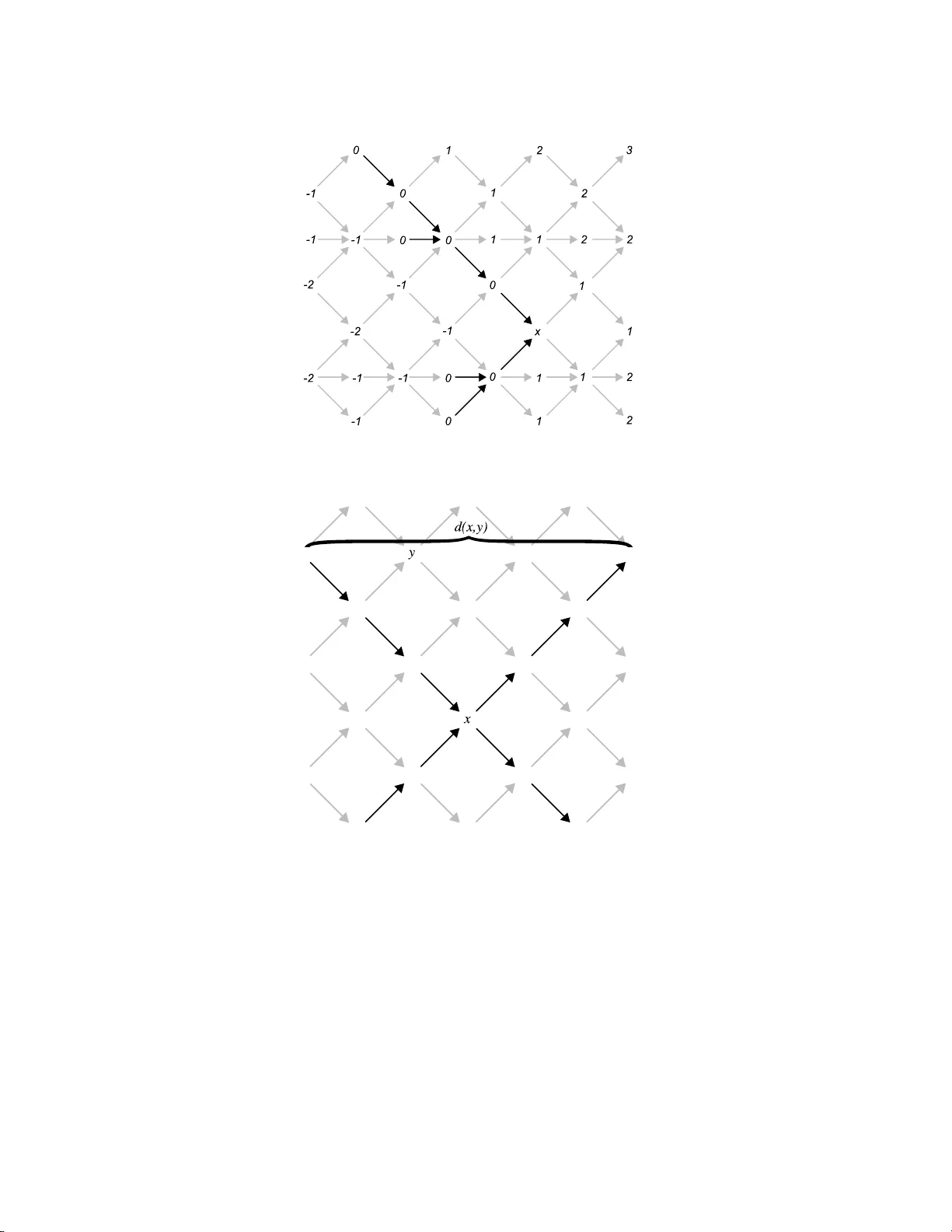
THE QUIVER OF PR OJECTIVES IN HEREDIT AR Y CA TEGORIES WITH SERRE DUALIT Y CARL FREDRIK BERG AND ADAM-CHRISTIAAN V AN ROOSMALEN Abstract. Let k be an algebraically closed field and A a k -linear hereditary cat egory satisfying Serre dualit y with no infinite radicals b etw een the prepro jective ob jects. If A is generate d b y the prepro jectiv e ob jects, then we sho w that A is derived equiv alen t to r ep k Q for a so called str ongly lo c al ly finit e quiv er Q . T o this end, w e in troduce li gh t cone distances and round trip distances on quiv ers which wi ll b e used to inv estigate sections in stable translation quivers of the f orm Z Q . Contents 1. Int ro duction 1 2. Preliminarie s 4 2.1. Quivers 4 2.2. Stable tra nslation quivers 4 3. Light Co ne a nd Round T r ip Distance 5 3.1. Right ligh t co ne distances 5 3.2. Round T rip Distances 7 3.3. Round T rip Distance Spheres for Q uivers 8 4. Existence of Stro ngly Lo cally Finite Sections 9 5. Application to Hereditary Categor ies with Ser re Duality 11 5.1. Definitions 11 5.2. Sectional paths 12 5.3. Representations of strongly lo cally finite q uivers 14 5.4. Derived Equiv alences 14 References 15 1. Intr oduction With a q uiver Q we may asso c iate a stable trans la tion quiver Z Q as follows: the vertices a r e given by ( n, x ) wher e n ∈ Z and x ∈ Q . The num b er o f arrows ( i, x ) → ( j, y ) is equa l to the nu mber of arr ows x → y in Q if i = j , equal to the num b er of arr ows y → x if j = i + 1, and equal to zero otherwise. On the vertices of Z Q , we may define a translatio n τ : Z Q → Z Q by τ ( n, x ) = ( n − 1 , x ). T his is an automo rphism of Z Q that makes Z Q a stable translation quiver. Non-isomor phic quivers Q and Q ′ may give rise to iso morphic sta ble translation quivers Z Q and Z Q ′ . W e define a se c tion of Z Q as a full sub quiver Q ′ of Z Q such that the embedding Q ′ → Z Q e x tends to an isomo rphism Z Q ′ → Z Q o f stable tra ns lation quivers. In this pa per , we will inv estiga te for whic h quivers Q the stable translation quiv er Z Q admits a str ongly lo c al ly finite sectio n Q ′ , i.e. every vertex of Q ′ has finitely many neighbors and Q ′ is without sub quivers of the form · → · → · · · or · · · → · → · Before stating our main result, we will need a definition. Let Q b e a q uiver. F or t wo vertices x, y ∈ Q we define the ro u nd trip distanc e d ( x, y ) as the least num b er of a rrows that have to b e trav er sed in the oppo site direction on an unor iented path fro m x to y a nd back to x . If Q do es not have or iented cy c le s, then for all x, y , z ∈ Q (1) d ( x, y ) ≥ 0 and d ( x, y ) = 0 ⇐ ⇒ x = y , 1 2 CARL FREDRIK BERG AND ADAM-CHRISTIAAN V AN R OOS MALEN · ? ? · ? ? · ? ? x ? ? · ? ? · ? ? · · ? ? . . · ? ? - - · ? ? + + x ? ? · ? ? · ? ? · Figure 1. A quiver satisfying the equiv alent conditions of Theorem 1.1 (left) and one that do es not (right) (2) d ( x, y ) = d ( y , x ), (3) d ( x, z ) ≤ d ( x, y ) + d ( y , z ) such that d defines a dista nce on the vertices of Q (Prop os ition 3 .6 in the text). T o the r ound trip distance, we may asso ciate r ound trip distanc e spher es a s follows S ( x, n ) = { y ∈ Q | d ( x, y ) = n } . W e may now formulate our main theorem (Theor em 4.4 in the text). Theorem 1.1. L et Q b e a c onne cte d qu iver, then the fol lowing ar e e quivalent. • The quiver Q has no oriente d cycles, and for a c ertain x ∈ Q (or e quivalently: f or al l x ∈ Q ) the r ound t rip distanc e spher es S Q ( x, n ) ar e fin ite, for al l n ∈ N . • Ther e ar e only finitely many p aths in Z Q b etwe en two vertic es. • The tr anslation quiver Z Q has a str ongly lo c al ly finite se ction. As an example, we see that the left quiver in Figure 1 sa tisfies the first c ondition of the previous theorem, while in the quiver o n the right hand s ide the round trip dista nce sphere S Q ( x, 1) has infinitely ma ny vertices. Our ma in r e a son to inv estig ate this problem has been a question by Reiten a nd V an den Bergh in [3]. In that a rticle, Reiten and V an den Ber gh classified a ll k -linear no etherian ab elian hereditary Ext-finite catego ries with Ser re duality . O ne type o f such categ ories, c ha racterized by being generated by prepro jectives, was constructed by formally inv erting a rig ht Serre functor in the ca tegory re p k Q of finitely presented representations of a certain quiver Q . Reiten a nd V a n den Ber g h s ug gest ano ther cons tr uction o f these ca teg ories, and a shor ter pro o f of their c la ssification, based on the ans wer to the fo llowing question. Let A be an her editary no etherian catego ry with Serr e duality , and let Q b e the full sub quiver of the Auslander-Reiten quiver of A spanned by the is omorphism classes of the indecomp o sable pro jectives. Do es Z Q have a stro ngly lo cally finite section? Since Reiten a nd V an den Ber gh note ([3, Lemma I I.3.1]) that for the quivers Q under con- sideration there ar e only finitely many pa ths b etw een t wo vertices in Z Q , our Theor em 1 .1 gives a p ositive a nswer. F ollowing the ideas o f Reiten and V an den Berg h, we obtain an a lternative wa y of co nstructing the no ether ian categ o ries g enerated by pr e pro jectives (Ringel a lready gave an alternative w ay of constructing suc h catego ries using ray quivers in [4]). Theorem 1.2. L et A b e a no etherian k -line ar ab elian Ext-finite her e ditary c ate gory with Serr e duality. Ass u me A is gener ate d by the pr epr oje ctive obje cts, then A is derive d e quivalent to rep Q ′ wher e Q ′ is str ongly lo c al ly finite. A slightly mo re general re sult, not in volving the no e therian condition, is given by Theorem 5 .3. Let A b e a hereditary category with Serr e duality . The following theor em (Corolla ry 5.5 in the text) c haracter iz es all quivers which o ccur a s a sub quiver of the Auslander-Reiten quiver of THE QUIVER OF PROJECTIVES IN HEREDIT AR Y CA TEGORIES WITH SERRE DUALITY 3 Figure 2. Light cones and light cone dista nc e in Z A ∞ ∞ A gener ated by indecompo sable pro jectiv es (called the qu iver of pr oje ctives ). This complements a result from [3] where all such q uivers that ca n a rise when A is no etheria n were characterized as being sta r quivers. Theorem 1. 3 . L et Q b e a quiver. Ther e is an ab elian her e ditary c ate gory with Serr e duality having Q as its quiver of pr oje ctives if and only if Q satisfies the e quivalent c onditions of The or em 1.1. The pr o of of Theorem 1 .1 is a co ns tructive one. Let Q b e a quiver. In Z Q we define the right light c one centered on a vertex x ∈ Z Q as the set of a ll vertices y such that there is an oriented path from x to y but not to τ y . Dually , we define the left light c one c e n tered o n x as the set of all vertices y such that there is an or ien ted path from y to x , but not to τ x . Let y ∈ Z Q suc h that τ − n y lies on the right light c one c e n tered on x , then w e will say that the right light c one distanc e d • ( x, y ) is n . Note that d • ( x, y ) may be ne g ative, and is not sy mmetric. Fixing an x , the rig ht light cone distance d • ( x, y ) determines which o b ject w e ta ke fro m the τ -orbit of y (see for exa mple Figur e 2). In P rop osition 4.2 we show that in order for a full subq uiver Q ′ of Z Q to b e a s e ction, it suffices that Q ′ meets every τ -o rbit of Z Q at least o nce, and that for every t wo vertices x, y ∈ Q ′ bo th d • ( x, y ) and d • ( y , x ) are p ositive. Gra phically , these la st conditions mean that y lies “in betw een” the left and right light co ne s centered on x (as is for example the case in Fig ure 2). Another useful prop erty of the r ight light cone distance is that one may see whether a certain section is stro ngly lo cally finite or not (Pr op osition 4 .1). Thu s for the quiver Q , we pick any vertex x ∈ Z Q and co nsider the left and right light cones centered o n x . In every τ -or bit, we cho ose a vertex “in the middle” betw een the left and right light cone centered on x (as is illustrated in Figur e 7 ). Using prop erties of d • we may then show that the constructed sub quiver of Z Q is a str ongly lo cally finite section, completing the pro of of Theorem 1 .1. Ac kno wledgment The autho r s would like to thank Idun Reiten and Sverre Smalø for many useful discussio ns and helpful ideas. W e thank Michel V an den Bergh fo r his c omment s on an earlier version o f the pap er. The second a uthor also gratefully ackno wle dg es the ho s pitality and suppo rt of the Max-Planck-Institut f¨ ur Mathematik in Bonn and the Nor wegian Univ ersity of Science and T ec hnolog y . 4 CARL FREDRIK BERG AND ADAM-CHRISTIAAN V AN R OOS MALEN 2. Preliminaries 2.1. Quiv e rs . A quiver Q is a 2-tuple ( Q 0 , Q 1 ) of sets where the element s of Q 0 are the vertices, and Q 1 consists of arrows b etw een those vertices. W e will often write x ∈ Q for a vertex x , when we mea n x ∈ Q 0 . An (oriente d) p ath b etw een t wo vertices x, y ∈ Q is a sequence x = x 0 , x 1 , . . . , x n − 1 , x n = y such that there is a n arr ow x i → x i +1 , for all i ∈ { 0 , 1 , . . . n − 1 } . An (or ien ted) cycle is a nontrivial path fr om a vertex to itself. W e define unoriente d p aths in an ob vious wa y . While w e will often abbr eviate “oriented paths” to “paths” , in order to av oid confusion w e will not abbrevia te “unor ien ted paths” to “paths” . If there is an arr ow x → y be tween tw o vertices, we say x is a neighb or of y and vice versa. If every vertex of Q has only finitely many neighbo rs, we say Q is lo c al ly finite . If Q do es not contain a s ubquiver o f the form · → · → · · · or · · · → · → · (called r ays and c or ays , resp ectively), we will say Q is p ath finite . A connected, lo c a lly finite a nd pa th finite quiver has b een called str ongly lo c al ly finite in [3]. Hence a quiver Q is s trongly lo cally finite if and only if all indeco mpo sable pro jectiv es and injectiv es representations hav e finite length. 2.2. Stable translation quivers. A stable tr anslation quiver is a q uiver T = ( T 0 , T 1 ) to gether with a bijection τ : T 0 − → T 0 , such that for all vertices x, y ∈ T 0 the nu mber of arr ows fro m y to x is equal to the num b er of arr ows from τ x to y . With a quiver Q we will a sso ciate a stable translation quiver Z Q as the quiver with vertices Z Q 0 = { ( n, x ) | n ∈ Z , x ∈ Q 0 } and arrows as follows: the n um be r o f arrows ( i, x ) → ( j, y ) is equal to the n um ber of a rrows x → y in Q if i = j , to the num b er of ar rows y → x if j = i + 1, and zero otherwise. The trans la tion is given by τ : ( i, x ) 7→ ( i − 1 , x ). It is easy to see that Z Q is lo cally finite or co n tains no oriented cycles if and only if Q is lo cally finite o r contains no o riented cycles, res pectively . A se ction Q o f the stable transla tion quiver Z Q is a co nnected full conv ex sub quiver that meets each τ -orbit of Z Q exa c tly once. Th us Q ′ ⊆ Z Q is a sectio n if and only if the canonical injection may be lifted to a n isomorphism Z Q ′ ∼ = Z Q of stable tr anslation quivers. An equiv alent formulation is given by [3]: a subquiver Q ′ of the sta ble transla tion quiver Z Q is a section if and only if Q ′ meets e very τ -orbit of Z Q exa ctly once, and if x ∈ Q ′ and x → z is an arrow in Z Q then either z ∈ Q ′ or τ z ∈ Q ′ , and when z → x is an arr ow in Z Q then either z ∈ Q ′ or τ − 1 z ∈ Q ′ . A se ctional p ath in a stable translation quiver is an or ien ted path A 0 → A 1 → · · · → A n such that A i 6 = τ A i +2 , for all i ∈ { 0 , . . . , n − 2 } . W e will mostly b e interested in stable translation quivers of the form Z Q where there will only be a finite num b er of pa ths b et ween t wo vertices. T he following pr op osition gives some eq uiv alent formulations. Prop ositio n 2.1. L et Q b e a c onne cte d quiver. The fol lowing statements ar e e quivalent. (1) The qu iver Q is lo c al ly finite and ther e ar e only finitely many se ctional p aths b etwe en any two vertic es of Z Q . (2) Ther e ar e only finitely many (p ossibly non-se ctional) p aths b etwe en any two vertic es in Z Q . (3) F o r every vertex x ∈ Z Q ther e ar e only finitely many p aths fr om x to τ − n x in Z Q for al l n ∈ N . (4) Ther e is a vertex x ∈ Z Q such that ther e ar e only finitely many p aths fr om x to τ − n x in Z Q for al l n ∈ N . Pr o of. (1 ⇒ 2) Seeking a co nt radiction to the assumptions in (1), w e will assume we may cho ose x and y such that there ar e infinitely many paths from x to y . Without los s o f generality , we may assume x has co or dinates (0 , v x ) a nd y has co ordina tes ( n, v y ), whe r e v x and v y are vertices in Q a nd n ≥ 0. Since there ar e finitely many sectional paths fro m x to y , a n infinite num b er of the paths b etw een x and y must be non-sectional. If x 6 = τ y then we may turn a no n-sectional THE QUIVER OF PROJECTIVES IN HEREDIT AR Y CA TEGORIES WITH SERRE DUALITY 5 path into a no n-trivial path fr om x to τ y by r eplacing a part A i − 2 → τ A i +1 → A i → A i +1 → A i +2 by A i − 2 → τ A i +1 → τ A i +2 . Since the paths from x to y hav e finite length and Q is lo cally finite, only finitely man y different paths w ill b e tur ned into the same one by this pro cedure, thus ther e are infinitely many paths fro m x to τ y . Repe a ting this pro ces s shows that we either have infinitely many paths from x to τ n +1 y or infinitely many pa ths fr o m x to τ − x . The co ordinates of τ n +1 y ar e ( − 1 , v y ), and as such there ma y b e no paths fro m x = (0 , v x ) to τ n +1 y . Therefore a ssume there ar e infinitely many pa ths from x to τ − x . Since Q is lo c a lly finite, there may only b e a finite num b er of paths from x to τ − x of length 2 . All pa ths from x to τ − x not of length 2 are se c tio nal, since o therwise we may turn them into paths fr o m x to x b y replacing a part A i − 2 → τ A i +1 → A i → A i +1 → A i +2 by A i − 2 → τ A i +1 → τ A i +2 , as befor e. Such a path from x to x is necessarily sectio nal. By concatenating this cycle with itself, we obtain a n infinite num b er of sectional paths from x to x , a contradiction. Hence we know there are infinitely ma n y sectional pa ths fr o m x to τ − x , a contradiction to the assumption in (1). (2 ⇒ 1 ) There is a finite n um be r of paths b etw ee n x and τ − 1 x s uch that Q is lo cally finite. The claim ab out sectional pa ths is trivial. (2 ⇒ 3 ) T rivia l. (3 ⇒ 4 ) T rivia l. (4 ⇒ 2 ) Seeking a contradiction, assume there are infinitely many paths from a vertex y to a vertex z of Z Q . Since Q is connected, there is a path from x to τ n y for an n ∈ Z . F or the same reason there is a path from τ n z to τ m x for a n m ∈ Z . Co mpo sition g ives a path fr o m x to τ m x , hence m ∈ − N . Since there are infinitely many paths from y to z , comp o sition gives infinitely many paths from x to τ m x , a contradiction to the a ssumption in (4). 3. Light Cone and R ound Trip Dist ance In this section, we will introduce some to ols that will help us to find and discuss sections in stable tra nslation quivers of the fo rm Z Q . 3.1. Right light cone distances. Let Q be a quiver. In Z Q we define the (right) light c one centered on a vertex x ∈ Z Q as the set of a ll vertices y such that there is a path from x to y but not to τ y . It is clea r that the right light cone intersects a τ -orbit in at most o ne vertex. If Q (and hence Z Q ) is connected, then the right lig ht co ne intersects each τ -orbit in exa ctly one v ertex. Let y ∈ Z Q . If τ − n y lies on the right light cone centered on x , then w e will say that the right light c one distanc e d • ( x, y ) is n . If no such n exists, we define d • ( x, y ) = ∞ . If Q (and hence Z Q ) is connected then the r ight lig ht cone distance d • ( x, y ) is finite for a ll vertices x, y ∈ Z Q . The following lemma is o b vious. Lemma 3.1 . F or al l x, y ∈ Z Q , we have d • ( x, τ n y ) = d • ( x, y ) + n . Note tha t d • ( x, y ) may b e nega tive, and that the function d • is not symmetric. The following lemma shows the right light co ne distance satisfies the triang le inequality . Lemma 3.2 . F or al l vertic es x, y , z ∈ Z Q we have d • ( x, z ) ≤ d • ( x, y ) + d • ( y , z ) Pr o of. Assume d • ( x, y ) = n and d • ( y , z ) = m , th us there are paths from x to τ − n y a nd from τ − n y to τ − n − m z . Co mpos ition gives a path from x to τ − n − m z , hence d • ( x, z ) ≤ n + m . If either d • ( x, y ) or d • ( y , z ) is infinite, then the inequality is trivial. There is a natura l embedding ǫ : Q ֒ → Z Q induced by the map ǫ ( x ) = (0 , x ). Let x and y b e vertices of Q , then we define the right light c one distanc e d • Q ( x, y ) b etw een x a nd y as the distance d • ((0 , x ) , (0 , y )). 6 CARL FREDRIK BERG AND ADAM-CHRISTIAAN V AN R OOS MALEN P S f r a g r e p la c e m e n t s x Figure 3. A stable tra nslation quiver with the (rig h t) light co ne centered o n x and the corre s po nding right light co ne distances An equiv alent wa y to describ e d • Q ( x, y ) intrinsically o n Q is as the minimal num b er o f arr ows trav er sed in the opp osite dire c tio n over all unoriented paths fro m x to y . Prop ositio n 3. 3. L et Q b e a c onne cte d quiver, then d • Q defines a hemimetric on Q , i.e. for al l x, y , z ∈ Q we have (1) d • Q ( x, y ) ≥ 0 , (2) d • Q ( x, x ) = 0 , (3) d • Q ( x, z ) ≥ d • Q ( x, y ) + d • Q ( y , z ) . If furthermor e Q do es not have oriente d cycles, then we may str engthen (2) to (2’) ( d • Q ( x, y ) = 0 and d • Q ( y , x ) = 0 ) ⇐ ⇒ x = y . Pr o of. This fo llows directly from the definition of d • Q and Lemma 3.2. Prop ositio n 3.4. If x → y is an arr ow in Z Q for a qu iver Q , then d • ( x, y ) = 0 or d • ( x, y ) = − 1 . F urthermor e Q has no oriente d cycles if and only d • ( x, y ) = 0 for al l arr ows x → y . Pr o of. By the definition of d • ( x, y ), and since there is a path fro m x to y , we hav e d • ( x, y ) ≤ 0 . F ro m the arr ow x → y we easily obtain an arrow τ 2 y → τ x . A pa th x → τ n y for n ≥ 2 would pro duce a path fr o m x to τ x by co ncatenation with a pa th from τ n y to τ 2 y and the arrow from τ 2 y to τ x . F ro m the definition o f Z Q w e see such a path do es not o ccur , hence d • ( x, y ) ≥ − 1. This shows d • ( x, y ) = 0 or d • ( x, y ) = − 1. If d • ( x, y ) = − 1, then there is a path from x to τ y . The arr ow x → y yields an arrow τ y → x and we obtain a cycle in Z Q . This implies ther e is a cyc le in Q as well. Finally , assume Q admits a cycle, a nd let x → y b e an a rrow o ccur ring in this cycle. This implies there is also an ar row y → τ − 1 x . Since there is a path fro m y to x , we k now d • ( y , x ) ≤ 0 , and hence d • ( y , τ − 1 x ) ≤ − 1 in Z Q . Example 3.5. Let Q = ˜ A 1 with cyc lic orientation, and let x, y ∈ Z Q as follows • O O O O O O ' ' P P P P P P • ' ' O O O O O O O O O O O O O y O O O O O O ' ' P P P P P P • · · · · · · • G G 7 7 o o o o o o o o o o o o o x G G n n n n n n 7 7 o o o o o o • H H 7 7 o o o o o o o o o o o o o • G G Then d • ( x, y ) = − 1. In addition to the right light cone dis ta nce one may also define a left light cone and a left light cone distance d • : Z Q × Z Q → Z ∪ {∞} dua lly (see Figure 4), but since d • ( x, y ) = d • ( y , x ), the left light co ne distance is es sentially sup erfluous . THE QUIVER OF PROJECTIVES IN HEREDIT AR Y CA TEGORIES WITH SERRE DUALITY 7 P S f r a g r e p la c e m e n t s x Figure 4. A stable tr anslation quiver with the left light cone centered on x and the co rresp onding left light cone distances Figure 5. Light cones and round trip distance in Z A ∞ ∞ 3.2. Round T rip Distances. F or t wo vertices x, y ∈ Z Q , w e define the r ound t rip distanc e d ( x, y ) a s d ( x, y ) = d • ( x, y ) + d • ( y , x ) . It is a n immediate co nsequence of the definition that d ( x, y ) is the least integer n such that there is a path in Z Q fro m x to τ − n x that contains exactly o ne vertex from the τ -orbit of y , namely τ − d • ( x,y ) y . Let x and y b e vertices o f Q , then we define the r ound trip distanc e d Q ( x, y ) be t ween x and y as the distance d ((0 , x ) , (0 , y )) wher e (0 , x ) and (0 , y ) are the vertices in Z Q corresp onding to x and y under the na tur al embedding Q ֒ → Z Q . Hence d Q ( x, y ) = d ((0 , x ) , (0 , y )) = d • ((0 , x ) , (0 , y )) + d • ((0 , y ) , (0 , x )) = d • Q ( x, y ) + d • Q ( y , x ) 8 CARL FREDRIK BERG AND ADAM-CHRISTIAAN V AN R OOS MALEN P S f r a g r e p la c e m e n t s x Figure 6. A n example of a stable trans lation quiver where the left a nd right light cone centered o n x hav e b een marked. Every vertex is la b e le d with the round trip distance from x . As with d • Q , we may describ e d Q ( x, y ) int rinsically . If x and y are vertices of Q , then d Q ( x, y ) is the least num ber of arr ows traversed in the o ppo site dir ection on a path from x to itself pa s sing through y . The nex t prop ositio n shows that the round trip distance d Q defines a distance on the ver- tices of Q when Q is without o riented cy c le s. If Q has or ie n ted cycles, then d merely defines a pseudo distance (i.e. satisfies co nditions (1) to (4) b elow). Prop ositio n 3.6. L et Q b e a c onne cte d quiver, then for al l x, y , z ∈ Q we have (1) d Q ( x, y ) ≥ 0 (2) d Q ( x, x ) = 0 (3) d Q ( x, y ) = d Q ( y , x ) (4) d Q ( x, z ) ≤ d Q ( x, y ) + d Q ( y , z ) F urthermor e, if Q has no oriente d cycles then we may str engthen (2) t o (2’) d Q ( x, y ) = 0 ⇔ x = y Pr o of. The first three prop erties fo llow directly from the definition of d Q , while the tr ia ngle in- equality follows from Lemma 3 .2. F urthermore, if d Q ( x, y ) = 0, then x and y lie on the same oriented cycle in Q . This prov es the last assertion. 3.3. Round T rip Distance Spheres for Quivers. F or a vertex x in a quiver Q we define the r ound t r ip distanc e spher es S Q ( x, n ) where n ∈ N , as the sets S Q ( x, n ) = { y ∈ Q | d Q ( x, y ) = n } . Similarly we define the right light c one spher e and the left light c one spher e as S • Q ( x, n ) = { y ∈ Q | d • Q ( x, y ) = n } and S Q • ( x, n ) = { y ∈ Q | d • Q ( y , x ) = n } resp ectively . W e may now extend Pro po sition 2.1. Prop ositio n 3.7. L et Q b e a c onne cte d quiver. The fol lowing statements ar e e quivalent. (1) The qu iver Q is lo c al ly finite and ther e ar e only finitely many se ctional p aths b etwe en any two vertic es of Z Q . (2) Ther e ar e only finitely many (p ossibly non-se ctional) p aths b etwe en any two vertic es in Z Q . THE QUIVER OF PROJECTIVES IN HEREDIT AR Y CA TEGORIES WITH SERRE DUALITY 9 (3) F o r every vertex x ∈ Z Q ther e ar e only finitely many p aths fr om x to τ − n x in Z Q for al l n ∈ N . (4) Ther e is a vertex x ∈ Z Q such that ther e ar e only finitely many p aths fr om x to τ − n x in Z Q for al l n ∈ N . (5) The quiver Q is without oriente d cycles, and for al l x ∈ Q and n ∈ N the r ound trip distanc e spher e S Q ( x, n ) is finite. (6) The quiver Q is without oriente d cycles, and ther e is an x ∈ Q such that the r oun d trip distanc e spher e S Q ( x, n ) is finite for al l n ∈ N . Pr o of. (3 ⇒ 5) Since an o riented cycle inv olv ing x would give infinitely many pa ths from x to x , we k now Q is without or ient ed cycles. Since every vertex y ∈ S Q ( x, n ) has a τ -shift in Z Q lying on a path from x to τ − n x , and there are o nly finitely many such paths, it is clear S Q ( x, n ) must b e finite. (5 ⇒ 2 ) F or every y on a path from x to τ − n x , we know d ( x, y ) ≤ n . Since S Q ( x, i ) is finite fo r a ll i ≤ n , there ma y only be finitely many paths from x to τ − n x . (5 ⇔ 6 ) This follows directly fr om the triangle inequality . 4. Existence of Strongl y Locall y Finite Sections W e will now turn our attention to finding strongly loc a lly finite sections in translation quivers of the for m Z Q . T o do this we will use the right light cone distance a nd the round tr ip distance int ro duced in Section 3. First, we will give a characterization of str o ngly lo cally finite quivers using the right and left light co ne dis tances. Prop ositio n 4.1. L et Q b e a c onne cte d quiver. Th en Q is st ro ngly lo c al ly finit e if and only if Q has no oriente d cycles and for any x ∈ Q al l spher es S • Q ( x, n ) and S Q • ( x, n ) ar e finite for al l n ∈ N . Pr o of. First, a ssume Q is stro ngly lo cally finite. Since Q is then path finite, it is clear that Q do es not hav e o riented cycles. Seek ing a contradiction, w e w ill assume there to be an m ∈ N such that S • Q ( x, m ) is infinite fo r a certain vertex x ∈ Q . Let m b e the smallest suc h integer; since Q is path finite, we know m ≥ 1. F or every y ∈ S • Q ( x, m ) we fix a n unoriented path from x to y with ex actly m arrows in the opp osite dir ection. F o llowing such an unoriented path fro m x to y , the right light co ne distance will b e increasing . Let z b e the first vertex encountered on this unor ient ed path with d • ( x, z ) = m . Such a vertex z admits a n oriented path to y and is a neighbor of a vertex in S • Q ( x, m − 1). Since this la st set is finite and Q is lo ca lly finite, it is clea r that there a re only finitely many vertices z . Hence one of these vertices a dmits o riented paths to an infinite num b er of vertices in S • Q ( x, m ). Since Q is lo cally finite, we conclude that Q ha s rays. A c ontradiction. Dually , one shows S Q • ( x, n ) is finite fo r all n ∈ N . F or the other implicatio n, assume Q ha s no oriented cycles and for a cer ta in x ∈ Q all spher e s S • Q ( x, n ) a nd S Q • ( x, n ) a re finite for all n ∈ N . Let y ∈ Q b e any vertex. F or a ll neighbors z ∈ Q of y , we have either d • Q ( y , z ) = 0 if there is an ar row y → z or d • Q ( y , z ) = 1 if there is a n arr ow z → y . Using the triangle inequality , we find d • Q ( x, z ) ≤ d • Q ( x, y ) + d • Q ( y , z ) ≤ d • Q ( x, y ) + 1 . Since S • Q ( x, n ) is finite for all n ∈ N , we see that y may only hav e a finite num b er of neighbors, hence Q is lo c a lly finite. W e will now pro ceed by proving that Q is path finite. Assume Q ha s a ray a 0 → a 1 → · · · as sub q uiver. F or i ≥ 0 , the triangle inequa lit y gives d • Q ( x, a i +1 ) ≤ d • Q ( x, a i ) + d • Q ( a i , a i +1 ) = d • Q ( x, a i ) since d • Q ( a i , a i +1 ) = 0 , hence the sequence ( d • Q ( x, a i )) i ∈ N m ust s ta bilize, giving a n infinite set S • Q ( x, m ) for an m ≤ d • Q ( x, a 0 ). Thus Q may not hav e a ray as a sub quiver. 10 CARL FREDRIK BERG AND ADAM-CHRISTIAAN V AN R OOS MALEN Dually , one finds that Q may no t hav e a cor ay as subquiver. The next result gives necessary and sufficient co nditio ns for Q ′ to be a section of Z Q using the right light co ne distance. Prop ositio n 4.2. L et Q ′ b e a fu l l sub quiver of the stable tr anslation quiver Z Q that me ets every τ -orbit ex actly onc e. Then Q ′ is a se ction if and only if d • ( x, y ) ≥ 0 for al l vertic es x, y ∈ Q ′ . Pr o of. W e will first chec k that, if d • ( x, y ) ≥ 0 for all vertices x, y ∈ Q ′ , then Q ′ is a section. W e need to s how that for every arr ow x → z in Z Q with x ∈ Q ′ either z ∈ Q ′ or τ z ∈ Q ′ , a nd for every arrow z → x in Z Q with x ∈ Q ′ either z ∈ Q ′ or τ − 1 z ∈ Q ′ . W e will only show the first part, the second is s imilar. So let x ∈ Q ′ . Since there is an arrow x → z in Z Q , we know d • ( x, z ) ≤ 0, thus the ob ject of the τ -o rbit of z b elonging to Q ′ has to b e of the form τ n z with n ≥ 0 . An arr ow x → z induces an arrow τ z → x , hence d • ( τ z , x ) ≤ 0 and thus n ≤ 1. W e conclude that either z or τ z b elongs to Q ′ . Conv ers e ly , let Q ′ be a sec tion of Z Q a nd let x, y ∈ Q ′ . Since the injection Q ′ ⊆ Z Q lifts to an isomorphism Z Q ′ → Z Q of translatio n quivers, Pro po sition 3.3 yields d • ( x, y ) = d • Q ′ ( x, y ) ≥ 0 . Example 4.3 . Let x b e a vertex of the s table translatio n quiver Z Q . Using triangle ineq ua lit y , one easily verifies that the right lig ht cone S • ( x, 0 ) and the left lig ht cone S • ( x, 0 ) are b oth s ections of Z Q . W e now come to the ma in res ult of this section. Theorem 4.4. L et Q b e a c onne cte d qu iver. The fol lowing statements ar e e quivalent. (1) The qu iver Q is lo c al ly finite and ther e ar e only finitely many se ctional p aths b etwe en any two vertic es of Z Q . (2) Ther e ar e only finitely many (p ossibly non-se ctional) p aths b etwe en any two vertic es in Z Q . (3) F o r every vertex x ∈ Z Q ther e ar e only finitely many p aths fr om x to τ − n x in Z Q for al l n ∈ N . (4) Ther e is a vertex x ∈ Z Q such that ther e ar e only finitely many p aths fr om x to τ − n x in Z Q for al l n ∈ N . (5) The quiver Q is without oriente d cycles, and for al l x ∈ Q and n ∈ N the r ound trip distanc e spher e S Q ( x, n ) is finite. (6) The quiver Q is without oriente d cycles, and ther e is an x ∈ Q such that the r oun d trip distanc e spher e S Q ( x, n ) is finite, for al l n ∈ N . (7) The tr anslation quiver Z Q has a str ongly lo c al ly finite se ction. Pr o of. The fir st 6 points a re equiv alent by Prop osition 3 .7. (5 ⇒ 7 ) W e will construct a section Q ′ in Z Q . Start by fixing a vertex x in Z Q . F rom every τ -orbit w e will choose a vertex y to b e in Q ′ for which d • ( x, y ) = j d ( x,y ) 2 k , hence also d • ( y , x ) = l d ( x,y ) 2 m , wher e ⌊·⌋ and ⌈·⌉ ar e the usual flo or a nd ceiling functions, resp ectively . W e will use Pr o po sition 4.2 to show tha t the full subquiver Q ′ pick ed in this w ay is a se ction of Z Q . Therefore we need to show that for all vertices y , z ∈ Q ′ ⊂ Z Q , we have d • Q ′ ( y , z ) ≥ 0 . W e will consider tw o ca ses. Fir st, assume d ( x, z ) − d ( x , y ) ≥ 0 . Sta rting with the tr ia ngle inequality , we hav e d • ( y , z ) ≥ d • ( x, z ) − d • ( x, y ) = d ( x, z ) 2 − d ( x, y ) 2 ≥ 0 THE QUIVER OF PROJECTIVES IN HEREDIT AR Y CA TEGORIES WITH SERRE DUALITY 11 Next if d ( x, z ) − d ( x, y ) ≤ 0, we have d • ( y , z ) ≥ d • ( y , x ) − d • ( z , x ) = d ( x, y ) 2 − d ( x, z ) 2 ≥ 0 Prop ositio n 4 .2 then yields that Q ′ is a section of Z Q . T o show that Q ′ is path finite, w e note that | S • Q ′ ( x, n ) | = | S Q ( x, 2 n ) | + | S Q ( x, 2 n + 1) | and | S Q ′ • ( x, n ) | = | S Q ( x, 2 n − 1) | + | S Q ( x, 2 n ) | , so by assumption the s ets S • Q ′ ( x, n ) and S Q ′ • ( x, n ) are finite. Since Q , a nd hence also Z Q , is lo ca lly finite and has no oriented cycles, we know that the same is true for Q ′ . Prop osition 4.1 now yields Q ′ is path finite. (7 ⇒ 5 ) Let Q ′ be a stro ngly lo cally finite section of Z Q . W e may assume there is a vertex x ∈ Z Q lying in b oth Q and Q ′ . It is then clear tha t | S Q ( x, n ) | = | S Q ′ ( x, n ) | = [ i + j = n ( S • Q ′ ( x, i ) ∩ S Q ′ • ( x, j )) . By Pro po sition 4.1, the right ha nd side is finite, hence als o the left hand side is finite. Since Q ′ is path finite, it has no oriented cycles, so Q is also without or ient ed cycles. Example 4.5. Let Q b e the quiver A ∞ ∞ with linea r or ien tation, thus Q : · · · → · → · → · → · → · → · → · · · It is easy to see that Q satisfies s tatement (6) in Theorem 4 .4. After fixing a vertex x of Z Q , the construction desc r ibe d in the pro of of Theo rem 4.4 g ives a str ongly lo cally finite q uiver Q ′ as in Figure 7 , namely Q ′ is an A ∞ ∞ -quiver with z ig -zag or ientation. Q ′ : · · · → · ← · → · ← · → · ← · → · · · 5. Applica tion to H eredit a r y Ca tegories with Serre Duality In this section, we apply Theorem 4.4 to the theory of k - linear a belia n Ext-finite hereditary categorie s with Serre dualit y . In this w ay , we contribute to an ongo ing pr o ject to b etter understand these categories (cf. [2], [3], [5], [6]). Throug hout, let k b e an algebraica lly clo sed field, and A b e a k -line a r ab elia n Ext-finite hereditary categor y with Serr e duality . W e start by recalling some definitions and a short discuss ion ab out sectional paths. 5.1. Definitions. L e t A be a n abelian k - linear category . W e say A is her e ditary if Ext 2 ( X, Y ) = 0 for all X , Y ∈ A and is Ext-fi nite if dim k Ext( X, Y ) < ∞ for a ll X , Y ∈ A . W e will say A satisfies S err e duality [1] if there exists an auto-equiv alence F : D b A → D b A , called a Serr e fu n ctor , such that for a ll X , Y ∈ D b A there is an isomo rphism Hom D b A ( X, Y ) ∼ = Hom D b A ( Y , F ( A )) ∗ natural in X a nd Y , where ( − ) ∗ is the vector space dual. It ha s b een shown in [3] that A has Ser re duality if and only if D b A ha s Auslander-Reiten triangles; the Serre functor then c o incides with τ [1], wher e τ is the Auslander-Reiten transla tion in D b A . In particular, a hereditary categor y A has Serre dualit y if a nd o nly if A ha s Auslander - Reiten sequences and the Serr e functor F : D b A − → D b A induces an equiv alence b etw een the category of pro jectives and the categ ory of injectives of A . The Auslander-R eiten quiver of A and D b A is defined as follows. The set o f vertices is ind A or ind D b A , r esp e ctively , and b etw ee n tw o v ertices A, B , there ar e dim k rad( A, B ) / rad 2 ( A, B ) arrows from A to B . If A is an ab elian hereditar y Ext-finite ca teg ory with Ser re duality , then the Auslander-Reiten q uiver of D b A is a stable tra ns lation quiver with τ = F [ − 1]. 12 CARL FREDRIK BERG AND ADAM-CHRISTIAAN V AN R OOS MALEN P S f r a g r e p la c e m e n t s x Figure 7. A stable tr anslation quiver of the form Z A ∞ ∞ . Here a n ob ject x has bee n c hosen and the assoc iated left and right light cones are given by black arrows. The vertices o f the full sub quiver Q ′ constructed in the pro o f of Theorem 4.4 are indicated b y ‘ • ’. The full sub quiver of the Auslander- Reiten q uiver of A spanned by all pro jectiv e or injectiv e ob jects in ind A is calle d the quiver of pr oje ctives o r inje ctives of A , res pectively . A compo nen t of the Auslander-Reiten quiver of A containing a pro jective ob ject is called a pr epr oje ctive c omp onent . If A s a tisfies Serre duality , then the Ausla nder -Reiten comp onent of D b A containing the pro - jective q uiver Q is a sta ble trans lation quiver o f the for m Z Q where the tr a nslation τ is given by the Ausla nder-Reiten tr anslation. W e will r efer to this Auslander-Reiten comp onent as the c onne cting c omp onent . Finally , we will s ay a compo nent Q of the Auslander -Reiten sequence of D b A is gener alize d standar d if rad ∞ ( X, Y ) = 0 for all vertices X , Y of Q . In particular , if there is no or iented path from X to Y in the Ausla nder-Reiten quiver, then Hom( X , Y ) = 0. 5.2. Sectional paths. W e will say a seq ue nc e A 0 → A 1 → · · · → A n − 1 → A n of ir reducible maps betw een indecomp osable ob jects in A or D b A is se ctional if A i 6 ∼ = τ A i +2 for all i ∈ { 0 , . . . , n − 2 } . Note tha t a corres po nding pa th in the Auslander-Reiten quiver is a sectio nal path. Prop ositio n 5.1. L et A b e an ab elian Ext -finite c ate gory with Serr e duality, then for every X , Y ind D b A ther e may only b e finitely many se ctional p aths fr om X to Y . Pr o of. Assume ther e are differ en t s e ctional paths from X to Y . The arr ows A → B in the Auslander-Reiten quiver of D b A give a ba s is of rad( A, B ) / ra d 2 ( A, B ). With such a basis, we may asso cia te linea rly indep e nden t mor phisms o f rad( A, B ). Fix such a mor phis m for every ar row o ccurring in an above path from X to Y (if a n a r row o ccurs more than once, we will a sso ciate the same mor phism with it). In this way , every sec tio nal pa th corresp onds to a morphism in Hom( X , Y ). W e claim different sectional paths give rise to linearly indep enden t mo rphisms. THE QUIVER OF PROJECTIVES IN HEREDIT AR Y CA TEGORIES WITH SERRE DUALITY 13 Seeking a contradiction, consider the sectio na l sequences a s depicted b elow A 0 0 f 0 1 / / A 0 1 / / · · · / / A 0 n 0 f 0 n 0 +1 < < < < < < < < < < A 1 0 f 1 1 / / A 1 1 / / · · · / / A 1 n 1 f 1 n 1 +1 & & M M M M M M X f 0 0 A A f 1 0 9 9 r r r r r r f m 0 & & L L L L L L . . . . . . . . . Y A m 0 f m 1 / / A m 1 / / · · · / / A m n m f m n m +1 8 8 q q q q q q such tha t there is a linear combination of the corresp onding maps m X i =0 α i n i +1 k =0 f i k = 0 where α i ∈ k \ { 0 } , and where the corr ect order of comp osition is understo o d. Keeping all paths that end with the mo rphism f 0 n 0 +1 on the left hand side o f the equa tio n and moving the others to the r ight ha nd side, w e find (po ssibly after renum b er ing the pa ths) f 0 n 0 +1 ◦ m 0 X i =0 α i n i k =0 f i k ! = − m X i = m 0 +1 α i n i +1 k =0 f i k Denote g 0 = P m 0 i =0 α i n i k =0 f i k . Considering the Auslander-Reiten triangle extending the irreducible maps f i n i +1 : A i n i → Y gives following diag ram. X g 0 ! ! C C C C C C C C + + + + + + + + + + + + + + + + + + + + + + + A 0 n 0 f 0 n 0 +1 @ @ @ @ @ @ @ @ τ Y = = | | | | | | | | ! ! C C C C C C C C Y / / τ Y [1] E 1 > > } } } } } } } } It follows tha t g 0 : X → A 0 n 0 factors thro ugh the map τ Y → A 0 n 0 . Likewise, we may split the comp ositions o ccurr ing in the definition of g 0 in tw o groups, with the group on the left hand side containing all the comp ositions ending in f 0 n 0 . After po ssibly renum be r ing the paths, we g et f 0 n 0 ◦ m 1 X i =0 α i n i − 1 k =0 f i k ! = g 0 − m 1 X i = m 1 +1 α i n i k =0 f i k . If we write g 1 = P m 1 i =0 α i n i − 1 k =0 f i k , then we see fr om the following Auslander- Reiten tr ia ngle X g 1 $ $ H H H H H H H H H . . . . . . . . . . . . . . . . . . . . . . . . A 0 n 0 − 1 f 0 n 0 " " E E E E E E E E τ A 0 n 0 ; ; w w w w w w w w # # H H H H H H H H H A 0 n 0 / / τ A 0 n 0 [1] E 2 ; ; x x x x x x x x x 14 CARL FREDRIK BERG AND ADAM-CHRISTIAAN V AN R OOS MALEN that g 1 factors through τ A 0 n 0 → A 0 n 0 − 1 . Since every c onsidered pa th is different, iterating this pr o cedure shows that the irr educible map α 0 f 0 0 : X → A 0 0 factors through E → A 0 0 as in the Auslander-Reiten tr iangle X α 0 id X ! ! D D D D D D D D + + + + + + + + + + + + + + + + + + + + + + X f 0 0 @ @ @ @ @ @ @ τ A 0 0 = = | | | | | | | | ! ! B B B B B B B B A 0 0 / / τ A 0 1 [1] E > > ~ ~ ~ ~ ~ ~ ~ which is clear ly a contradiction. This implies that e very sta ble comp onent o f the form Z Q o f the Auslander -Reiten quiver D b A satisfies the equiv alent conditions of Theo rem 4.4 . In particular, we have the following corolla ry . Corollary 5 .2. L et A b e an ab elian Ext -finite k -line ar c ate gory with Serr e duality. If a c omp onent of t he Auslander-R eiten quiver of D b A is of the form Z Q , t hen Q satisfies the e quivalent c onditions of The or em 4.4. 5.3. Representa tions of strongly lo cally finite quiv ers. Let Q b e a strong ly lo cally finite quiver. It is eas y to see that this implies that there ar e only finitely ma n y paths b etw een tw o vertices o f Q . Let rep k Q b e the catego ry of finitely presented k -representations of Q and denote by P and I the full subca tegory of pro jectives a nd injectives, r esp e ctively . With every vertex x ∈ Q we may as s o ciate an indecompo sable pro jectiv e ob ject P x and a n indecomp osable injectiv e o b ject I x . There is a canonica l isomor phism ν x,y : Hom( P x , P y ) ∼ = Hom( I x , I y ) since b oth vector spa c e s hav e the pa ths of from y to x as a bas is . W e may consider the Na k ayama functor N : P → I where N ( P x ) = I x and where the map Hom( P x , P y ) → Hom( N ( P x ) , N ( P y )) is given by the ab ov e iso morphism ν x,y . The Nak a yama functor is an equiv alence of catego r ies. It follows from [3 , Le mma I I.1.2] that the comp osition F : D b rep k Q ∼ = K b P N − → K b I ∼ = D b rep k Q is a right Serre functor. Since F is an equiv alence, it is a Ser re functor. Hence rep k Q satisfies Serre dualit y . 5.4. Deriv ed Equiv alences. Assume that D b A is g enerated as a triang ula ted categ o ry by the connecting comp onent C and fur ther more that the c onnecting compo nent is generalized standard, th us rad ∞ ( X, Y ) = 0 for a ll X and Y in ind C . If we denote the quiver o f pro jectiv es in A b y Q , then the Auslander-Reiten quiver of C will b e a stable tra nslation quiver of the form Z Q . Let X b e any vertex in Q and X → M X → τ − 1 X → X [1] b e a n Auslander- Re iten triangle. Since M X has a s many direct summands as X ha s direct successo rs in Z Q , we see tha t Z Q and hence also Q must be lo cally finite. F urthermore, it follows fro m Prop osition 5.1 that there may be only finitely many sectional paths b etw een a ny tw o vertices in Z Q , th us by Theorem 4.4 we know Z Q admits a str o ngly lo cally finite section Q ′ . Since C is gener alized sta ndard and Ex t( X, Y ) ∼ = Hom( Y , τ X ) ∗ , Prop osition 4.2 yields that the vertices of Q ′ form a par tial tilting se t, i.e. Hom D b A ( X, Y [ n ]) = 0 for a ll n ∈ Z \ { 0 } and all X , Y ∈ Q ′ . It follows from [6, Theorem 5.1] tha t there is an exact fully faithful functor i : D b rep k ( Q ′ ) ◦ − → D b A mapping P X to X , where ( Q ′ ) ◦ is the dual quiver of Q ′ . Considering the exactness of i , and the connection b etw een the Auslander-Reiten tra nslation τ and the Serr e functor F , we may chec k tha t i ◦ F ( P ) ∼ = F ◦ i ( P ) for all P ∈ Q ′ . Hence the THE QUIVER OF PROJECTIVES IN HEREDIT AR Y CA TEGORIES WITH SERRE DUALITY 15 essential image of i is clos e d under the action of the Ser re functor of D b A and contains C . Since C gener ates D b A , we conclude that i is essentially sur jectiv e and thus an eq uiv alence. W e hav e pr ov en the following theorem. Theorem 5.3. L et A b e a k -line ar ab elian Ext-fi nite her e ditary c ate gory with Serr e duality. As- sume D b A is gener ate d by its c onne cting c omp onent C and t hat C is gener alize d st andar d, then A is derive d e quivalent t o rep k Q ′ wher e Q ′ is str ongly lo c al ly fin ite. W e now turn our attention to no etherian categ o ries. It has b een shown in [3, Theor em I I.4.2] that in this case the categor y A decomp oses as a direct sum R ⊕ Q wher e R ha s no nonze r o prepro jectives, no r nonzero preinjectives, and where Q is genera ted by prepro jectiv es. Thus, when A is a k -linear connected no etherian abelian Ext-finite her editary ca teg ory with Serre duality , saying that A has at least one non-zer o pr o jective ob ject is equiv alent to saying that A is genera ted by pr epro jectives. In this ca se, D b A is gener ated by the connecting comp onent. W e hav e following co rollar y as answer to the question p osed in [3]. Corollary 5.4. L et A b e a no etherian k -line ar ab elian Ext-fin ite her e ditary c ate gory with Serr e duality. Ass u me A has a non-zer o pr oje ctive obje ct, t hen A is derive d e quivalent t o r ep k Q ′ wher e Q ′ is str ongly lo c al ly finite. Pr o of. It has been shown in [3, Pr op osition I I.2 .3] that the quiver of pro jectives Q of A is lo cally finite a nd do es not contain any sub q uivers of the form · → · → · → · · · Since A ha s a no nz e r o pro jectiv e ob ject, it is genera ted by prepro jectiv es and hence D b A is generated by the connecting compo nent. W e will show the co nnecting comp onent C is genera lized standa r d. Let X , Y ∈ ind C b e with co ordinates (0 , v X ) and ( n, v Y ), r esp ectively , in the Auslander -Reiten q uiver Z Q o f C . Assume that r ad ∞ ( X, Y ) 6 = 0 and that n has b een chosen minimal with this pr op erty . Consider the Auslander- Reiten triangle Y → M Y → τ − 1 Y → Y [1 ]. There is a t least one indecomp osable summand of Y 1 of M Y such that rad ∞ ( X, Y 1 ) 6 = 0 . Due to the minimality of n , the co ordina tes of Y 1 in Z Q must b e ( n, v Y 1 ) wher e v Y 1 is a dire c t successo r of v Y in Q . Iter ation gives a n infinite sequence Y → Y 1 → Y 2 → · · · in Q , a contradiction. W e may now use Theorem 5.3 to see that A is der ived equiv a len t to r ep k Q ′ where Q ′ is stro ngly lo cally finite. Our last result characteriz e s all quivers which can o ccur as quiver of pro jectiv es of an ab elian hereditary ca tegory with Serre duality . Corollary 5.5 . L et Q b e a quiver. The quiver Q satisfies the e quivalent c onditions of The or em 4.4 if and only if ther e is an ab elian her e ditary c ate gory with Serr e du ality having Q as its quiver of pr oje ctives. Pr o of. One direction follows directly from Corollary 5.2. So let Q be a quiv er satisfying the equiv alent co nditions of Theorem 4.4 and let Q ′ be a stro ng ly loca lly finite section in Z Q . C o nsider the hereditar y ab elian categ ory A = r ep k ( Q ′ ) ◦ . The catego ry of pro jectives of A is then given b y Q ′ . W e may assume Q is an infinite quiver, and in particular not Dynk in. The r equired res ult then follows from [3, Lemma I I.3.4]. References 1. A. I. Bondal and M. M. Kapranov, R epr esentable functors, Serr e functors, and r e c onstructions , Izv. Ak ad. Nauk SSSR Ser. Mat. 53 (1989), no. 6, 1183–1205, 1337. 2. Dieter Happ el, A char acterization of her ed itary c ate gories with tilting object , Inv ent . Math. 144 (2001), no. 2, 381–398. MR MR1827736 (2002a:18014) 3. I. Reiten and M. V an den Bergh, No et herian her e ditary ab elian c ate gories satisfy ing Serr e duality , J. Amer . Math. So c. 15 (2002), no. 2, 295–366 (electronic). MR M R1887637 (2003a:18011) 4. Claus Mi c hael Ringel, A r ay quiver c onstruction of her e ditary ab elian c ategories with Se rre duality , Represen- tations of algebra. V ol. II, BNU Pr ess, 2002, pp. 396–416. 5. Adam-Chr istiaan v an Ro osmalen, Ab elian 1-Calabi-Yau c ate gories , Int. M ath. Res. Not. IMRN (2008), no. 6, Art. ID rnn003, 20. 16 CARL FREDRIK BERG AND ADAM-CHRISTIAAN V AN R OOS MALEN 6. , Classific ation of ab elian her e ditary dir e ct e d ca te gories satisfying Serr e duality , T rans. Amer. Math. Soc. 360 (2008), no. 5, 2467–2503. Carl Fredrik Berg, Institutt for ma tematis ke f a g, NTNU, 7491 Trondheim, Nor w a y, (Curren tl y working for St a toilHydro R&D Centre, Arkitekt Ebb ells veg 10, Rotvoll, 7053 Ranheim, Nor w ay) E-mail addr ess : carlpaatur@h otmail.co m Adam-Christiaan v an R oosmalen , Ma x-Planck-Institut f ¨ ur Ma themat ik, Viv a tsgasse 7, 53111 Bonn, Germany E-mail addr ess : vroosmal@mpi m-bonn.mp g.de
Original Paper
Loading high-quality paper...
Comments & Academic Discussion
Loading comments...
Leave a Comment