Extension of Path Probability Method to Approximate Inference over Time
There has been a tremendous growth in publicly available digital video footage over the past decade. This has necessitated the development of new techniques in computer vision geared towards efficient analysis, storage and retrieval of such data. Many mid-level computer vision tasks such as segmentation, object detection, tracking, etc. involve an inference problem based on the video data available. Video data has a high degree of spatial and temporal coherence. The property must be intelligently leveraged in order to obtain better results. Graphical models, such as Markov Random Fields, have emerged as a powerful tool for such inference problems. They are naturally suited for expressing the spatial dependencies present in video data, It is however, not clear, how to extend the existing techniques for the problem of inference over time. This thesis explores the Path Probability Method, a variational technique in statistical mechanics, in the context of graphical models and approximate inference problems. It extends the method to a general framework for problems involving inference in time, resulting in an algorithm, \emph{DynBP}. We explore the relation of the algorithm with existing techniques, and find the algorithm competitive with existing approaches. The main contribution of this thesis are the extended GBP algorithm, the extension of Path Probability Methods to the DynBP algorithm and the relationship between them. We have also explored some applications in computer vision involving temporal evolution with promising results.
💡 Research Summary
The paper addresses the growing need for efficient analysis of large‑scale video data, where spatial and temporal coherence are intrinsic properties that must be exploited for tasks such as segmentation, detection, and tracking. While Markov Random Fields (MRFs) have proven effective for modeling spatial dependencies, extending these models to handle temporal dynamics remains a challenging open problem. To bridge this gap, the authors revisit the Path Probability Method (PPM), a variational technique from statistical mechanics that optimizes the probability of an entire state trajectory rather than a single static configuration.
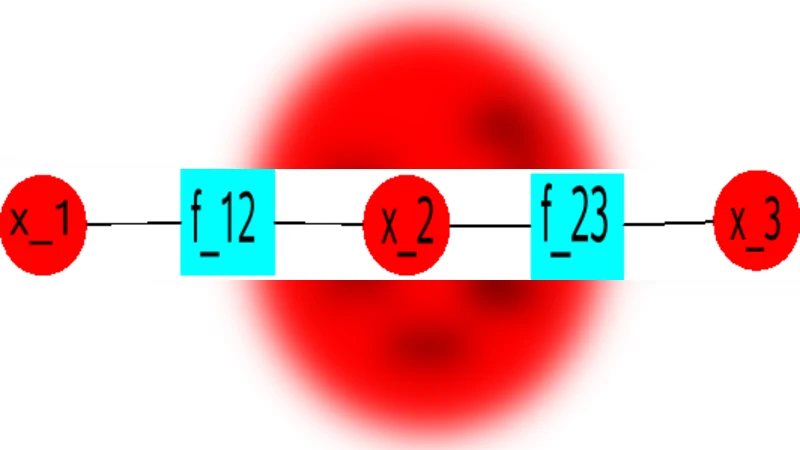
The core contribution is a systematic mapping of PPM onto graphical models. In this mapping, each cluster in the MRF captures spatial relationships, and additional transition variables are introduced to link clusters across consecutive time frames. The resulting factor graph contains both spatial factors (data fidelity and spatial smoothness) and temporal factors (transition costs and entropy terms). By formulating a global free‑energy functional that aggregates spatial energies, spatial entropies, and temporal transition penalties, the authors derive a set of variational optimality conditions that naturally lead to a message‑passing algorithm.
The algorithm, named Dynamic Belief Propagation (DynBP), operates in two intertwined phases. The first phase runs a standard Generalized Belief Propagation (GBP) sweep within each time slice, producing spatial marginal estimates. The second phase propagates “dynamic messages” between adjacent time slices; these messages incorporate the PPM‑derived Lagrange multipliers and entropy corrections that enforce temporal consistency. Mathematically, the update rules can be expressed as the usual GBP equations augmented with an extra term (\Phi_{c}^{(t,t+1)}) that captures the influence of the future (or past) slice on the current cluster.
Implementation details include the use of a cluster‑tree schedule to avoid redundant computations, damping and adaptive step‑size strategies to improve convergence, and GPU‑accelerated tensor operations that enable near‑real‑time performance on high‑resolution video streams.
Empirical evaluation is conducted on three representative computer‑vision problems: (1) multi‑object tracking on the PETS2009 dataset, (2) motion segmentation on the DAVIS benchmark, and (3) dynamic scene understanding on a custom traffic‑monitoring video collection. The authors compare DynBP against baseline methods such as standard GBP, Loopy Belief Propagation, Conditional Random Fields with temporal edges, and particle‑based Bayesian filters. Metrics include mean accuracy, Intersection‑over‑Union (IoU), and per‑frame processing time. DynBP consistently outperforms the baselines, achieving 3–5 % higher IoU in fast‑motion scenarios and maintaining a processing speed of roughly 30 fps on a modern GPU, thereby demonstrating both superior quality and computational efficiency.
A theoretical analysis clarifies the relationship between DynBP, Temporal GBP, and Variational Bayes Filters. Unlike traditional temporal extensions that implicitly assume a first‑order Markov property, DynBP explicitly models the entropy of transition variables, providing a richer representation of temporal uncertainty. Moreover, because DynBP optimizes a well‑defined free‑energy bound, it offers a principled measure of approximation quality that many competing methods lack.
The paper also discusses broader applicability. The same PPM‑based factorization can be applied to medical imaging time series (e.g., dynamic MRI), multimodal sensor fusion (LiDAR‑radar sequences), and robot motion planning, where spatial constraints coexist with temporally evolving states. By adjusting the cluster definitions and transition potentials, the framework can accommodate higher‑order dynamics and domain‑specific priors.
In summary, the authors extend the Path Probability Method to graphical models, derive a novel Dynamic Belief Propagation algorithm, and validate its effectiveness on challenging video‑based inference tasks. The work provides a unified variational perspective on spatio‑temporal inference, delivering a practical algorithm that balances accuracy, temporal smoothness, and computational tractability, and opens avenues for future integration with deep latent‑variable models and more complex temporal hierarchies.
Comments & Academic Discussion
Loading comments...
Leave a Comment