The Repressor-Lattice: Feed-Back, Commensurability, and Dynamical Frustration
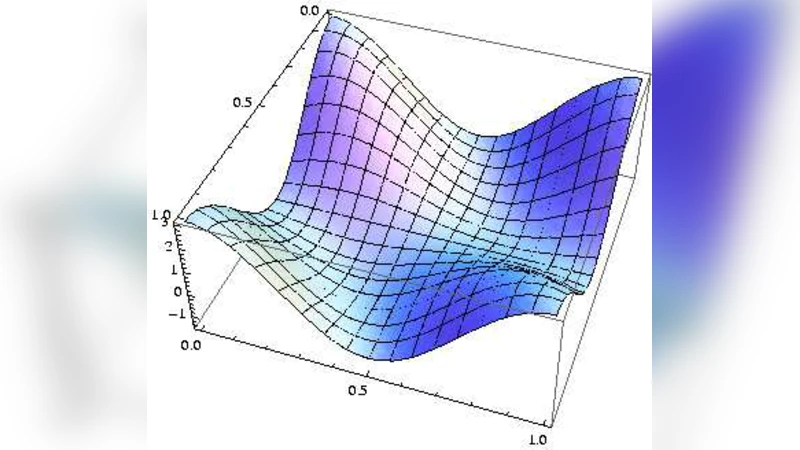
A repressilator consists of a loop made up of three repressively interacting genes. We construct a hexagonal lattice with repressilators on each triangle, and use this as a model system for multiple interacting feedback loops. Using symmetry arguments and stability analysis we argue that the repressor-lattice can be in a non-frustrated oscillating state with only three distinct phases. If the system size is not commensurate with three, oscillating solutions of several different phases are possible. As the strength of the interactions between the nodes increases, the system undergoes many transitions, breaking several symmetries. Eventually dynamical frustrated states appear, where the temporal evolution is chaotic, even though there are no built-in frustrations. Applications of the repressor-lattice to real biological systems, such as tissues or biofilms, are discussed.
💡 Research Summary
The paper introduces a spatially extended version of the classic repressilator—a synthetic genetic circuit composed of three genes that inhibit each other in a closed loop. Instead of a single triangle, the authors tile a two‑dimensional hexagonal lattice with repressilator units, placing one on each elementary triangle. In this “repressor‑lattice,” every node receives repression from three neighbours and simultaneously represses three others, creating a regular network of mutually inhibitory feedback loops.
Using group‑theoretic symmetry arguments, the authors first show that when the linear size of the lattice is a multiple of three (i.e., the total number of nodes N = 3 k), the entire system can settle into a perfectly non‑frustrated oscillatory state characterized by only three distinct phases separated by 120°. In this commensurate case the lattice behaves as a collection of synchronously rotating phase domains, each domain occupying one of the three phase values. Linear stability analysis around the homogeneous steady state yields a pair of complex conjugate eigenvalues whose real part changes sign at a Hopf bifurcation, confirming the emergence of a stable limit cycle with the three‑phase structure.
If the lattice size is not commensurate with three, the global 3‑phase symmetry cannot be satisfied. The authors demonstrate that additional phase values appear, leading to a richer set of spatiotemporal patterns. The system then exhibits “phase incommensurability”: local clusters of nodes oscillate with different phase offsets, and the overall pattern is no longer a simple repetition of the three‑phase motif. Numerical simulations reveal that the number of distinct phases grows with the degree of incommensurability, and the spatial arrangement of these phases can be highly non‑uniform.
The strength of the repression interaction (parameter β) and the kinetic rates of transcription, translation, and degradation (α, γ) act as control parameters. As β is increased, the homogeneous fixed point loses stability through a sequence of Hopf bifurcations. Initially the lattice displays the three‑phase oscillation; with further increase, symmetry‑breaking bifurcations generate six‑phase, nine‑phase, and higher‑order phase structures. Each bifurcation reduces the symmetry group of the solution, and the system passes through a cascade of period‑doubling‑like transitions. Eventually the lattice reaches a regime where no static phase assignment can satisfy all inhibitory constraints—a state the authors term “dynamical frustration.” Despite the absence of any built‑in geometric frustration (the lattice is perfectly regular), the nonlinear coupling produces chaotic time evolution. Chaos is diagnosed by positive Lyapunov exponents, broadband power spectra, and irregular Poincaré sections.
Boundary conditions also influence the dynamics. With periodic boundaries the lattice behaves as a torus, allowing phase waves to circulate without interruption, whereas fixed boundaries introduce pinned nodes that act as phase anchors, generating additional defects and shifting the onset of chaotic behavior.
From a biological perspective, the repressor‑lattice serves as a minimal model for multicellular systems where cells exchange inhibitory signals, such as Notch‑Delta lateral inhibition, quorum‑sensing mediated repression, or synthetic gene circuits engineered in bacterial colonies or tissue cultures. In real tissues, cells are often arranged in quasi‑hexagonal packs, making the lattice geometry biologically plausible. The authors argue that commensurability effects could explain why some tissues display coherent oscillations (e.g., segmentation clocks) while others show irregular or chaotic gene‑expression patterns. Moreover, the model suggests that by tuning interaction strength or lattice size, synthetic biologists could deliberately program desired rhythmic or chaotic behaviors in engineered cell arrays.
In summary, the study combines symmetry analysis, linear stability theory, and extensive numerical simulations to map out the rich dynamical landscape of a hexagonal array of repressilators. It reveals how lattice size, commensurability, and interaction strength govern the transition from simple three‑phase oscillations to multi‑phase patterns and ultimately to chaotic, dynamically frustrated states. These findings provide both theoretical insight into coupled nonlinear oscillators and practical guidance for designing and interpreting multicellular synthetic gene networks.
Comments & Academic Discussion
Loading comments...
Leave a Comment