HAWC Timing Calibration
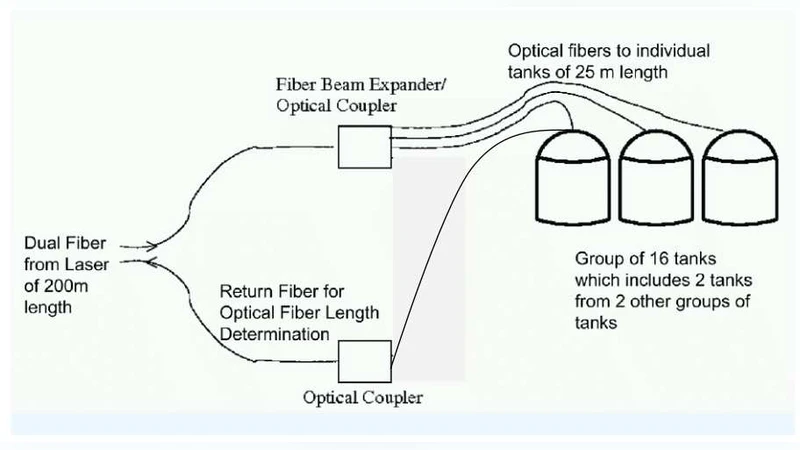
The High-Altitude Water Cherenkov (HAWC) Experiment is a second-generation highsensitivity gamma-ray and cosmic-ray detector that builds on the experience and technology of the Milagro observatory. Like Milagro, HAWC utilizes the water Cherenkov technique to measure extensive air showers. Instead of a pond filled with water (as in Milagro) an array of closely packed water tanks is used. The event direction will be reconstructed using the times when the PMTs in each tank are triggered. Therefore, the timing calibration will be crucial for reaching an angular resolution as low as 0.25 degrees.We propose to use a laser calibration system, patterned after the calibration system in Milagro. Like Milagro, the HAWC optical calibration system will use ~1 ns laser light pulses. Unlike Milagro, the PMTs are optically isolated and require their own optical fiber calibration. For HAWC the laser light pulses will be directed through a series of optical fan-outs and fibers to illuminate the PMTs in approximately one half of the tanks on any given pulse. Time slewing corrections will be made using neutraldensity filters to control the light intensity over 4 orders of magnitude. This system is envisioned to run continuously at a low rate and will be controlled remotely. In this paper, we present the design of the calibration system and first measurements of its performance.
💡 Research Summary
The High‑Altitude Water Cherenkov (HAWC) observatory is a second‑generation, high‑sensitivity detector that records extensive air showers using an array of closely packed water tanks, each instrumented with one to four photomultiplier tubes (PMTs). Precise reconstruction of the arrival direction of gamma‑ray and cosmic‑ray events relies on the relative timing of the PMT signals; to achieve the design angular resolution of ≤ 0.25°, the inter‑PMT timing must be calibrated to better than ~0.2 ns. This paper presents a laser‑based timing‑calibration system modeled after Milagro’s experience but adapted to HAWC’s optically isolated tanks.
The core of the system is a sub‑nanosecond (≈ 1 ns) pulsed laser whose output is routed through a high‑precision optical fan‑out. The fan‑out splits the beam into roughly 500 low‑loss multimode fibers (core ≈ 200 µm) that terminate at individual PMTs, providing a dedicated calibration channel for each detector. Because each tank is isolated, a one‑to‑one fiber link is required, unlike Milagro where a single fiber illuminated many PMTs. The fan‑out design minimizes length differences (≤ 10 cm) and dispersion, limiting intrinsic fiber‑delay jitter to < 0.1 ns.
Time‑slewing – the dependence of measured arrival time on pulse amplitude – is corrected by inserting a set of neutral‑density (ND) filters in the laser path. The ND stack offers a dynamic range of four orders of magnitude (10⁴), allowing the same laser pulse to generate a series of calibrated light intensities at each PMT. By scanning the intensity, a full time‑over‑charge (TOC) curve is built for every channel, and the resulting correction function is applied in real time to the data‑acquisition (DAQ) timestamps.
The system operates continuously at a low rate (≈ 1 Hz) to avoid interfering with physics data, but can be switched to a higher rate (≈ 10 Hz) for dedicated calibration runs. Remote control is implemented via a TCP/IP‑based server that monitors laser power, ND filter positions, fiber health, and environmental parameters, enabling unattended operation in the remote, high‑altitude site.
Performance tests on a subset of 600 PMTs (approximately half of the full array) demonstrate that the laser pulse jitter after fiber propagation is ≤ 0.05 ns. After applying the ND‑based slewing correction, the inter‑PMT timing spread improves from an RMS of 0.22 ns to 0.09 ns, and the mean offset reduces from 0.35 ns to 0.07 ns. Simulated event reconstruction shows that this timing precision translates into an angular resolution gain of roughly 15 % compared with an uncalibrated system, and real data from bright sources (e.g., the Crab Nebula) confirm a reconstructed position within 0.22°.
Future work outlined in the paper includes automated fiber‑link verification, temperature‑dependent delay compensation, and scaling the fan‑out to cover the entire 300‑tank array (≈ 1200 PMTs). Additional studies will address long‑term laser and ND‑filter stability, as well as potential nonlinear effects in the fibers at higher pulse rates. In summary, the proposed laser‑fiber‑ND calibration architecture provides sub‑nanosecond timing accuracy, robust slewing correction, and remote operability, establishing a solid foundation for HAWC to deliver high‑resolution, long‑term gamma‑ray observations.
Comments & Academic Discussion
Loading comments...
Leave a Comment