Towards a General Definition of Biometric Systems
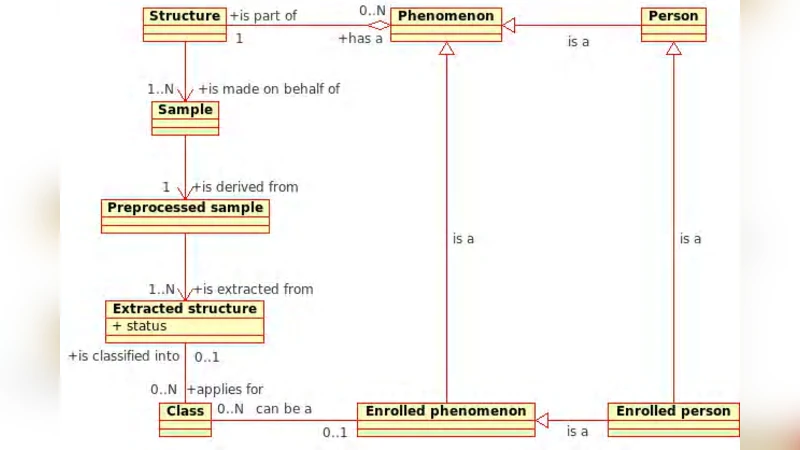
A foundation for closing the gap between biometrics in the narrower and the broader perspective is presented trough a conceptualization of biometric systems in both perspectives. A clear distinction between verification, identification and classification systems is made as well as shown that there are additional classes of biometric systems. In the end a Unified Modeling Language model is developed showing the connections between the two perspectives.
💡 Research Summary
The paper addresses a longstanding conceptual gap in the biometrics field by proposing a unified definition that bridges the “narrow” perspective—traditionally limited to verification (1‑to‑1 matching) and identification (1‑to‑N matching)—and the broader perspective, which includes any application that exploits physiological or behavioral traits for classification, profiling, or multimodal decision making. The authors begin by decomposing any biometric system into five logical stages: sensor acquisition, preprocessing, feature extraction, matching/classification, and decision output. This decomposition is deliberately technology‑agnostic, allowing the same pipeline to accommodate optical, acoustic, capacitive, or even emerging signals such as electrocardiograms and gait patterns.
A central contribution is the explicit separation of three functional families. Verification systems compare a presented sample against a single stored template to confirm claimed identity; identification systems search a database of N templates to determine the most likely identity; classification systems, in contrast, assign the sample to a predefined set of classes that need not correspond to individual identities (e.g., age group, gender, emotional state). The paper argues that classification is a distinct biometric use case because its objective is not identity confirmation but trait‑based grouping, and therefore it typically relies on probabilistic classifiers (softmax, SVM, decision trees) rather than strict distance‑based matchers.
Beyond these three families, the authors identify “multimode” or “multitask” biometric systems that simultaneously perform verification, identification, and classification, or that fuse heterogeneous sensor streams (face + voice, fingerprint + iris, etc.). They discuss the engineering challenges of such systems: temporal synchronization, feature‑level versus score‑level fusion, error propagation across stages, and the need for a flexible decision engine capable of weighting heterogeneous evidence.
To formalize the relationships among all these concepts, the paper presents a comprehensive Unified Modeling Language (UML) model. At its core is an abstract class BiometricSystem, which aggregates the five pipeline components as separate interfaces. Concrete subclasses—VerificationSystem, IdentificationSystem, ClassificationSystem, and MultiModeSystem—inherit from this abstract base and specialize the Matcher/Classifier interface accordingly. The UML class diagram shows composition links to Sensor, Preprocessor, FeatureExtractor, Matcher/Classifier, and DecisionEngine, while a UML sequence diagram illustrates the data flow from sensor input through preprocessing, feature extraction, matching/classification, and final decision. Notably, the Matcher/Classifier interface is designed as a plug‑in point, enabling developers to swap a distance‑based matcher for a neural‑network classifier without redesigning the surrounding infrastructure.
The authors argue that this modular, interface‑driven architecture promotes reusability, simplifies integration of new biometric traits, and aligns with emerging standards (ISO/IEC 19794 series). They also discuss how the model can support privacy‑preserving mechanisms such as cancellable templates and homomorphic encryption, because the abstracted decision engine can enforce policy checks before exposing matching scores.
In the concluding section, the paper outlines future research directions: real‑time multimodal fusion algorithms, adaptive threshold selection for dynamic environments, systematic evaluation metrics that span verification, identification, and classification performance, and collaborative efforts with standardization bodies to codify the proposed taxonomy. By delivering a clear, extensible definition and a concrete UML blueprint, the work provides both theoreticians and system engineers with a common language for designing next‑generation biometric solutions that are more versatile, interoperable, and ready for the expanding landscape of biometric applications.
Comments & Academic Discussion
Loading comments...
Leave a Comment