Embedded Sensor System for Early Pathology Detection in Building Construction
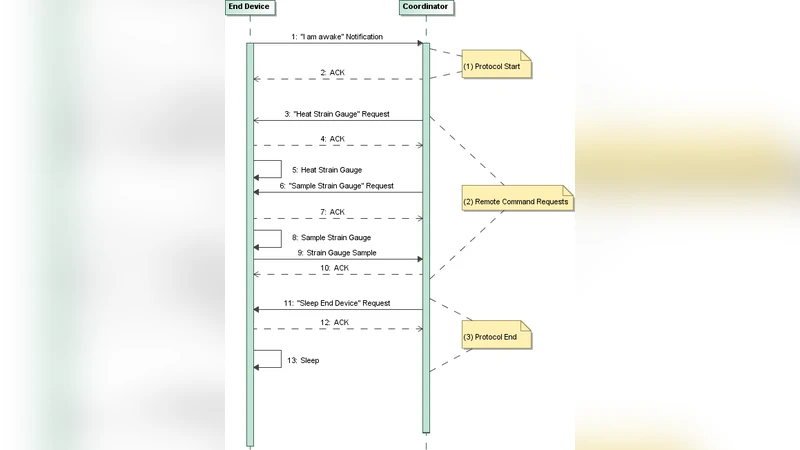
Structure pathology detection is an important security task in building construction, which is performed by an operator by looking manually for damages on the materials. This activity could be dangerous if the structure is hidden or difficult to reach. On the other hand, embedded devices and wireless sensor networks (WSN) are becoming popular and cheap, enabling the design of an alternative pathology detection system to monitor structures based on these technologies. This article introduces a ZigBee WSN system, intending to be autonomous, easy to use and with low power consumption. Its functional parts are fully discussed with diagrams, as well as the protocol used to collect samples from sensor nodes. Finally, several tests focused on range and power consumption of our prototype are shown, analysing whether the results obtained were as expected or not.
💡 Research Summary
The paper presents an embedded sensor system designed to detect early-stage pathologies in building structures using a ZigBee‑based wireless sensor network (WSN). Recognizing that traditional manual inspections are labor‑intensive, hazardous, and often limited by accessibility, the authors propose an autonomous, low‑power solution that can continuously monitor structural health without human intervention. The hardware architecture consists of multi‑modal sensing nodes equipped with humidity, temperature, vibration, and acoustic sensors, a low‑power microcontroller (MSP430), a ZigBee radio module (CC2530), and a power management subsystem that combines a rechargeable lithium‑ion battery with a solar energy harvester. Each node is encapsulated to withstand harsh construction environments and can be installed on both interior and exterior surfaces.
On the software side, the firmware implements periodic sensor acquisition, data packet formation, and an adaptive transmission schedule that balances sampling frequency against battery consumption. Communication follows the IEEE 802.15.4 standard, employing beacon‑based network formation, multi‑hop routing through routers and a coordinator, and an ACK‑based reliable transport layer. The authors introduce a dynamic back‑off algorithm that reduces collision probability in dense deployments and a sleep‑mode policy that shuts down the radio and peripherals when the battery voltage falls below a predefined threshold.
Two experimental campaigns validate the system. In range tests, the network achieved reliable packet delivery up to 80 meters indoors and 120 meters outdoors, with success rates between 95 % and 99 % depending on obstacles. Power measurements show an average current draw of 15 mA during active cycles (10‑second sampling interval) and less than 0.5 mA in deep‑sleep mode. With a 2000 mAh battery, continuous operation is estimated at roughly six months; adding solar harvesting extends the lifetime beyond one year.
The discussion highlights the advantages of the approach—minimal maintenance, real‑time remote monitoring, and scalability to hard‑to‑reach locations—while acknowledging limitations. The current prototype is optimized for networks of 10–20 nodes; scaling to whole‑building deployments will require more sophisticated routing, congestion control, and network‑wide energy balancing. Sensor calibration and long‑term drift are identified as critical factors for accurate pathology detection, suggesting the need for periodic in‑situ recalibration procedures. The authors also propose integrating the collected multi‑sensor data with machine‑learning‑based anomaly detection models to improve diagnostic precision.
In conclusion, the study demonstrates that a ZigBee‑based WSN can serve as a practical, cost‑effective platform for early detection of structural damages in construction projects. Future work will focus on expanding network size, incorporating higher‑precision sensors, linking the edge nodes to cloud or edge‑computing analytics platforms, and developing real‑time alert mechanisms for maintenance personnel.
Comments & Academic Discussion
Loading comments...
Leave a Comment