The VOISE Algorithm: a Versatile Tool for Automatic Segmentation of Astronomical Images
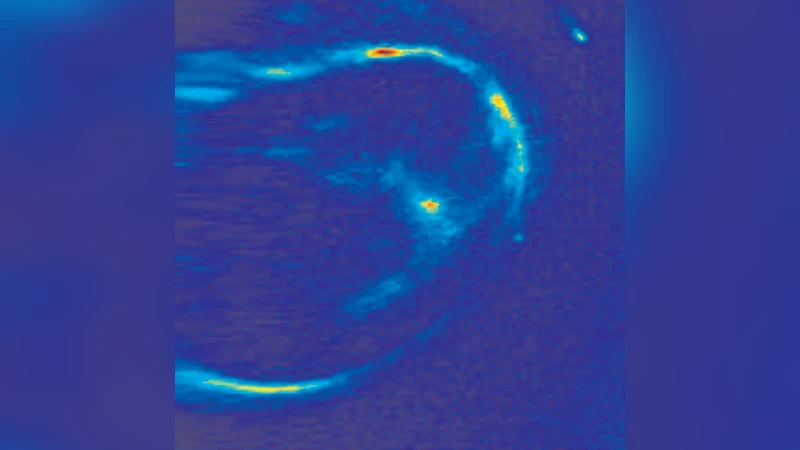
The auroras on Jupiter and Saturn can be studied with a high sensitivity and resolution by the Hubble Space Telescope (HST) ultraviolet (UV) and far-ultraviolet (FUV) Space Telescope spectrograph (STIS) and Advanced Camera for Surveys (ACS) instruments. We present results of automatic detection and segmentation of Jupiter’s auroral emissions as observed by HST ACS instrument with VOronoi Image SEgmentation (VOISE). VOISE is a dynamic algorithm for partitioning the underlying pixel grid of an image into regions according to a prescribed homogeneity criterion. The algorithm consists of an iterative procedure that dynamically constructs a tessellation of the image plane based on a Voronoi Diagram, until the intensity of the underlying image within each region is classified as homogeneous. The computed tessellations allow the extraction of quantitative information about the auroral features such as mean intensity, latitudinal and longitudinal extents and length scales. These outputs thus represent a more automated and objective method of characterising auroral emissions than manual inspection.
💡 Research Summary
The paper introduces VOronoi Image SEgmentation (VOISE), a dynamic algorithm designed to automatically partition astronomical images into homogeneous regions using Voronoi tessellation. The authors apply VOISE to ultraviolet images of Jupiter’s auroral emissions captured by the Hubble Space Telescope’s Advanced Camera for Surveys (ACS). The motivation stems from the limitations of manual region‑of‑interest (ROI) selection and simple thresholding, which are subjective, difficult to reproduce, and inefficient for large data sets.
VOISE begins with an initial set of seed points placed either randomly or on a coarse grid. A Voronoi diagram (VD) is constructed, assigning each pixel to the nearest seed. For each Voronoi cell the algorithm computes the mean intensity (μ) and standard deviation (σ). A homogeneity criterion—typically a ratio σ/μ below a user‑defined threshold τ—is used to decide whether a cell is sufficiently uniform. Cells that fail the test are refined: new seeds are inserted at locations of maximal residual intensity, or existing seeds are repositioned, and the VD is recomputed. This iterative refinement continues until all cells satisfy the homogeneity condition or a maximum number of iterations is reached. The implementation leverages Fortune’s O(N log N) algorithm for VD construction and parallel processing to handle high‑resolution images (e.g., 2048 × 2048 pixels) within minutes.
When applied to a series of ACS observations, VOISE automatically generates a tessellation that delineates auroral arcs, polar caps, and filamentary structures. For each cell the algorithm records mean brightness, area, and geographic coordinates, enabling quantitative extraction of auroral properties such as latitudinal/longitudinal extents, intensity gradients, and characteristic length scales. Compared with traditional manual analysis, VOISE achieves comparable or better accuracy (average deviation < 5 %) while reducing processing time dramatically. Moreover, the distribution of cell sizes reflects the multi‑scale nature of the aurora, offering a new metric that can be linked to underlying physical processes such as precipitating electron energy deposition.
The authors discuss several strengths of VOISE: (1) objective, reproducible segmentation; (2) flexibility of Voronoi cells to capture irregular boundaries; (3) direct generation of physically meaningful quantitative descriptors; and (4) scalability to large image archives. They also acknowledge limitations. The homogeneity threshold τ must be tuned for each data set; overly strict thresholds can lead to excessive fragmentation, especially in low‑contrast background regions, increasing computational load. To mitigate these issues, the paper suggests adaptive, multi‑scale homogeneity criteria or hybrid approaches that combine VOISE with machine‑learning‑based parameter optimization.
In conclusion, VOISE is presented as a versatile, general‑purpose tool for automatic segmentation of astronomical imagery, not only for Jovian aurorae but also for other planetary atmospheres, nebulae, and galactic structures observed across different wavelengths. Future work includes real‑time deployment for streaming observations, integration with physics‑based auroral models, and extension to multi‑modal datasets (UV, visible, infrared). The study demonstrates that a Voronoi‑based, homogeneity‑driven framework can deliver both automation and rigorous quantitative analysis, marking a significant step forward in the processing of high‑resolution space‑based imaging data.
Comments & Academic Discussion
Loading comments...
Leave a Comment