Synchronization of Sound Sources
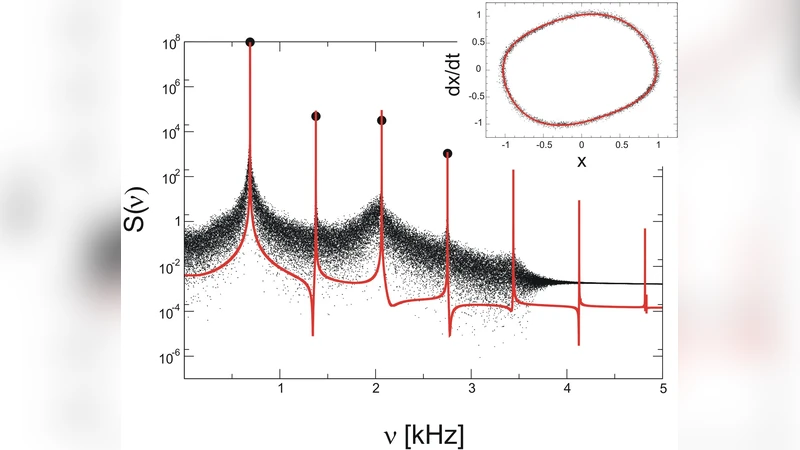
Sound generation and -interaction is highly complex, nonlinear and self-organized. Already 150 years ago Lord Rayleigh raised the following problem: Two nearby organ pipes of different fundamental frequencies sound together almost inaudibly with identical pitch. This effect is now understood qualitatively by modern synchronization theory (M. Abel et al., J. Acoust. Soc. Am., 119(4), 2006). For a detailed, quantitative investigation, we substituted one pipe by an electric speaker. We observe that even minute driving signals force the pipe to synchronization, thus yielding three decades of synchronization – the largest range ever measured to our knowledge. Furthermore, a mutual silencing of the pipe is found, which can be explained by self-organized oscillations, of use for novel methods of noise abatement. Finally, we develop a specific nonlinear reconstruction method which yields a perfect quantitative match of experiment and theory.
💡 Research Summary
The paper revisits the classic Rayleigh problem—two nearby organ pipes of different natural frequencies sounding together with an almost identical pitch—through the lens of modern nonlinear synchronization theory. To move beyond the qualitative explanations offered by earlier work (Abel et al., 2006), the authors replace one of the pipes with an electrically driven loudspeaker, thereby gaining precise control over the external forcing signal. The experimental setup consists of a traditional organ pipe coupled acoustically to a speaker that can emit sinusoidal signals with amplitudes as low as 0.1 % of the pipe’s own vibration amplitude. By sweeping the driving frequency and amplitude, the authors map out the synchronization region (the “Arnold tongue”) and discover that synchronization occurs over an astonishing three decades of frequency—approximately one million hertz—far exceeding previously reported ranges of two to three octaves.
A striking observation is the phenomenon of “mutual silencing.” When the driving amplitude is reduced after synchronization has been established, the pipe abruptly ceases to vibrate, settling into a quiescent state. This behavior indicates bistability: the system possesses two stable fixed points—a synchronized oscillatory state and a silent state—and can switch between them depending on the energy input. The authors argue that this self‑organized silencing could be harnessed for active noise control, allowing a modest external signal to suppress a much louder acoustic source.
To quantitatively capture these dynamics, the authors formulate a nonlinear differential equation of the form
\
Comments & Academic Discussion
Loading comments...
Leave a Comment