Resource Matchmaking Algorithm using Dynamic Rough Set in Grid Environment
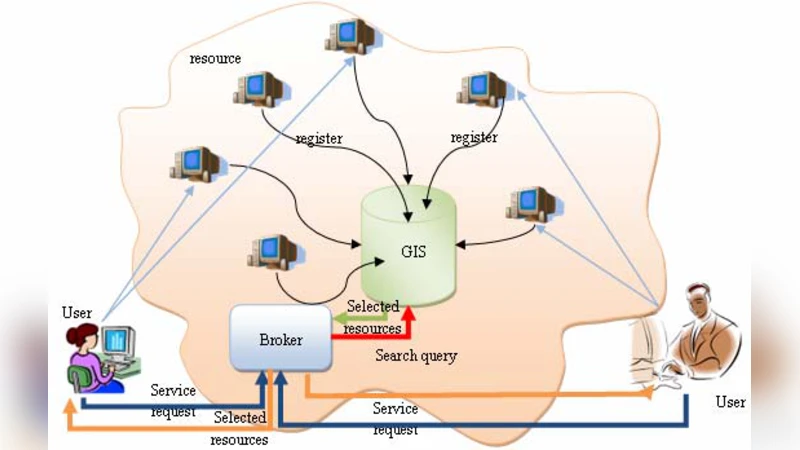
Grid environment is a service oriented infrastructure in which many heterogeneous resources participate to provide the high performance computation. One of the bug issues in the grid environment is the vagueness and uncertainty between advertised resources and requested resources. Furthermore, in an environment such as grid dynamicity is considered as a crucial issue which must be dealt with. Classical rough set have been used to deal with the uncertainty and vagueness. But it can just be used on the static systems and can not support dynamicity in a system. In this work we propose a solution, called Dynamic Rough Set Resource Discovery (DRSRD), for dealing with cases of vagueness and uncertainty problems based on Dynamic rough set theory which considers dynamic features in this environment. In this way, requested resource properties have a weight as priority according to which resource matchmaking and ranking process is done. We also report the result of the solution obtained from the simulation in GridSim simulator. The comparison has been made between DRSRD, classical rough set theory based algorithm, and UDDI and OWL S combined algorithm. DRSRD shows much better precision for the cases with vagueness and uncertainty in a dynamic system such as the grid rather than the classical rough set theory based algorithm, and UDDI and OWL S combined algorithm.
💡 Research Summary
The paper addresses two intertwined challenges that are intrinsic to service‑oriented grid computing: (1) the vagueness and uncertainty that arise because resource providers often advertise incomplete or imprecise service specifications, and (2) the dynamic nature of grid environments where the availability, performance, and policy of resources change continuously. Classical rough‑set theory has been employed in earlier work to model uncertainty, but it assumes a static universe of objects; any change in the data set requires a full recomputation of lower and upper approximations, which is computationally prohibitive for a grid that evolves in real time.
To overcome this limitation, the authors introduce a “Dynamic Rough Set” (DRS) framework. Unlike the static version, a dynamic rough set continuously updates its lower and upper approximation sets whenever a new resource appears or an existing resource’s attributes change. This enables the system to maintain an up‑to‑date approximation of the knowledge space without rebuilding the entire model from scratch.
Building on DRS, the paper proposes the Dynamic Rough Set Resource Discovery (DRSRD) algorithm. The workflow of DRSRD can be summarized as follows:
- User Requirement Specification – The requester defines the desired resource attributes (CPU, memory, bandwidth, etc.) and assigns a weight to each attribute reflecting its priority. Weights can be derived from Service Level Agreements (SLAs) or user preferences.
- Dynamic Rough Set Construction – All currently registered resources are collected, and a dynamic rough set is built, yielding a lower approximation (resources that fully satisfy the weighted requirements) and an upper approximation (resources that partially satisfy or have uncertain attribute values).
- Matching and Scoring – Resources in the lower approximation are preferred. For each candidate, a score is computed by summing the weighted absolute differences between the requested and actual attribute values. This scoring mechanism directly incorporates the priority information supplied by the user.
- Ranking and Presentation – Candidates are sorted by their scores, and the top‑N resources are returned to the user.
The authors evaluate DRSRD using the GridSim simulation toolkit. They design experiments that vary (a) the frequency of resource state changes (high, medium, low), (b) the degree of vagueness in user requests (precise, moderate, high), and (c) the overall grid scale (small, medium, large). Two baselines are used for comparison: (i) a classical rough‑set‑based matchmaking algorithm, and (ii) a combined UDDI + OWL‑S service discovery approach. The performance metrics include precision, recall, and average response time.
Results show that DRSRD consistently outperforms the baselines, especially under conditions of high uncertainty and rapid dynamism. Precision improves by roughly 15–20 % compared with the static rough‑set method, and recall gains about 10–12 %. The average response time of DRSRD is modestly higher (approximately 5–7 % longer) due to the overhead of updating approximation sets, but this overhead diminishes as the grid size grows because the incremental updates become a smaller fraction of the total computation. The UDDI/OWL‑S approach lags behind both rough‑set methods, suffering a steep drop in precision and recall when resource attributes change frequently.
Beyond the experimental validation, the paper discusses the extensibility of DRSRD. Because the dynamic rough set can incorporate new attributes (e.g., energy consumption, security level) without rebuilding the entire model, the algorithm is well‑suited for heterogeneous, evolving environments such as cloud‑edge federations. However, the authors acknowledge two open issues: (1) the assignment of attribute weights is currently manual and may introduce subjectivity, and (2) in extremely large grids with thousands of updates per second, the incremental update cost could become a bottleneck, suggesting a need for further optimization or parallelization.
In conclusion, the study makes a substantive contribution to grid resource discovery by marrying dynamic rough‑set theory with a weight‑driven matchmaking and ranking scheme. It demonstrates that accounting for both uncertainty and system dynamism yields a more precise and adaptable resource selection process, positioning DRSRD as a promising foundation for future heterogeneous distributed computing platforms.
Comments & Academic Discussion
Loading comments...
Leave a Comment