Theory and Applications of Coulomb Excitation
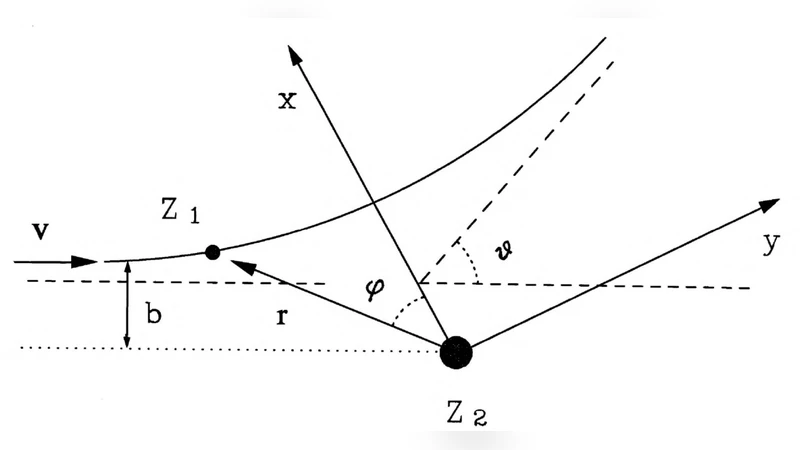
Because the interaction is well-known, Coulomb excitation is one of the best tools for the investigation of nuclear properties. In the last 3 decades new reaction theories for Coulomb excitation have been developed such as: (a) relativistic Coulomb excitation, (b) Coulomb excitation at intermediate energies, and (c) multistep coupling in the continuum. These developments are timely with the advent of rare isotope facilities. Of special interest is the Coulomb excitation and dissociation of weakly-bound systems. I review the Coulomb excitation theory, from low to relativistic collision energies. Several applications of the theory to situations of interest in nuclear physics and nuclear astrophysics are discussed.
💡 Research Summary
The paper provides a comprehensive review of Coulomb excitation (CE) as a powerful probe of nuclear structure and nuclear astrophysics, emphasizing the advantages that stem from the well‑known electromagnetic interaction. It begins with the traditional low‑energy, non‑relativistic formulation, where the electric multipole expansion of the Coulomb field yields first‑order transition probabilities directly related to reduced transition strengths B(Eλ). The authors then discuss the necessity of relativistic corrections as projectile velocities approach a significant fraction of the speed of light. In the intermediate‑energy regime (≈10–100 MeV/u), time‑delay, Lorentz contraction, and Doppler shift modify the virtual photon spectrum, requiring a generalized expression for the excitation cross section that includes γ‑dependent factors.
A major focus of the review is the development of multi‑step coupling models that treat successive electromagnetic transitions and the coupling to the continuum on an equal footing. The authors present a coupled‑channels framework that incorporates both bound‑state and continuum channels, allowing for the description of weakly bound or halo nuclei that may dissociate immediately after excitation. By introducing complex transition matrices and continuum density of states, the formalism yields simultaneous predictions for excitation probabilities and breakup cross sections. This is particularly relevant for rare‑isotope beams, where the interplay between electromagnetic excitation and nuclear breakup is unavoidable.
The paper also details the fully relativistic CE theory applicable to GeV/u energies, where the virtual photon method becomes a convenient language. The authors derive the virtual photon spectrum for high‑γ projectiles, showing that the excitation cross section scales with γ⁻⁴ for electric dipole transitions, and they discuss the impact of magnetic multipoles at ultra‑high energies.
Several applications are highlighted. First, the extraction of B(E1) values and neutron separation energies (Sₙ) from Coulomb dissociation experiments on neutron‑rich isotopes, providing crucial input for r‑process nucleosynthesis models. Second, the use of CE to benchmark nuclear structure models for medium‑mass nuclei, where precise electromagnetic matrix elements constrain shell‑model and energy‑density‑functional calculations. Third, the role of CE in astrophysical reaction‑rate determinations, where measured breakup cross sections are converted via detailed balance into radiative capture rates needed for stellar evolution simulations.
The authors conclude by outlining current challenges: the need for higher‑order electromagnetic corrections, improved treatment of nuclear‑force interference in the intermediate‑energy region, and more sophisticated continuum discretization techniques. They advocate for the integration of Bayesian inference and machine‑learning tools to extract nuclear‑structure parameters from increasingly complex CE data sets. Overall, the review bridges the gap between low‑energy nuclear spectroscopy and high‑energy rare‑isotope physics, presenting a unified theoretical framework that is essential for interpreting present and future Coulomb excitation experiments.
Comments & Academic Discussion
Loading comments...
Leave a Comment