Electronic Authority Variation
When a person joins in an organization, he becomes authorize to take some decisions on behalf of that organization; means he is given some authority to exercise. After some time, on the basis of his performance in the organization, he is given promotion and he becomes eligible to exercise to some higher authorities. And further, he may get some higher promotion or he may leave the organization. So, during his stay in the organization, the authority of that person varies from the time he joins the organization until he/she leaves the organization. This paper presents the variation in authorities of a person in the organization. The method implements the queuing model to analyze the various people in the queue of their promotion and looks at various parameters like average waiting time etc.
💡 Research Summary
The paper titled “Electronic Authority Variation” attempts to model how an employee’s authority changes over the course of his or her tenure in an organization, using concepts from queuing theory and XML‑based policy representation. The authors begin with a brief literature review of electronic document authorization, noting early work on source‑level authorization, digital signatures, and XML security mechanisms. They then introduce the basic elements of queuing theory—customers, servers, input sources, queues, and queue discipline—and map these abstract concepts onto an organizational setting: employees are “customers,” the organization’s authority structures act as “servers,” and the promotion pipeline is the “queue.”
For simplicity, the authors consider only three hierarchical levels, denoted L1 (new hires), L2 (first‑level promotion), and L3 (second‑level promotion). Arrival rate λₙ is defined as the rate at which individuals enter a given level (either by hiring or promotion from the previous level), while service rate μₙ is the rate at which individuals leave that level (by promotion to the next level or by exiting the organization). The model assumes an infinite‑capacity queue and a first‑come‑first‑served (FCFS) discipline, essentially treating each level as an M/M/1 system, although the paper does not explicitly state the underlying probability distributions or present a full state‑transition matrix.
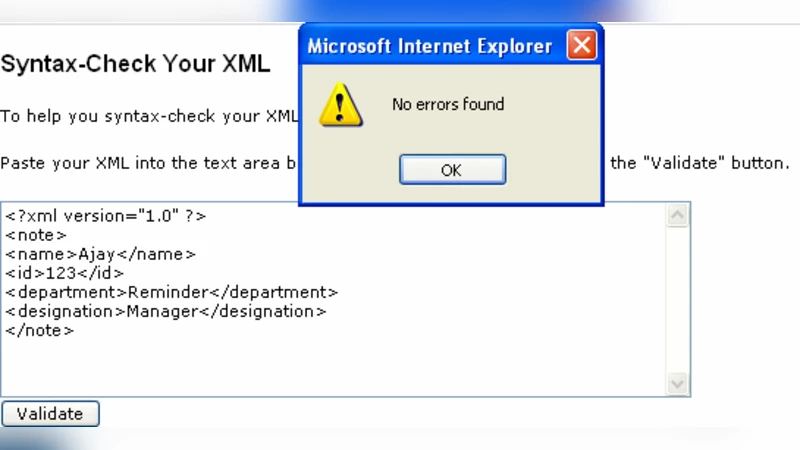
The second major contribution is an XML policy database that stores each employee’s identifier, designation, and signing limits. A sample XML snippet and an XSLT stylesheet are provided to illustrate how a system could verify whether a particular user is authorized to sign a document. The stylesheet checks the user’s name, ID, designation, and signing limit, and outputs “Access allowed” if all conditions are satisfied. The authors claim that this mechanism enables real‑time verification of authority as employees move through the promotion queue.
In the “Authority Variation” section, the authors argue that whenever an employee is promoted, the corresponding XML policy must be updated to reflect the new authority set. However, the paper does not discuss how conflicts between policies are resolved, how versioning is managed, or how the XML data are protected against tampering (e.g., digital signatures, encryption).
The experimental portion presents two numerical scenarios: (λ=6, μ=2) and (λ=8, μ=3). For each case the authors report the steady‑state probabilities of finding a person in the system and the average time spent in the system, but they provide no detailed calculations, simulation methodology, or validation against real organizational data. Screenshots of the XML policy verification interface are included, but they serve only as a superficial illustration.
The conclusion restates that the queuing model can be used to compute average waiting times for promotion and that the XML policy database can support electronic decision‑making. The authors suggest that the approach could be applied to any organization that relies heavily on electronic documents and that future work might involve maintaining synchronized policy databases across organizational boundaries while protecting sensitive information.
Overall, while the idea of linking authority changes to a queuing framework is conceptually interesting, the paper suffers from several serious shortcomings. The mathematical model is overly simplistic, lacking explicit distributional assumptions, transition matrices, or performance analysis beyond two hand‑picked λ/μ pairs. The XML policy component is rudimentary, with no discussion of security best practices, scalability, or conflict resolution. Moreover, the experimental validation is minimal and does not demonstrate that the model provides actionable insights for real‑world human‑resource management. Future research should extend the model to multiple promotion levels, incorporate performance‑based promotion probabilities, consider finite queue capacities, and integrate robust XML security mechanisms. Empirical validation using actual HR datasets and comparison with existing authority‑management systems would be essential to establish the practical value of the proposed framework.
Comments & Academic Discussion
Loading comments...
Leave a Comment