The sidereal anisotropy of multi-TeV cosmic rays in an expanding Local Interstellar Cloud
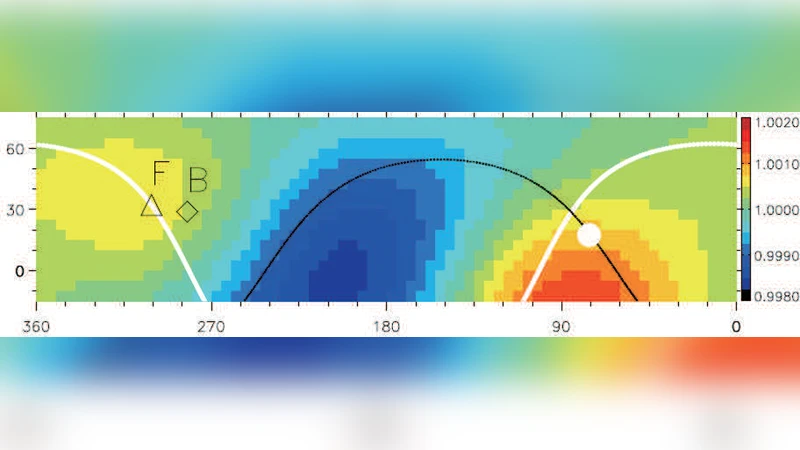
The sidereal anisotropy of galactic cosmic ray (GCR) intensity observed with the Tibet Air Shower (AS) experiment still awaits theoretical interpretation. The observed global feature of the anisotropy is well reproduced by a superposition of the bi-directional and uni-directional flows (BDF and UDF, respectively) of GCRs. If the orientation of the deduced BDF represents the orientation of the local interstellar magnetic field (LISMF), as indicated by best-fitting a model to the data, the UDF deviating from the BDF orientation implies a significant contribution from the streaming perpendicular to the LISMF. This perpendicular streaming is probably due to the drift anisotropy, because the contribution from the perpendicular diffusion is expected to be much smaller than the drift effect. The large amplitude deduced for the UDF indicates a large spatial gradient of the GCR density. We suggest that such a density gradient can be expected at the heliosphere sitting close to the boundary of the Local Interstellar Cloud (LIC), if the LIC is expanding. The spatial distribution of GCR density in the LIC reaches a stationary state because of the balance between the inward cross-field diffusion and the adiabatic cooling due to the expansion. We derive the steady-state distribution of GCR density in the LIC based on radial transport of GCRs in a spherical LIC expanding at a constant rate. By comparing the expected gradient with the observation by Tibet experiment, we estimate the perpendicular diffusion coefficient of multi-TeV GCRs in the local interstellar space.
💡 Research Summary
The paper addresses a long‑standing puzzle in cosmic‑ray physics: the sidereal anisotropy of multi‑TeV galactic cosmic rays (GCRs) measured by the Tibet Air‑Shower (AS) experiment. The authors show that the observed sky map can be reproduced by superposing two simple flow components – a bi‑directional flow (BDF) and a uni‑directional flow (UDF). The BDF defines a symmetry axis that aligns, within the fitting uncertainties, with the direction of the local interstellar magnetic field (LISMF). The UDF, however, points roughly 30° away from this axis, indicating a substantial particle flux that is perpendicular to the LISMF.
Because the amplitude of the UDF is large, the authors argue that perpendicular diffusion alone cannot generate it; the diffusion coefficient required would be unrealistically high for multi‑TeV particles. Instead, they attribute the perpendicular component to drift motion, i.e. the ∇ n × B drift that arises when a density gradient exists across magnetic field lines. A large drift implies a steep GCR density gradient in the local interstellar medium (LISM).
To explain the origin of such a gradient, the authors propose that the Local Interstellar Cloud (LIC) – the warm, partially ionised cloud in which the Sun is embedded – is expanding. In a spherical LIC that expands at a constant rate H = (1/R)(dR/dt), the GCR density obeys a diffusion‑advection equation
∂n/∂t = D⊥ ∇²n − 3H n,
where D⊥ is the perpendicular diffusion coefficient and the term 3H n represents adiabatic cooling due to expansion. In steady state (∂n/∂t = 0) the solution is an exponential profile
n(r) ∝ exp(−r/ℓ), ℓ = √(D⊥/3H).
Thus the characteristic length ℓ is set by the competition between inward cross‑field diffusion and outward expansion. By fitting the observed UDF amplitude, the authors infer ℓ ≈ 30 pc, which, together with an estimated expansion rate H ≈ 10⁻¹⁶ s⁻¹ (corresponding to a few km s⁻¹ over a 3 pc radius), yields a perpendicular diffusion coefficient D⊥ ≈ 1 × 10²⁷ cm² s⁻¹ for multi‑TeV GCRs. This value is about an order of magnitude smaller than the canonical galactic diffusion coefficient (∼10²⁸ cm² s⁻¹), suggesting that the local interstellar environment is less turbulent and more magnetically ordered than the average ISM.
The paper further discusses the physical implications of the BDF–UDF offset. The BDF traces streaming along the LISMF, while the UDF reflects drift across it. The combined pattern indicates that GCR trajectories near the heliosphere are not straight lines but are bent by the magnetic field geometry and by the heliopause boundary. Because the Sun sits close to the LIC’s outer edge, the heliopause may act as a semi‑permeable membrane: GCRs diffuse inward across field lines, are adiabatically cooled by the expanding cloud, and then experience drift that produces the observed perpendicular flow.
In summary, the authors provide a self‑consistent framework that links three observational facts: (1) the global sidereal anisotropy measured by Tibet AS, (2) the orientation of the LISMF inferred from the BDF, and (3) the large UDF amplitude implying a steep density gradient. By modelling the LIC as a uniformly expanding sphere, they derive a steady‑state GCR density profile and, from the measured gradient, estimate the local perpendicular diffusion coefficient. This work offers a novel method to probe the transport properties of multi‑TeV cosmic rays in the immediate interstellar neighbourhood and highlights the importance of drift processes and cloud dynamics in shaping the anisotropy observed at Earth. Future work combining higher‑resolution anisotropy data, three‑dimensional magnetohydrodynamic simulations of the LIC‑heliosphere interaction, and direct measurements of the local magnetic turbulence spectrum will be essential to refine the diffusion coefficient and to test the expanding‑cloud hypothesis.
Comments & Academic Discussion
Loading comments...
Leave a Comment