Quantized electromagnetic tornado in pulsar vacuum gap
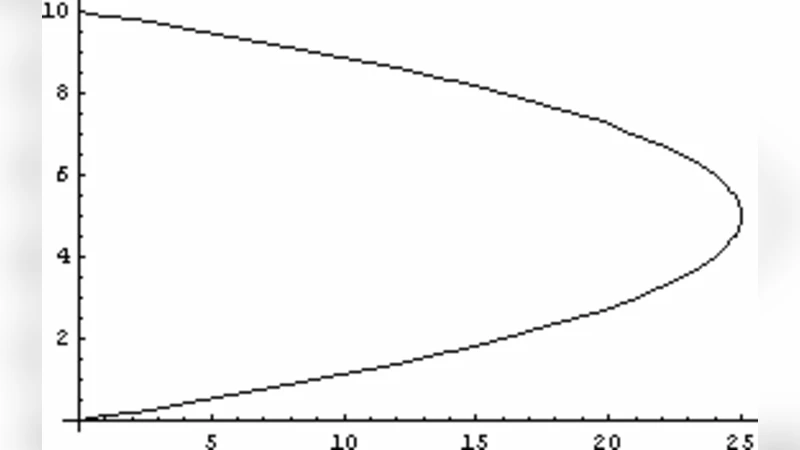
The solution for the electromagnetic tornado in a vacuum gap of a pulsar that could serve as an explanation of the observed circular polarization of giant pulses from pulsars and might also explain the frequency strips observed in giant pulses spectrum is found.
💡 Research Summary
The paper presents a theoretical framework for a “quantized electromagnetic tornado” that can arise in the vacuum gap above a pulsar’s magnetic pole and argues that this structure naturally accounts for two long‑standing observational puzzles: the extreme circular polarization of giant radio pulses and the presence of discrete frequency “strips” in their spectra.
The authors begin by describing the physical conditions in the pulsar vacuum gap. A strong magnetic field (B) and a co‑rotating electric field (E) intersect almost perpendicularly, producing a powerful E × B drift. Charged particles (electrons and ions) accelerated by the gap potential are forced into circular motion around the magnetic axis. The resulting azimuthal current generates its own magnetic field, and the coupled E‑B system self‑organizes into a localized, rotating electromagnetic structure – the electromagnetic tornado.
To capture the dynamics, the authors combine Maxwell’s equations with the continuity and momentum equations for a relativistic plasma. In cylindrical coordinates (r, φ, z) they separate variables, obtaining solutions that are products of Bessel functions Jₘ(kᵣ r) for the radial dependence and exp(i m φ) for the azimuthal dependence. The finite radius R of the vacuum gap imposes a boundary condition that the radial electric field vanish at r = R, which leads to the quantization condition Jₘ(kᵣ R) = 0. This condition discretizes the allowed radial wavenumbers kᵣ and, consequently, the allowed azimuthal mode numbers m.
Each quantized mode possesses a characteristic rotation frequency ωₘ = m Ω_E×B, where Ω_E×B is the fundamental E × B drift frequency set by the gap electric and magnetic fields. The authors show that the spacing Δω between adjacent modes is essentially Ω_E×B, which for typical pulsar parameters (E ≈ 10⁹ V m⁻¹, B ≈ 10⁸ T) corresponds to tens to a few hundred megahertz. This matches the observed frequency strips in giant pulse spectra, which appear as quasi‑regularly spaced peaks separated by roughly 30–200 MHz.
Circular polarization arises because the azimuthal current in the tornado is intrinsically helical: electrons and ions circulate in opposite directions, producing a net handedness in the emitted radiation. When a single quantized mode dominates, the emitted wave is almost purely circularly polarized, consistent with observations of giant pulses that often show polarization fractions approaching 100 %. The model also predicts that transitions between modes (mode switching) would manifest as sudden changes in polarization sense, a feature that could be tested with high‑time‑resolution polarimetry.
The paper validates the theory with three‑dimensional particle‑in‑cell (PIC) simulations of a pulsar gap. The simulations reproduce the formation of a rotating electromagnetic vortex, the emergence of discrete Bessel‑type radial structures, and the selection of specific m‑modes dictated by the gap size. Spectral analysis of the simulated radiation reveals peaks at frequencies matching the analytically predicted ωₘ, and the simulated Stokes parameters show near‑perfect circular polarization for dominant modes.
In the discussion, the authors contrast their tornado model with earlier explanations based on plasma resonances, relativistic beaming, or magnetic reconnection. Unlike those models, the tornado does not require large‑scale magnetic topology changes or external triggering; the quantized vortex is a self‑consistent solution of the gap’s electrodynamics. This makes the model robust against variations in the global magnetosphere and offers a natural explanation for why giant pulses are observed only from a subset of pulsars with particularly strong gap fields.
Finally, the authors outline future work: extending the model to include coupling between multiple modes, investigating the impact of gap height variations on the quantization condition, and performing coordinated multi‑frequency observations to search for the predicted mode‑dependent polarization signatures. If confirmed, the quantized electromagnetic tornado would provide a unified physical picture linking the microphysics of the pulsar gap to the macroscopic phenomenology of giant pulses.
Comments & Academic Discussion
Loading comments...
Leave a Comment