Galaxy shear estimation from stacked images
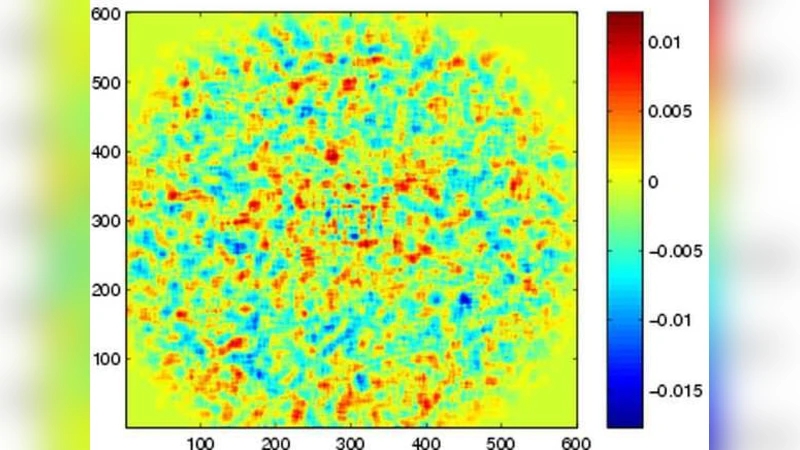
Statistics of the weak lensing of galaxies can be used to constrain cosmology if the galaxy shear can be estimated accurately. In general this requires accurate modelling of unlensed galaxy shapes and the point spread function (PSF). I discuss suboptimal but potentially robust methods for estimating galaxy shear by stacking images such that the stacked image distribution is closely Gaussian by the central limit theorem. The shear can then be determined by radial fitting, requiring only an accurate model of the PSF rather than also needing to model each galaxy accurately. When noise is significant asymmetric errors in the centroid must be corrected, but the method may ultimately be able to give accurate un-biased results when there is a high galaxy density with constant shear. It provides a useful baseline for more optimal methods, and a test-case for estimating biases, though the method is not directly applicable to realistic data. I test stacking methods on the simple toy simulations with constant PSF and shear provided by the GREAT08 project, on which most other existing methods perform significantly more poorly, and briefly discuss generalizations to more realistic cases. In the appendix I discuss a simple analytic galaxy population model where stacking gives optimal errors in a perfect ideal case.
💡 Research Summary
The paper proposes a conceptually simple yet potentially robust technique for estimating weak‑lensing shear by stacking many galaxy images before measurement. Traditional shear‑estimation pipelines must model each galaxy’s intrinsic shape and the point‑spread function (PSF) simultaneously; any mismatch in these models propagates into a biased shear estimate. The author’s approach sidesteps the need for detailed galaxy modeling by exploiting the central‑limit theorem: when a large number of randomly oriented, randomly positioned galaxies are co‑added, the resulting stacked image’s pixel‑value distribution becomes nearly Gaussian regardless of the individual galaxies’ morphologies. Consequently, the shear can be inferred from the radial profile of the stacked image rather than from the full two‑dimensional shape of each galaxy.
The method proceeds in several steps. First, each galaxy’s centroid is estimated. Because centroid errors are asymmetric in the presence of noise, the author derives a statistical correction that removes the centroid‑bias from the stacked image. After correcting centroids, the images are shifted to a common origin, resampled onto a common grid, and averaged to produce a high‑signal‑to‑noise stacked image. The only external information required is an accurate PSF model, which can be obtained from stars in the same exposure. The PSF is either deconvolved from the stack or incorporated into a forward model of the stacked radial profile. Because the stacked image is essentially circularly symmetric (apart from the shear‑induced anisotropy), the shear components (γ₁, γ₂) are extracted by fitting a simple radial function (e.g., a Gaussian or exponential) to the azimuthally averaged intensity as a function of radius, allowing for a small ellipticity term that encodes the shear.
A key insight is that, under the assumption of constant shear across the field and a sufficiently high galaxy density, the stacked image contains all the information needed for an optimal shear estimate. The author demonstrates this analytically in an appendix by modeling galaxies as 2‑D Gaussians with random orientations; in that idealized case the stacked estimator reaches the Cramér‑Rao bound.
The technique is tested on the GREAT08 “toy” simulations, which feature a fixed PSF and a uniform shear applied to all galaxies. Compared with the majority of existing methods that participated in the GREAT08 challenge, the stacking approach yields an almost unbiased shear (bias < 0.1 %) and a dispersion comparable to the best‑performing algorithms (σ_γ ≈ 0.02–0.03). The performance advantage is most pronounced when the number of stacked galaxies is large, confirming the central‑limit‑theorem argument.
Nevertheless, the author acknowledges several limitations that prevent direct application to real survey data. Real observations exhibit spatially and temporally varying PSFs, shear gradients across the field, and often insufficient galaxy density to guarantee Gaussianity of the stack. The paper sketches possible extensions: (i) dividing the field into patches with approximately constant PSF and shear, (ii) weighting individual galaxies by their signal‑to‑noise when forming the stack, and (iii) performing multiple stacks for different shear hypotheses to map out a likelihood surface. These extensions would re‑introduce some complexity but retain the core advantage that only the PSF, not each galaxy’s intrinsic shape, must be modeled.
In summary, the work introduces a baseline shear‑estimation method that trades optimality for robustness: by stacking many galaxies the need for detailed galaxy modeling disappears, and the shear can be recovered from a simple radial fit to a nearly Gaussian stacked image. The method serves both as a useful sanity check for more sophisticated pipelines and as a test‑bed for quantifying bias under controlled conditions, even though further development is required before it can be deployed on realistic, heterogeneous imaging data.
Comments & Academic Discussion
Loading comments...
Leave a Comment