Bayesian considerations on the multiverse explanation of cosmic fine-tuning
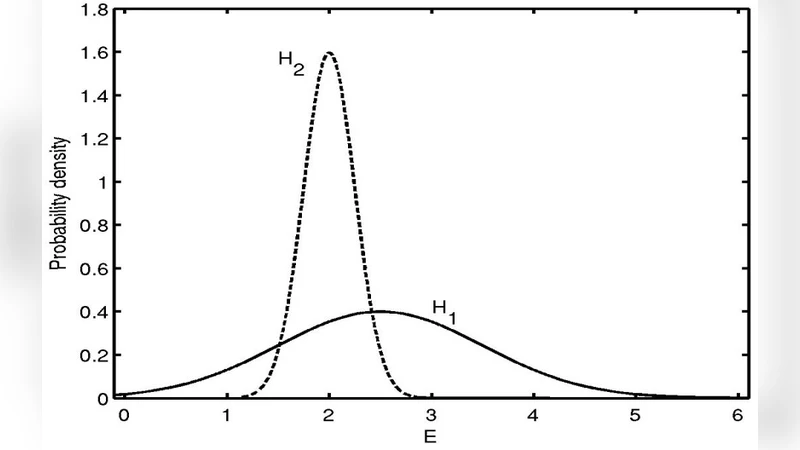
The fundamental laws and constants of our universe seem to be finely tuned for life. The various multiverse hypotheses are popular explanations for the fine tuning. This paper reviews the four main suggestions on inference in the presence of possible multiple universes and observer selection effects. Basic identities from probability theory and previously unnoticed conditional dependencies of the propositions involved are used to decide among the alternatives. In the case of cosmic fine-tuning, information about the observation is not independent of the hypothesis. It follows that the observation should be used as data when comparing hypotheses. Hence, approaches that use the observation only as background information are incorrect. It is also shown that in some cases the self-sampling assumption by Bostrom leads to probabilities greater than one, leaving the approach inconsistent. The “some universe” (SU) approach is found wanting. Several reasons are given on why the “this universe” (TU) approach seems to be correct. Lastly, the converse selection effect by White is clarified by showing formally that the converse condition leads to SU and its absence to TU. The overall result is that, because multiverse hypotheses do not predict the fine-tuning for this universe any better than a single universe hypothesis, the multiverse hypotheses fail as explanations for cosmic fine-tuning. Conversely, the fine-tuning data does not support the multiverse hypotheses.
💡 Research Summary
The paper “Bayesian considerations on the multiverse explanation of cosmic fine‑tuning” conducts a rigorous Bayesian analysis of four prominent approaches to handling observer‑selection effects (OSE) when evaluating multiverse hypotheses as explanations for the apparent fine‑tuning of physical constants. The four approaches are: (1) Assume the Observation (AO), (2) the Self‑Sampling Assumption (SSA), (3) the Some‑Universe (SU) approach, and (4) the This‑Universe (TU) approach.
The author begins by reviewing the basic tools of Bayesian inference: Bayes’ theorem, the law of total probability, and the concept of marginalisation. He stresses that all probabilities are conditional on background information I, which must be made explicit to avoid hidden assumptions.
AO (Assume the Observation)
AO treats the fact that we observe a universe capable of supporting observers as background information, effectively conditioning on O (observability) in the same way as on I. This leads to the expression p(H|D,O) ∝ p(D|H,O) p(H). The author shows that this step is only justified when O is independent of the hypothesis H, i.e., p(O|H) = p(O). In the case of cosmic fine‑tuning, however, the probability of observing a life‑permitting universe is a direct product of the hypothesis (e.g., a multiverse that generates many universes with varying constants). Consequently, O is not independent, and the AO simplification discards the crucial factor p(O|H). By ignoring this factor, AO artificially inflates the likelihood of hypotheses that make very broad predictions, because the non‑observable part of the prediction is filtered out. The paper demonstrates, using Bayesian belief‑network diagrams (Fig. 1a vs. 1b), that the correct joint probability must be p(D,O|H) = p(D|H,O) p(O|H).
SSA (Self‑Sampling Assumption)
SSA, introduced by Bostrom, posits that an observer should reason as if they are a random sample from the set of all observers in their reference class. The author critiques SSA on two grounds. First, SSA is ad‑hoc: the definition of the reference class remains vague, and the method is derived from intuitive thought experiments rather than formal probability theory. Second, SSA can yield probabilities greater than one. By constructing a scenario where two observers exchange information about their identities, the paper shows that SSA leads to inconsistent posterior odds for the same underlying world model, violating the axioms of probability. This inconsistency is especially problematic when the number of observers varies dramatically across hypotheses (as in many‑worlds or multiverse models).
SU (Some‑Universe) vs. TU (This‑Universe)
The SU approach treats the statement “some universe is fine‑tuned” as the data to be explained. This formulation ignores the fact that we have observed our universe to be fine‑tuned; it treats the observation as a generic existential claim rather than a specific datum. Consequently, SU fails to incorporate the selection effect correctly and tends to over‑estimate the explanatory power of multiverse models.
In contrast, the TU approach uses the proposition “this universe is fine‑tuned” (or more formally, D ∧ O for our particular universe) as the data. The paper formalises White’s “converse selection effect” and shows that when the converse condition (that every fine‑tuned universe would be observed) is absent, the correct Bayesian network reduces to the TU case. TU properly includes the factor p(O|H) and therefore penalises hypotheses that assign low probability to the existence of an observable, life‑permitting universe.
Empirical Comparison of Multiverse vs. Single‑Universe Hypotheses
Using uniform priors for the distribution of physical constants under both a multiverse hypothesis (M) and a single‑universe hypothesis (S), the author computes the joint likelihoods p(D,O|M) and p(D,O|S). Because the observation of a fine‑tuned universe is equally unlikely under both hypotheses (the multiverse does not increase the probability of our universe being fine‑tuned beyond the single‑universe baseline), the posterior odds are essentially determined by the priors, which are taken to be equal. Hence, the multiverse hypothesis does not gain any Bayesian advantage from the fine‑tuning data.
Conclusions
- In the presence of observer‑selection effects, the observation should be treated as data, not as background information; AO is therefore invalid for cosmic fine‑tuning.
- SSA is mathematically inconsistent in certain cases and can produce probabilities > 1, rendering it unsuitable as a general theory of selection effects.
- The SU approach is inadequate because it fails to condition on the specific observed universe.
- The TU approach is the only method that respects the conditional dependencies and yields coherent posterior probabilities.
- Since the multiverse hypothesis does not predict the fine‑tuning of this universe any better than a single‑universe hypothesis, it fails as an explanatory model for cosmic fine‑tuning.
Overall, the paper provides a clear, formal Bayesian framework for evaluating cosmological theories with selection effects and demonstrates that, when applied correctly, the fine‑tuning argument does not support multiverse explanations.
Comments & Academic Discussion
Loading comments...
Leave a Comment