MOND: time for a change of mind?
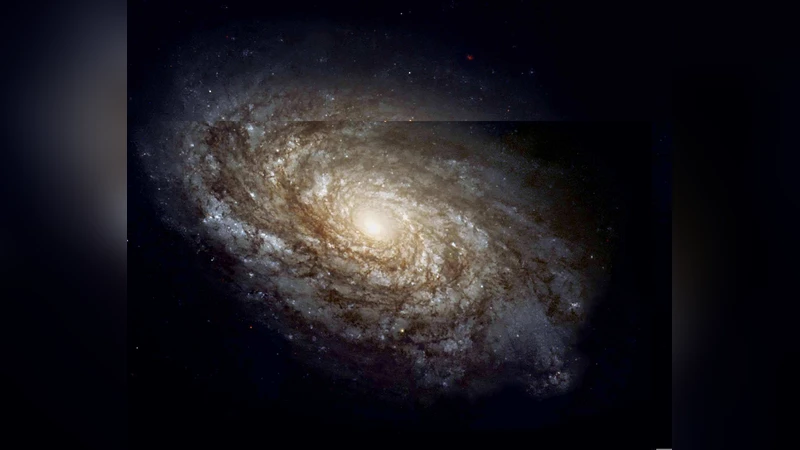
This is a semi-popular account of the MOND paradigm and its comparison with the competing Newtonian-dynamics-plus-CDM paradigm. It was published recently in the online magazine of the Israel Physical Society in the IYA 2009 issue.
💡 Research Summary
The paper “MOND: time for a change of mind?” offers a semi‑popular yet technically informed overview of the Modified Newtonian Dynamics (MOND) paradigm and contrasts it with the conventional Newtonian‑gravity‑plus‑Cold‑Dark‑Matter (CDM) framework. It begins by framing the two central puzzles of modern cosmology: the apparent missing mass in galaxies and clusters, and the question of whether gravity itself needs modification on galactic scales.
The author first explains the core idea of MOND, introduced by Milgrom in 1983. MOND postulates a universal acceleration constant a₀ ≈ 1.2 × 10⁻¹⁰ m s⁻². When the Newtonian acceleration g_N falls below a₀, the effective gravitational acceleration transitions from g_N = GM/r² to g = √(GMa₀)/r. This simple modification reproduces the observed flat rotation curves of spiral galaxies without invoking any unseen mass. Moreover, the theory naturally yields the empirical Tully‑Fisher relation (L ∝ V⁴), because the asymptotic circular speed V becomes (GMa₀)¹⁄⁴, directly linking baryonic mass to rotation velocity. The paper surveys a wide range of observational evidence—high‑surface‑brightness spirals, low‑surface‑brightness dwarfs, and outer HI disks—showing that a single value of a₀ fits them all within observational uncertainties.
Next, the CDM side of the story is reviewed. In the ΛCDM model, non‑baryonic cold dark matter provides the extra gravitational pull needed to explain galaxy rotation curves, cluster dynamics, gravitational lensing, and the anisotropies of the cosmic microwave background (CMB). While CDM excels at reproducing large‑scale structure and the CMB power spectrum, it requires a family of halo density profiles (e.g., NFW) with several free parameters to match individual galaxy rotation curves. This flexibility leads to well‑known small‑scale tensions: the “core‑cusp problem” (observed shallow central densities versus steep NFW cusps), the “missing satellites problem” (simulations predict far more dwarf satellites than observed), and the “too‑big‑to‑fail” issue (massive subhalos that should host visible dwarfs but do not).
The paper then juxtaposes the two approaches. On galactic scales, MOND’s predictive power is striking: with essentially one new constant, it reproduces the detailed shape of rotation curves across many orders of magnitude in mass and surface brightness. CDM, by contrast, must fine‑tune halo concentrations and baryonic feedback processes to achieve comparable fits. However, MOND struggles on larger scales. In galaxy clusters, even after accounting for the MOND boost, a substantial mass deficit remains, often attributed to unseen hot gas or a residual dark component. Gravitational lensing observations, especially strong lensing arcs in clusters, are more naturally explained by CDM’s additional mass. Moreover, MOND lacks a fully relativistic formulation that simultaneously matches the CMB acoustic peaks and the growth rate of structure. The author discusses relativistic extensions such as TeVeS (Tensor‑Vector‑Scalar theory) and other bimetric models, noting that while they can reproduce some cosmological observables, they still fall short of the precision achieved by ΛCDM.
Finally, the article outlines future observational tests that could discriminate between the paradigms. Precise measurements of stellar motions in the ultra‑low‑acceleration outskirts of galaxies, high‑resolution HI mapping of dwarf irregulars, and the dynamics of tidal dwarf galaxies (which form without dark matter in CDM but should obey MOND’s law) are highlighted as critical. The emerging field of gravitational‑wave astronomy may also provide constraints on the propagation speed of gravity in modified theories. The author concludes that, despite MOND’s remarkable successes on galactic scales, a comprehensive cosmological model still appears to favor CDM, unless a deeper theoretical framework can embed a₀ within a relativistic theory that also accounts for the CMB and large‑scale structure. Ongoing surveys (e.g., LSST, Euclid) and next‑generation simulations will be decisive in determining whether a change of mind toward modified gravity is warranted or whether dark matter remains the more viable solution.
Comments & Academic Discussion
Loading comments...
Leave a Comment