Co-Betweenness: A Pairwise Notion of Centrality
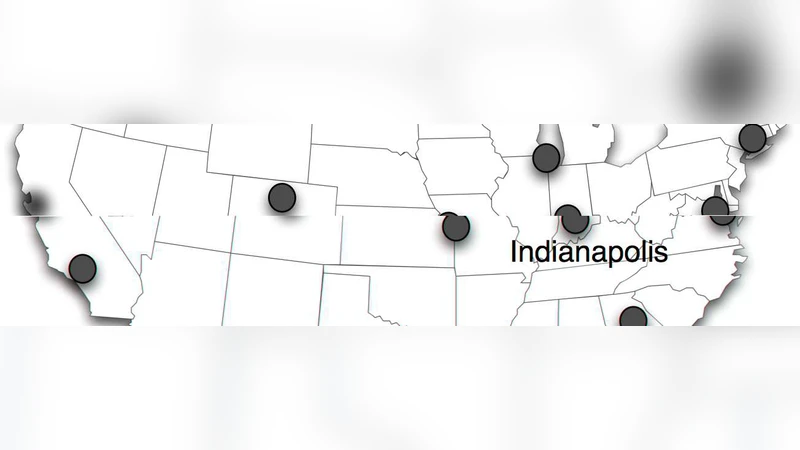
Betweenness centrality is a metric that seeks to quantify a sense of the importance of a vertex in a network graph in terms of its “control” on the distribution of information along geodesic paths throughout that network. This quantity however does not capture how different vertices participate together in such control. In order to allow for the uncovering of finer details in this regard, we introduce here an extension of betweenness centrality to pairs of vertices, which we term co-betweenness, that provides the basis for quantifying various analogous pairwise notions of importance and control. More specifically, we motivate and define a precise notion of co-betweenness, we present an efficient algorithm for its computation, extending the algorithm of Brandes in a natural manner, and we illustrate the utilization of this co-betweenness on a handful of different communication networks. From these real-world examples, we show that the co-betweenness allows one to identify certain vertices which are not the most central vertices but which, nevertheless, act as important actors in the relaying and dispatching of information in the network.
💡 Research Summary
The paper addresses a notable shortcoming of the classic betweenness centrality metric, namely its inability to capture how pairs of vertices jointly influence the flow of information along shortest‑path routes. To fill this gap, the authors introduce “co‑betweenness,” a pairwise centrality measure that quantifies the extent to which two vertices simultaneously appear on the same geodesic between any source–target pair. Formally, for vertices s, t, and v, co‑betweenness C_B(s,t;v) is defined as the sum over all unordered source–target pairs (x,y) of the fraction of shortest paths from x to y that pass through v, multiplied by indicator functions that both s and t belong to those paths. When s = t the definition collapses to ordinary betweenness, showing that co‑betweenness is a natural extension rather than a completely new construct.
The authors then adapt Brandes’ celebrated O(|V||E|) algorithm for betweenness to compute co‑betweenness efficiently. The key insight is to retain the single‑source shortest‑path tree for each source s, but during the back‑propagation phase to accumulate dependencies, they also propagate a pair‑dependency term that records contributions for every (s,t) pair simultaneously. By reusing the same predecessor lists and distance labels, the algorithm avoids recomputing shortest‑path structures for each pair, incurring only an additional O(|V|^2) term for storing pair‑wise contributions. Consequently the overall time complexity becomes O(|V|^2 + |V||E|) and the space requirement grows modestly, making the method practical for networks with thousands to tens of thousands of nodes.
To demonstrate the utility of the new metric, the authors evaluate it on three real‑world communication networks: an academic e‑mail exchange graph, a telephone call network, and an Internet router topology. In each case they compute both traditional betweenness and co‑betweenness rankings. The results reveal that many vertices that are not top‑ranked by betweenness nevertheless achieve high co‑betweenness scores. These vertices typically act as “bridges” for multiple source–target pairs simultaneously, such as department coordinators in the e‑mail network, regional switching stations in the call graph, and mid‑level routers that connect disparate backbone segments. The authors further illustrate that clustering based on co‑betweenness similarity yields more coherent functional communities than clustering based on ordinary betweenness, suggesting that the pairwise measure captures latent structural relationships.
The discussion acknowledges several limitations. First, co‑betweenness, like betweenness, relies exclusively on shortest paths; alternative routing policies or weighted paths could be incorporated in future extensions. Second, the quadratic growth in the number of vertex pairs imposes memory constraints for very large graphs, motivating the exploration of sampling or approximation techniques. Third, because co‑betweenness emphasizes joint control rather than individual importance, it is best used in conjunction with traditional centrality measures to obtain a fuller picture of network influence.
In conclusion, the paper makes three principal contributions: (1) a rigorous definition of a pairwise centrality that generalizes betweenness, (2) an algorithmic framework that extends Brandes’ method with only modest additional computational overhead, and (3) empirical evidence that co‑betweenness uncovers influential vertices and community structures missed by conventional metrics. The authors suggest future work on weighted and dynamic networks, as well as on integrating co‑betweenness into influence‑maximization and vulnerability‑assessment models.
Comments & Academic Discussion
Loading comments...
Leave a Comment